
HOW TO STORE WINE AT HOME
Wine is alive to its environment in a way that a bottle of olive oil or a can of beans is not. Temperature, light, movement and time all act on it, for better or worse. The good news is that storing wine well does not require a cellar, a specialist fridge, or a degree in oenology. It requires understanding what wine actually needs, and why.
THE SHORT VERSION
Wine stored badly ages faster and tastes worse. The enemies are heat, light, vibration, and a dry cork. Most wine bought for drinking within a few weeks needs nothing more than a cool, dark corner. Bottles kept longer than a month should lie horizontal. Serious storage requires temperature control between 9 and 14 degrees Celsius and humidity above 60%.
TEMPERATURE IS THE ONLY THING THAT REALLY MATTERS
The ideal storage temperature for wine is between 9 and 14 degrees Celsius. That range matters because heat accelerates the chemical reactions that age wine. A bottle stored at 25 degrees is not simply ageing faster; it is ageing badly. The flavours flatten. The fruit cooks. The freshness that made it worth buying disappears before you get near it.
Consistency matters as much as the number itself. A cellar that stays at a steady 14 degrees all year is better than a room that swings between 10 and 22 as the seasons change. Fluctuation causes the liquid inside to expand and contract, which puts pressure on the cork and can pull air into the bottle over time.
The average British kitchen runs between 18 and 22 degrees. That is fine for a bottle you are opening tonight or this week. It is not fine for a bottle you plan to open in six months.
LIGHT DEGRADES WINE FASTER THAN MOST PEOPLE REALISE
Ultraviolet light breaks down the organic compounds in wine, particularly in whites and sparkling wines. This is why quality wine bottles are almost always dark glass. It is also why a bottle left on a sunny windowsill for a week tastes noticeably flatter than the same bottle kept in a cupboard.
Artificial light causes the same problem, more slowly. LED lighting causes minimal damage. Fluorescent strip lights are worse. Direct sunlight is the one to avoid entirely.
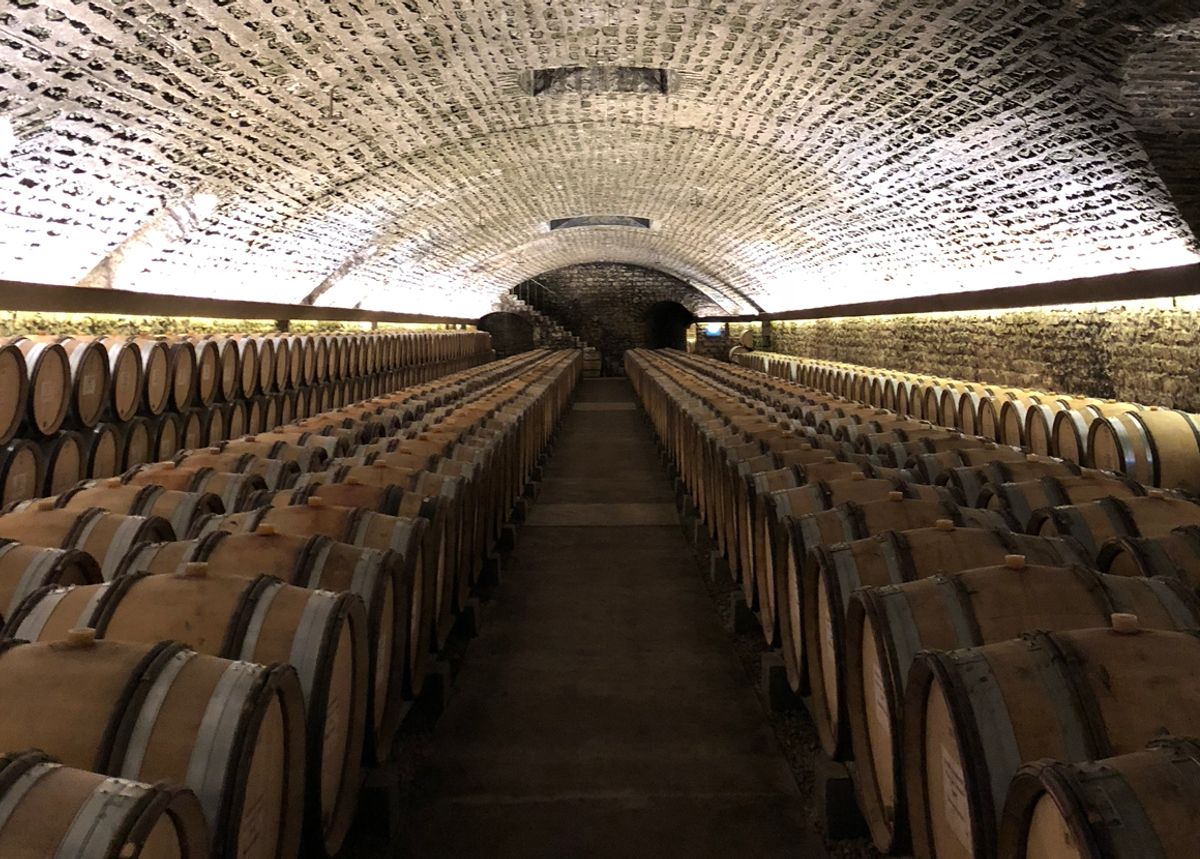
This is also why Champagne houses age their bottles in deep, dark chalk cellars rather than in glass-fronted display fridges. The bottle you see on the shelf of a restaurant near a window has already been compromised, even before the cork is pulled.
HOW LONG ARE YOU KEEPING IT?
The storage approach changes depending on your timeline, and it is worth being honest with yourself about which category a bottle falls into.
Drinking this week: Store upright, anywhere cool and away from direct light. The fridge is fine for whites and sparkling wines. For reds, a cool room or shaded shelf works well. Upright is acceptable for short periods because the cork will not dry out in a few days.
Keeping for up to a month: Store on its side if you can, in a cool spot away from heat sources and sunlight. A cupboard under the stairs, a pantry shelf, or the bottom of a wardrobe all work. The goal is to keep the cork in contact with the wine so it stays moist and maintains its seal.
Keeping for several months: The horizontal position becomes important here. A dry cork shrinks slightly, allowing air to enter the bottle. Oxidation at this level does not improve the wine; it spoils it. A proper wine rack, even a small countertop one, does the job. Alternatively, store bottles on their sides in the box they arrived in.
Keeping for years: This is where temperature control matters seriously. An unheated room that stays consistently cool is good. A purpose-built wine fridge is better. A cellar is the ideal, if you have access to one.
CORK OR SCREWCAP: DOES IT CHANGE ANYTHING?
Screwcap wines do not need to be stored on their sides. There is no cork to keep moist. For everyday drinking wines, this is largely academic because you are unlikely to be keeping them long enough for it to matter. For wines intended to age, most serious producers still use cork, which means horizontal storage remains the right approach.
THE CASE FOR A WINE FRIDGE
A dedicated wine fridge maintains temperature, controls humidity, minimises vibration, and keeps the bottles in darkness. For a collection of any size, or for bottles worth more than you would want to ruin through poor storage, it is worth considering.
The range is wide. Entry-level wine fridges start at around £150 and hold 12 to 18 bottles. They do the basics adequately. At the other end, a Eurocave or similar will cost significantly more and maintain conditions that serious winemakers would approve of. The right answer depends on what you are storing and how long you plan to keep it.
One distinction worth knowing: a wine fridge is not the same as a standard kitchen fridge. A kitchen fridge runs at 3 to 5 degrees and is too cold for long-term wine storage. It also produces vibrations from the compressor that are damaging over time, and the humidity is usually too low, which dries out corks.
COMMON MISTAKES
Storing above the fridge: the top of a kitchen fridge is one of the warmest spots in most homes, combining heat from the appliance with warm air rising from the kitchen. It is also subject to vibration. Avoid.
Storing near the oven or hob: obvious in principle, but worth stating. Temperature fluctuations near cooking surfaces are severe.
Storing in the garage: UK garages can drop well below freezing in winter and climb above 25 degrees in summer. Unless the garage is insulated and temperature-stable, it is not suitable for anything you care about.
Keeping sparkling wine on its side for extended periods: fine in the short term, but Champagne and other quality sparkling wines stored long-term can sometimes develop a slight cork taint from extended contact. Most sparkling wine is intended to be consumed within a year or two of purchase, so this is rarely an issue in practice.
WHAT ABOUT HUMIDITY?
The ideal humidity for wine storage is between 60 and 80 percent. Below that, corks dry out. Above it, labels deteriorate and mould can develop. In a standard British home, ambient humidity is usually sufficient for storage of a year or less. For longer-term cellaring, a wine fridge with humidity control handles this automatically.
THE SIMPLEST RULE
If you are not sure what to do, put it somewhere cool, dark, and still, on its side if it has a cork and you are keeping it for more than a few weeks. That covers most situations. The rest is refinement.
For guidance on getting the most from each bottle once you open it, including serving temperatures and glassware, our guide to wine tasting is a useful companion. And if you want wines that are genuinely worth storing well, explore our subscriptions.