
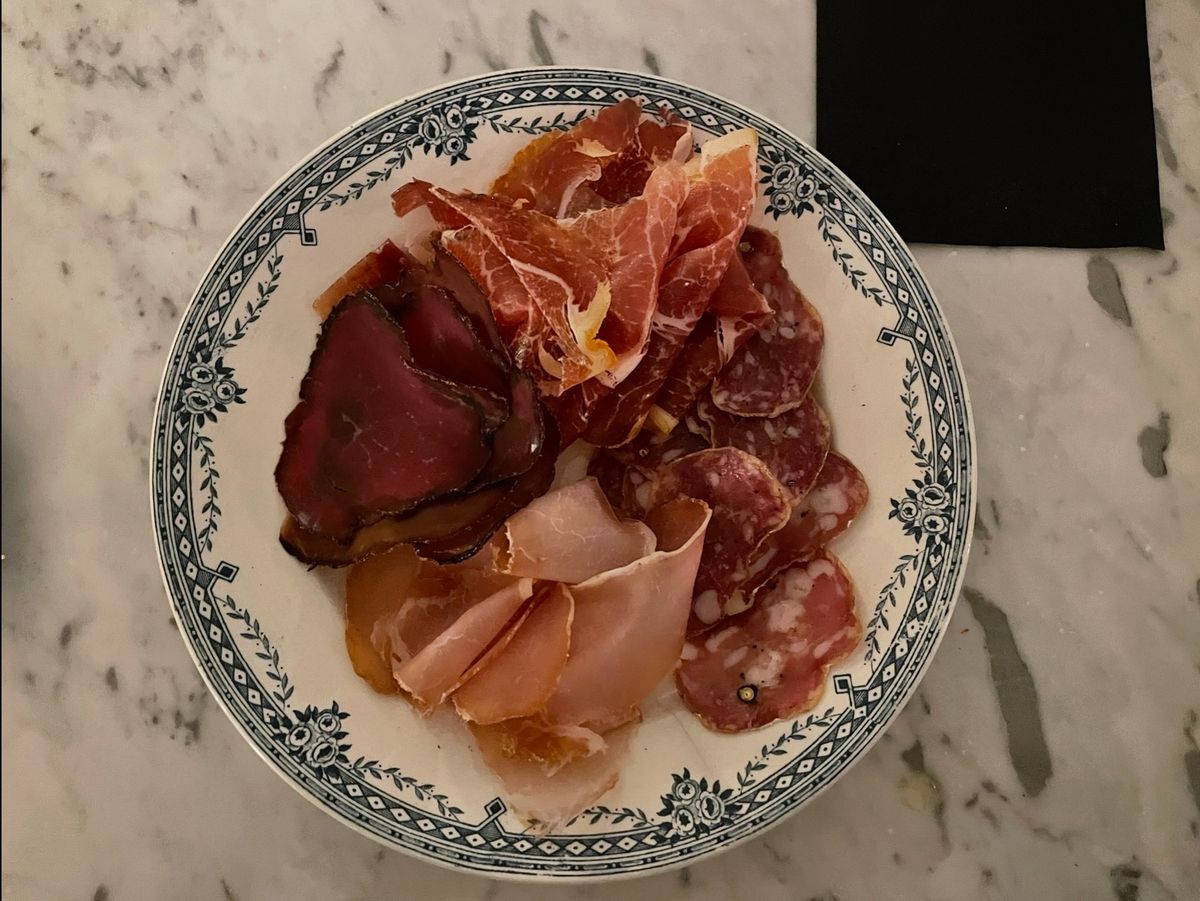
Charcuterie & Wine Pairing
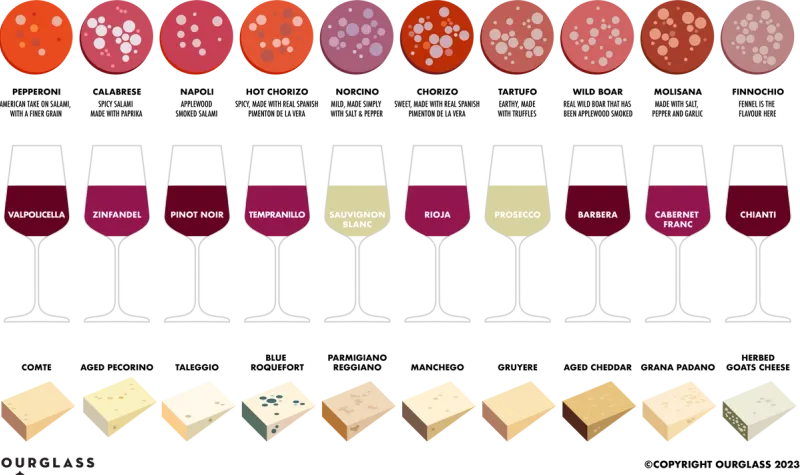
The marriage of wine with charcuterie and cheese stands as one of gastronomy's finest achievements. Yet for all its cultural weight, the fundamentals remain remarkably straightforward. Here's how to navigate these classical combinations with confidence.
THE COLOUR CODE
The time-honoured rule holds true: the colour of cured meat offers a reliable compass for wine selection. Lighter charcuterie gravitates naturally towards lighter wines, while darker, more robust meats demand fuller-bodied bottles. This isn't mere convention—it's chemistry at work.
THE ART OF CHEESE PAIRING
Cheese, like wine, tells the story of time. Young cheeses speak of milk and delicacy; aged ones whisper of concentrated flavours and crystalline complexity. The French call this evolution 'affinage', and it mirrors wine's own journey through time.
Fresh, youthful cheeses find their match in wines of similar character—think unoaked whites, proper dry rosés, or reds marked by vivid fruit and crackling acidity. More mature cheeses demand partnership with wines showing their own evolution, whether through careful oak ageing or deliberate oxidation.
THE HARMONY PRINCIPLE
Two paths lead to successful pairing: contrast and congruence. Sometimes you'll want to mirror flavours, creating layers of similar notes. Other times, opposition creates the spark—a rich, creamy cheese against a sharp sparkler offers two equally compelling experiences. The joy lies in discovering which path suits your palate.
THE SALT & FAT EQUATION
Most cured meats and cheeses bring significant salt, fat, or both to the table. This demands wines with proper acidity—seek out cooler-climate expressions of familiar grapes. Salt has a peculiar way of softening perceived acidity, while fat requires that same acid to refresh the palate. It's why most proper sweet wines perform admirably with most cheeses.
TANNINS & TIME
Tannic wines find their best expression alongside aged cheeses and meats marked by those prized fatty crystals. The molecular binding creates genuine harmony rather than mere compatibility. When pouring red with younger cheese, favour bottles with gentler tannins.
THE TERROIR TRUTH
The simplest solution often proves the most reliable: what grows together, goes together. A quick search for traditional pairings from any given region will yield tried-and-tested combinations refined over generations.
THE SAUCE FACTOR
Accompaniments warrant careful consideration. Light fruit preserves align naturally with whites, darker ones with reds. Sweet or spiced condiments—think honey or chilli-spiked preserves—demand wines carrying some residual sugar.
THE JOY OF DISCOVERY
The supporting cast—fresh and dried fruits, nuts, herbs, preserves, aged balsamics, properly pickled vegetables—each brings something vital to the ensemble. While these guidelines offer a starting point, the real pleasure lies in exploration.
The interplay of savoury and sweet, tangy and rich creates the possibility for discovery that makes these combinations so compelling. Wine pairing needn't be a source of anxiety—approached with curiosity, it becomes an adventure in flavour.
WANT MORE?
Check out our cheese matching infographic and our wine tasting flavour wheel..