
Wine Tasting Flavour Wheel Chart
Wine flavour wheels lcan initially appear more intimidating than the periodic table of elements – a dizzying array of descriptors that make you wonder if you've been drinking with your taste buds turned off all these years.
The reality is reassuringly simpler: these wheels aren't listing flavours that were added to the wine (unlike those fancy coffee drinks that genuinely contain caramel and vanilla syrups); they're providing language for what's naturally present.
It's rather like giving names to the stars – once someone points out the difference between the North Star and the Big Dipper, you'll find yourself noting them where previously you weren't.
WHAT THE WHEEL IS SHOWING YOU
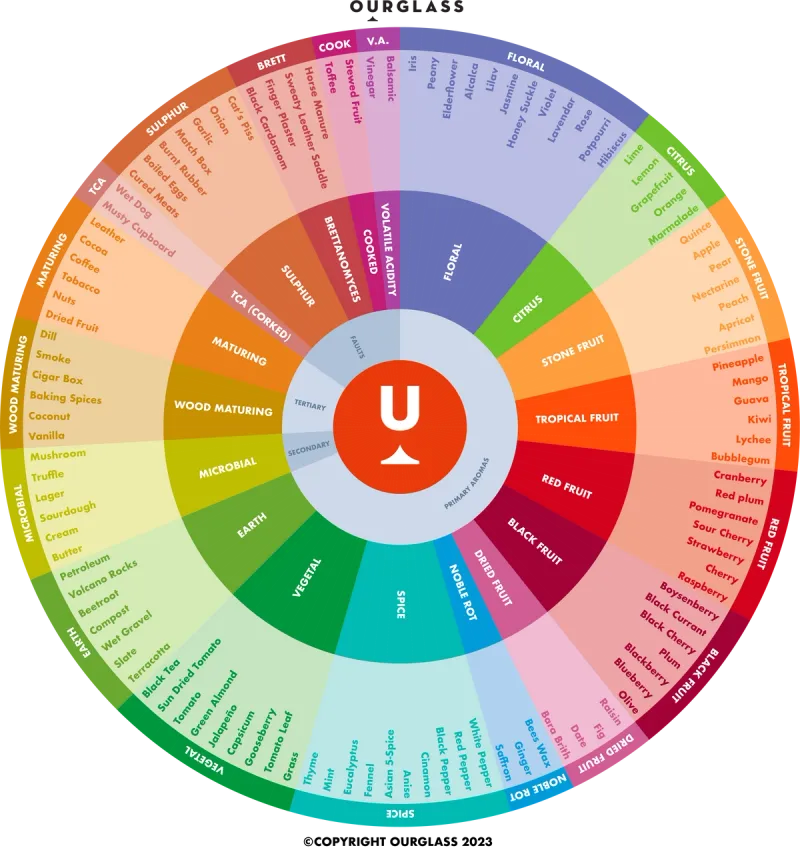
Wine aromas fall into three broad families, each telling a different part of the story.
Primary aromas come from the grape itself. These are the fruit and floral notes most people recognise first: citrus (lemon, grapefruit, orange), stone fruit (peach, apricot, nectarine), tropical fruit (mango, pineapple, guava, lychee), red fruit (cherry, raspberry, strawberry, pomegranate), black fruit (blackberry, blueberry, plum, black cherry), dried fruit and noble rot characteristics, floral notes (rose, violet, jasmine, elderflower), and the green, vegetal, and spice notes that define varieties like Sauvignon Blanc and Syrah.
Secondary aromas develop during fermentation. Yeast activity introduces microbial characteristics: bread, cream, butter, sourdough, and lager notes. These are what separate a wine that has gone through malolactic fermentation from one that has not.
Tertiary aromas, sometimes called bouquet, emerge from ageing. Oak contact brings vanilla, smoke, baking spices, and cigar box. Time in bottle develops tobacco, mushroom, truffle, dried fruit, and coffee. Earth notes (wet gravel, slate, beetroot, volcanic mineral) often appear here too, though some argue they begin in the vineyard.
The fault categories sit outside this progression: TCA produces that wet newspaper, corked quality. Sulphur reduction smells of rubber or rotten eggs. Brettanomyces brings barnyard, leather, and wet dog. Volatile acidity turns sharp and vinegary. Cooked wine tastes flat and stewed. Recognising faults is as valuable as recognising pleasure -- and understanding how taste works makes both more rewarding.
THE PATH TO PLEASURE
This flavour wheel isn't just a reference guide; it's a training tool designed to help develop your sensory vocabulary. Each time you successfully identify a specific aroma, you're building neural pathways that make future identification easier and more precise. If you want a method to structure that practice, our guide to tasting wine walks you through it step by step.
PRACTICE MAKES PERFECT
Professional tasters aren't born with superior palates -- they develop systematic approaches to identification. The structured categorisation reflects the methodology used in formal wine education programmes worldwide.
TASTE BETTER TOGETHER
The ability to precisely articulate what you're experiencing transforms subjective impressions into sharable observations. This skill bridges the gap between personal preference and communal appreciation.
WANT MORE?
Every Ourglass box arrives with tasting notes mapped to this wheel. If you want to put the vocabulary to work on wines worth talking about, explore our subscriptions.