
A GUIDE TO BAROLO
There is a version of wine appreciation that is really just patience in disguise. Barolo is its clearest test. Buy it too young and you will wonder what the fuss is about. Give it time and you will understand why serious drinkers plan their cellars around it.
This is not a wine that flatters immediately. The colour alone confuses people: pale garnet, almost translucent at the rim, more like a mature Burgundy than the deep ruby you might expect from something with this reputation. Then you smell it. Roses. Tar. Something floral and tight and serious. Then, if the wine has age, something shifts entirely: leather, dried violets, tobacco, forest floor, and in the finest examples, white truffle. That last one sounds like a cliche until you encounter it. It is not a cliche. It is a specific and recognisable aroma that separates great Barolo from very good Barolo.
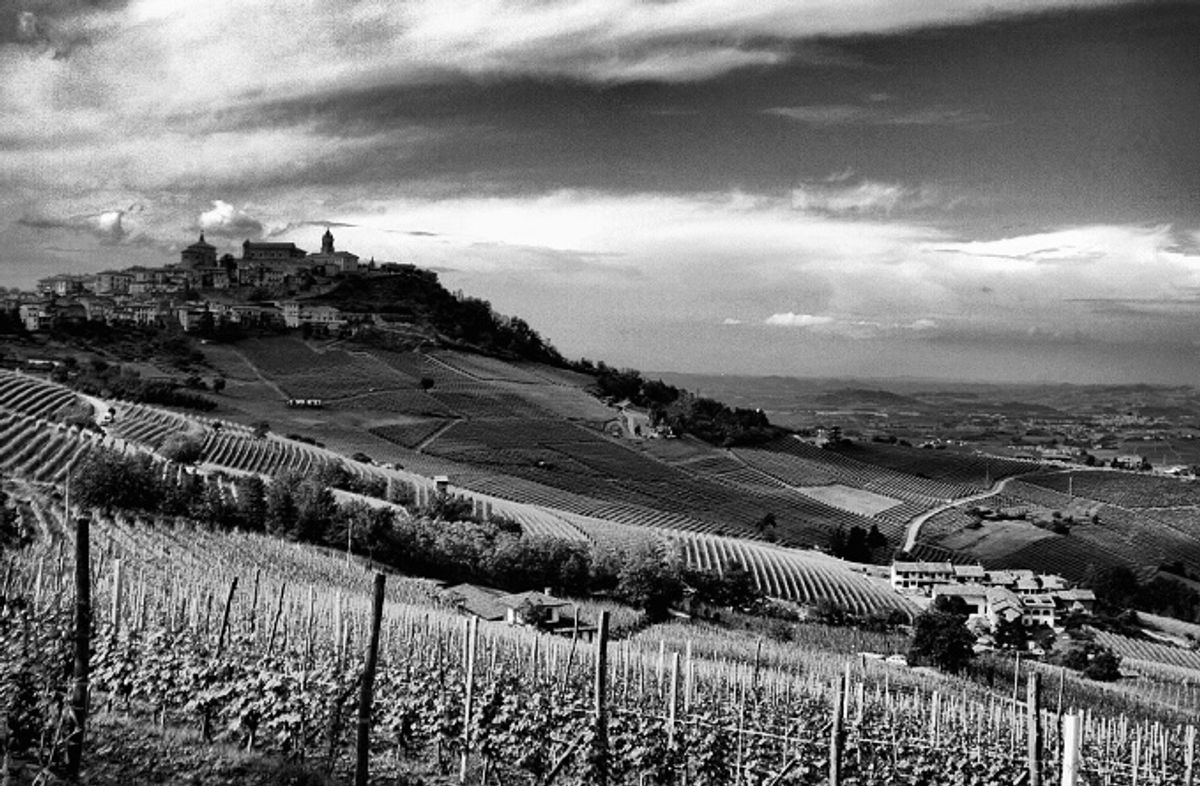
Barolo is made from Nebbiolo, grown in eleven communes in the Langhe hills of Piedmont, south of Alba. The wine is named after the appellation, not the grape. That distinction matters: Nebbiolo grown outside the zone produces something good but categorically different. Geography here is not incidental. It is the argument.
THE SHORT VERSION
Barolo is made from Nebbiolo in Piedmont's Langhe hills and must age a minimum of 38 months before release, 62 months for Riserva. Young Barolo smells of roses and tar; with age it develops leather, dried violets, tobacco, truffle, and forest floor. The tannins in young Barolo are not merely firm; they are architectural. This is a wine built for patience, and it rewards that patience more reliably than almost anything else at its price point.
WHY BAROLO IS DIFFERENT
Nebbiolo ripens late. In Piedmont that means October harvests, with autumn rain a constant threat. It is thin-skinned but intensely tannic, producing wines that are pale in colour and fierce in structure when young. The combination feels counterintuitive until you understand that colour and tannin in wine come from different compounds. Nebbiolo has plenty of one and, relatively speaking, less of the other.
The legal ageing requirements exist because Barolo without age is not Barolo at its best. A standard Barolo must spend a minimum of 38 months ageing before release, at least 18 of which must be in oak. A Riserva requires 62 months. These are not marketing designations; they reflect a genuine biological reality. Most serious producers recommend waiting at least five years from vintage before opening. The best examples reward ten to twenty years or more.
WHAT IT TASTES LIKE AT DIFFERENT STAGES
Young Barolo, say three to six years from vintage, is tightly wound. The roses and tar are there but compressed. The tannins grip hard and the acidity is pronounced. It can feel austere to a palate accustomed to softer reds, and that austerity is not a flaw. It is the structure that everything else will eventually organise itself around.
At eight to twelve years the picture starts to open. The tannins soften and integrate. Secondary characters emerge: leather, tobacco, liquorice, dried rose petals. The wine becomes conversational rather than confrontational.
Beyond fifteen years, in good vintages from good producers, Barolo becomes something else entirely. The fruit has largely receded. What remains is complex, specific, and unhurried. The truffle note appears here, if it is going to appear at all. This is the version people mean when they call Barolo Italy's greatest red wine.
THE COMMUNES AND WHAT THEY PRODUCE
The eleven communes within the Barolo DOCG produce wines with distinct characters, shaped primarily by two soil types that divide the appellation roughly east to west.
The western communes, Barolo, La Morra, and Verduno, sit on older Tortonian soils: calcareous marl laid down around ten million years ago. Wines from here tend to be more perfumed and more accessible earlier, with softer tannins and greater aromatic complexity in youth. If you want a bottle to open at eight to ten years, look here first.
The eastern communes, Serralunga d'Alba and Castiglione Falletto, sit on younger Helvetian soils: sandier, with more compact clay. The wines are more structured, more austere, and built for longer ageing. Serralunga in particular produces Barolo that can feel almost impenetrable at ten years and quietly magnificent at twenty.
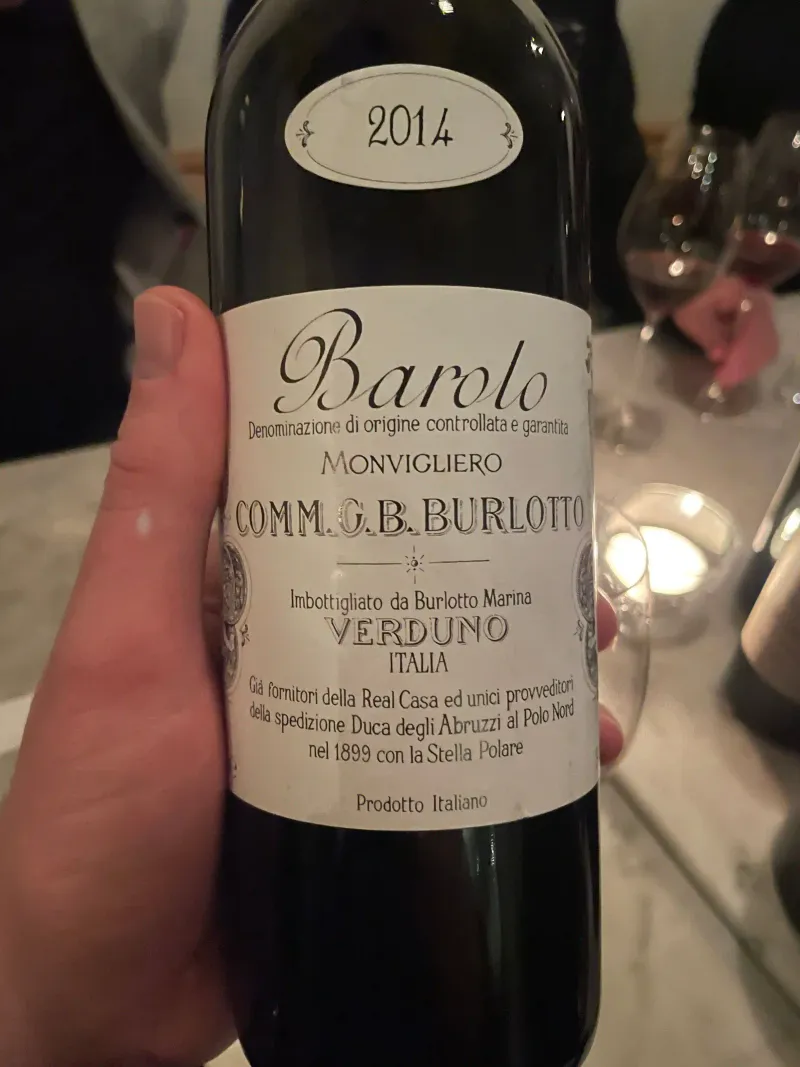
Verduno deserves a specific mention. It sits at the northern edge of the appellation and has historically been undervalued, which means it remains better priced than its quality warrants. Comm. G.B. Burlotto, whose Monvigliero vineyard sits at the heart of the commune, is among the finest producers in the appellation. The house dates to the nineteenth century and supplied the Royal House of Savoy; their wines provisioned the Duke of Abruzzi's 1899 Arctic expedition. The wines are elegant and precise, notably more perfumed than those from Serralunga, and they reward patience without demanding the decade-plus that the eastern communes often require.
HOW TO BUY BAROLO INTELLIGENTLY
Entry-level Barolo from a reliable producer starts at around £25 to £35. At this price you are getting appellation character and honest winemaking. It is worth it, provided you give the wine time.
The jump to named single-vineyard wines, known as MGA (Menzione Geografica Aggiuntiva) on the label, is significant in both price and quality. Wines from recognised sites such as Brunate, Cannubi, Monvigliero, Cerequio, and Rocche dell'Annunziata from serious producers run from £50 upwards, often considerably more. These are wines to buy and hold rather than open on the night.
A few things worth knowing before you spend:
Vintage matters more in Barolo than in most regions. 2016 and 2010 are widely regarded as the strongest recent vintages. 2013 and 2015 are very good. 2017 was warm and the wines are more forward; drink them earlier. Avoid the weakest vintages unless the price reflects it.
Traditional versus modern style is a real distinction. Traditional producers (Bartolo Mascarello, Giacomo Conterno, Burlotto) use large old oak casks for ageing, producing wines with more transparency and longer ageing potential. Modernist producers introduced small French barriques from the 1980s onwards, producing wines with more immediate fruit and oak influence. Neither is wrong. They are different wines from the same grape and the same hills.
Producer matters more than commune at entry level. A good producer in La Morra will outperform a mediocre one in Serralunga every time.
IF YOU LIKE BAROLO, TRY THESE NEXT
Barbaresco is Barolo's near neighbour, also made from Nebbiolo, typically lighter in structure and earlier to open. A useful introduction to the grape if Barolo feels like too much of a commitment.
Brunello di Montalcino shares Barolo's structural ambition and ageing requirements. Made from Sangiovese in Tuscany, it is a different character but a comparable level of seriousness.
Etna Rosso from Sicily, made from Nerello Mascalese on the volcanic slopes of Mount Etna, offers similar perfume and pale colour at a lower entry price. One of the most interesting reds in Italy right now.
Gattinara and Valtellina are Nebbiolo grown further north, in Piedmont and Lombardy respectively. The wines share the variety's structural character and aromatic profile at a fraction of Barolo's price. Worth knowing.
Red Burgundy is the closest stylistic parallel: similar transparency of colour, similar relationship between terroir and flavour, similar requirement for patience. The difference is that Barolo, at equivalent quality levels, remains considerably better value.
Barolo does not meet you halfway. It asks something of you: time, attention, the willingness to open a bottle before it is ready at least once so you understand what ready actually means. Most wines do not ask that. Most wines are not worth it.
For a broader introduction to Italian wine, see our Italy country guide. And if you want to develop your palate for wines at this level, our subscriptions include Barolo and its neighbours across the year.