
American Wine Regions | The Complete Guide
The United States of America is the world's fourth largest producer of wine. California alone produces 80%+ of all American wine, followed by Washington, New York, Pennsylvania, and Oregon, which means the Golden State can be classed as a superpower in the wine world in its own right. While the effects of Prohibition, popularised in the modern imagination by Sean Connery's stupendously good death scene in Brian de Palma's The Untouchables, makes selling wine even now a complex proposition, this doesn't stop our American cousins being the world's largest consumers of wine.
Despite being lumped under the anachronistic 'new world' umbrella, American winemaking extends back two and a half centuries to the establishment of the first San Franciscan mission in what is now San Diego, which preceded the establishment of twenty or so further missions stretching all the way up to northern California (including the mission Madeleine visits in San Francisco in the first act of Vertigo). California's root stock derives from an enterprising Hungarian, Agoston Haraszthy, who collected on a trip to 100,000+ cuttings of vinis vinifera (the common grape vine). In common with their European counterparts, phylloxera was a major threat to vineyards dotted across the state but thankfully native rootstock vitis labrusca (the American or fox vine) was resistant, so vitis vinifera was then grafted on and enabled recovery.
Another major setback arose from the effects of Prohibition, which ran from 1919 to 1932, meant that American tastes focused instead on moonshine, imported whisky and cocktails, while production halted in all but the few religious orders exempted for the production of sacramental wine. All this meant that wine production, much focused then as now in California, only started to kick back into gear in the 1950s. As the thirst for better quality wine grew, led by great producers including favourites like Ridge and Heitz in the 60s, the characteristic pioneer spirit synonymous with the US heralded a new brand of winemaker, embodied by the revolutionary Robert Mondavi (whose unique legacy is continued by his grandsons, Carlo and Dante).
While no equivalent of France's AOC system, American Viticultural Areas (AVAs) mark geographical areas out which can be both vast and hugely varied, with Upper Mississippi River Valley AVA accounting for 29,900 square miles across Illinois, Iowa, Minnesota, and Wisconsin, while Cole Ranch AVA in Mendocino County, California, numbers only 60 acres.
NB: American wine's breadth, depth and underrated subtlety rewards developing your sensory skills to best appreciate its diversity on its own terms (and not that of the Old World).
CALIFORNIA
Red: Cabernet Sauvignon, Zinfandel, Merlot, Pinot Noir
White: Chardonnay, Sauvignon Blanc, Pinot Gris
California is highly regarded on the global wine scene, with volume produced centring in the Central Valley and sold under the California appellation often in parallel with a large brand familiar to supermarket shelves. E & J Gallo dominates production here and elsewhere as the world's biggest wine producer.
The primary grapes grown in California are the French classics like Cabernet Sauvignon, Pinot Noir, and Chardonnay.
Many high profile Californian wines hail from Napa Valley, Chardonnays, Cabernets and Merlots, while Sonoma and Santa Barbara focus on making great Pinot Noir and Chardonnay. So great that in 1976, some plucky Californians were judged to stack up pretty well to their equivalents in Bordeaux and Burgundy in the fabled Judgment of Paris, much to the chagrin of French judges.
NAPA VALLEY
Napa Valley, a simple farming community in the early 1970s, has become the one of the world's most glamorous, and perhaps most over exposed, wine regions. The product of natural beauty, abundant sunshine, cooling Pacific breeze and limitless Silicon Valley capital, Napa is a magnet for recently exited founders with cash burning a hole in their pockets, plus tourists and traffic.
Napa Valley lies about 50 miles north-east from San Francisco and extends length ways north-west for over 30 miles and width-ways between 1 to 5 miles, flanked by mountains on both sides. Soil varies but is mostly volcanic.
The climate varies, with southerly part being cooler thanks to its proximity to the Bay. Carneros, which runs along the Sonoma County line, is the coolest section and suitable for producing sparkling wine, and Pinot Noir and Chardonnay. Then, moving north, come the notable sub-appellations Stags Leap, St Helena, Oakville and Rutherford although such is the power of the Napa Valley name, and the frequency of blending between sub appellations, that they are cited on labels in only a minority of cases. Cabernet Sauvignon dominates and produces such ripe, generous examples as to render blending with Merlot unnecessary.
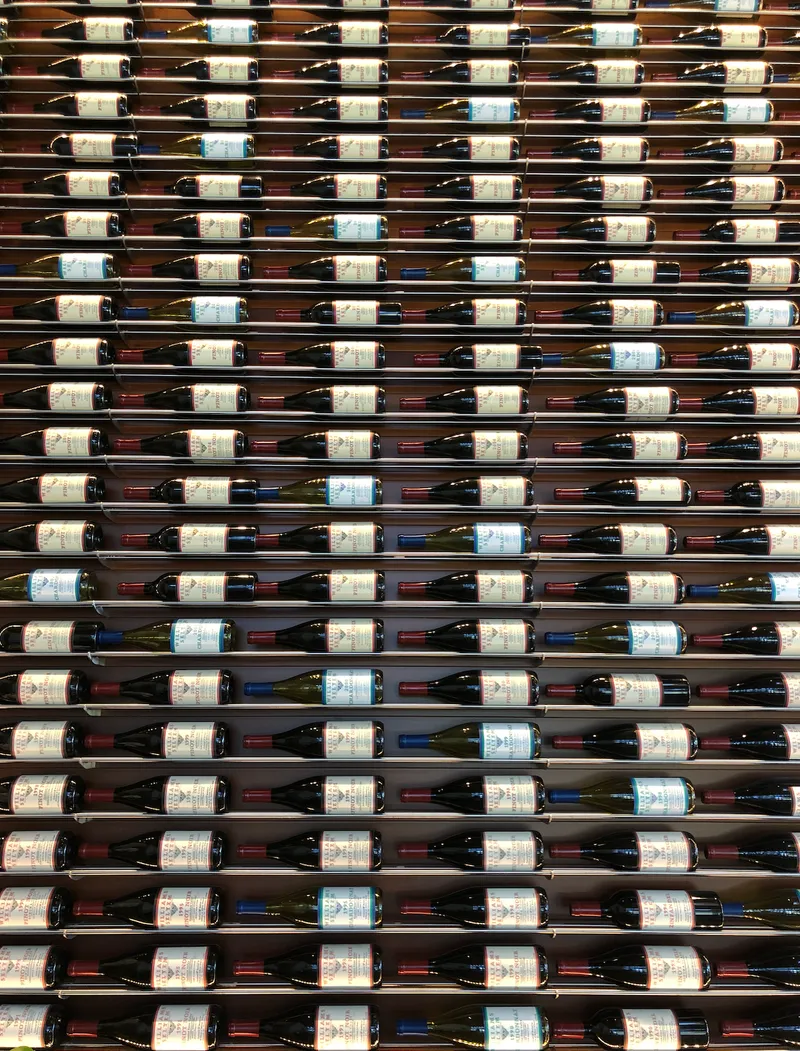
Photograph: Williams Selyem Winery
SONOMA
Sonoma County, lying west and slightly south of Napa country, is to Napa what Burgundy is to Bordeaux; that is to say more a question of domaines and farmers than châteaux and gentry. Many of its vineyards are cooled by the Pacific in the western reaches of the sprawling Sonoma Coast AVA. Pinot Noir and Chardonnay are prominent here, and with the Russian River Valley which is further inland and significantly warmer. Beyond Sonoma, the county also features Alexander Valley, known for some fine Cabernet Sauvignon production; and Dry Creek Valley, which benefits from some beautiful old vine Zinfandel, planted originally by Italian settlers gasping for a taste of the old country.
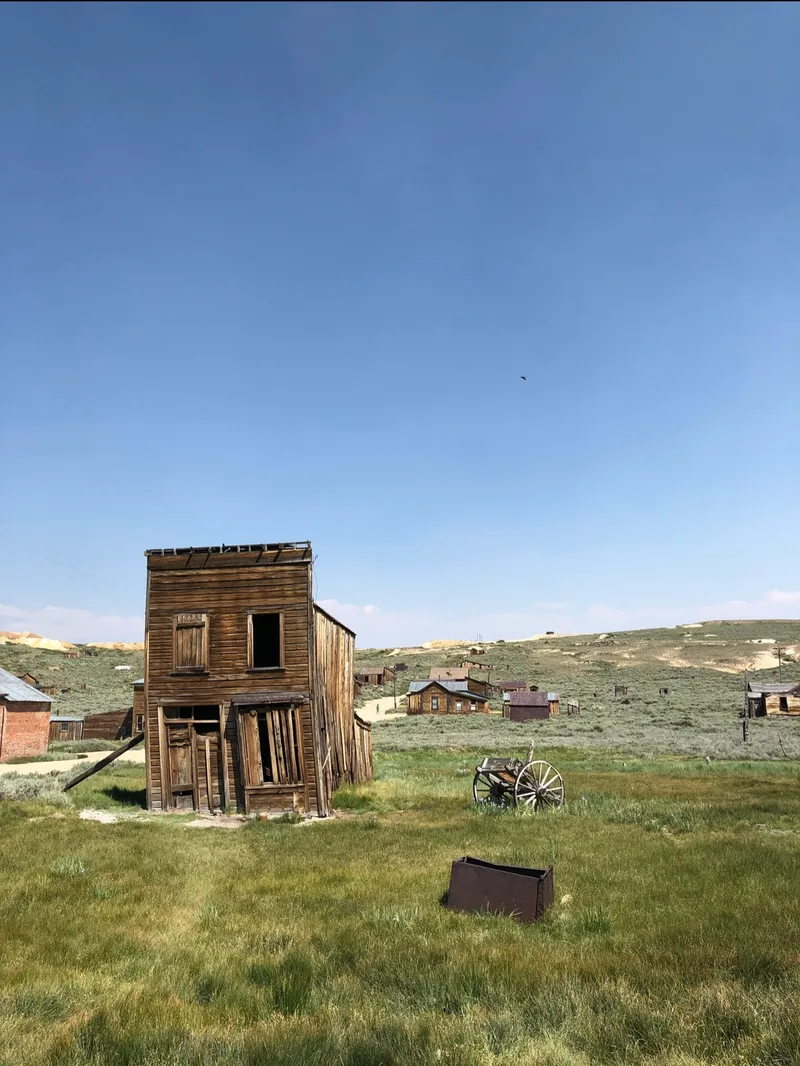
Photograph: Bodie, a ghost town near the Sierra Nevada mountains
SIERRA FOOTHILLS
The region follows the north-western foothills of the Sierra Nevada mountains tracing the boundary between California and Nevada to the east. Vineyards extend across the 160 mile length of the mountains, at altitudes ranging from 300-900m, with the enormous breadbasket that is the Central Valley running along the western section.
The Californian Gold Rush, kicked off in 1848, and further popularised by Dylan's evocative Days of 49, brought boom serving thirsty prospectors, bust and as seen elsewhere doom with the advent of Prohibition. Doom didn't mean death thankfully as much of the old vines were simply abandoned to be rediscovered by more enterprising types eager to unearth history's vinuous rather than metallurgical bounty. These include the 140 year old Grandpere Vineyard in the superbly named Shenandoah Valley.
MENDOCINO
California's most northern grape growing area, which with investment from 1970s onwards, saw an appreciable increase in production quality (including organic techniques). Like the magic trick in The Prestige, it is made up of 3 parts: Ukiah Valley, Redwood Valley and cool climate Anderson Valley, the latter of which has built a reputation for making refined sparkling wines, Rieslings and Gewürztraminer.
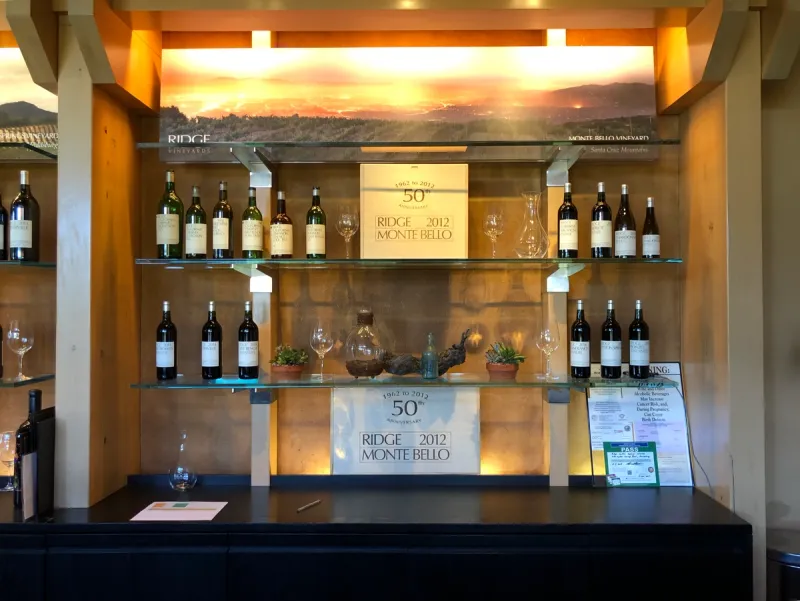
Photograph: Ridge Vineyards
SANTA CRUZ & MONTEREY
Several of California's most unique and characterful wines are produced in the area sandwiched between San Francisco to the north, the Central Coast to south and the Pacific to the west. Wineries including the justly revered Ridge Vineyards including the legendary Monte Bello (Cabernet Sauvignon and Merlot) and Chalone Vineyards (Pinot Noir).
SANTA BARBARA
Santa Barbara County sits in a roughly rectangular area at the southern end of California's Central Coast region. It has been producing wine since the last 18th century, and more recently is the location of Alexander Payne's wine/buddy movie, Sideways, which featured the wine variety killing line, 'I'm drinking any fucking Merlot' shouted by Pinot Noir hardliner and main character played by the brilliant Paul Giamatti.
The county is bordered by the Pacific to west and south, which means the topography varies between river valleys and coastal hills, and the terroirs similarly supports a broad range of varieties.
Despite its southern latitude, the nearby Pacific provides a cooling influence, including Sta. Rita Hills where coastal wind and fog counters even the midsummer heat. Inland from here, Santa Ynez Valley is considerably warmer, especially within the easterly Happy Canyon which has an almost Napa-ish propensity for richer Bordeaux blend reds. To the north, Santa Maria Valley is flatter, cooler and home to huge vineyards including Bien Nacido Vineyard. Santa Ynez Valley, Santa Maria Valley, Happy Canyon of Santa Barbara, Ballard Canyon, Los Olivos District and Sta. Rita Hills all enjoy AVA status.
San Luis Obispo and Santa Barbara Central Coast represent California's biggest AVA, extending 250 miles south of Monterey to east of Santa Barbara. In early missionary times, San Luis Obispo was said to produce the state's finest wines – perhaps in part due to lack of alternatives. Despite the large commercial vineyards churning it out, there's been a revival notably in Paso Robles, a hot, inland enclave planted with Rhône varietals suited to the dry heat. South of San Luis Obispo is the cooler Edna Valley AVA and Arroyo Grande.
PACIFIC NORTHWEST
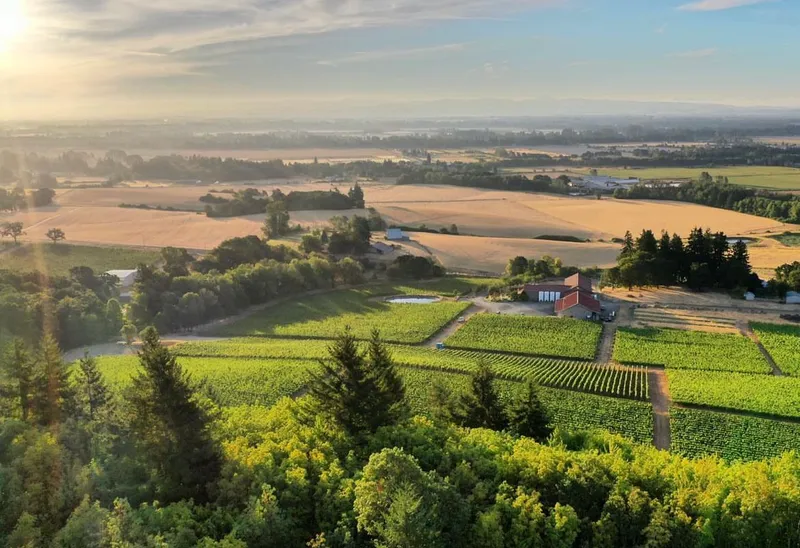
The states of Oregon and Washington in the Pacific Northwest are renowned for their winemaking.
Oregon's main winemaking region, Willamette Valley, is justly proud of its Pinot Noir, which bears comparison due to its cooler climate with its counterpart in Burgundy. Indeed, several Burgundians domaines have invested in the region, including Domaine Méo Camuzet's Jean-Nicolas with his venture, Nicholas Jay and also négociant house, Maison Drouhin.
Washington State, immediately north of Oregon, has a relatively recent love affair with winemaking but with 20,000 hectares/50,000 acres under vine, 900+ wineries, 350+ wine growers, it's second only to California in terms of volume and variety.
OREGON
Red: Pinot Noir
White: Pinot Gris, Chardonnay
As there is a rivalry between Napa and Sonoma, the same applies to California and smaller sibling, Oregon. The comparison with Burgundy is valid, with cooler, more damp climate where smaller, domaine style operations predominate. Willamette Valley is the main winemaking area, producing Pinot Noirs (which accounts for 60% of state vineyard area) and increasingly Chardonnays which more punch their weight on the international stage, parking local rivalry for a moment. To the north, Walla Walla Valley and Columbia Gorge are overshadowed by the western vineyards running 80 miles along the Pacific coast, among which Dundee Hills, Eola-Amity Hills and Ribbon Ridge are noteworthy smaller appellations.
WASHINGTON
Red: Cabernet Sauvignon, Merlot, Syrah
White: Chardonnay, Riesling
The Cascade mountains cuts the region in two, creating a 'rain shadow' which blocks precipitation to the Columbia River Basin to the east where rainfall averages only 200mm per year. This means irrigation from the Columbia, Snake, Yakimi and Walla Walla rivers is a necessity, as well as a moderating factor for the heat of the summer and cold of the winter (overnight temperatures can drop below -20°C). Washington's latitude of 46°N produces c. 16 hours of sunlight per day during the summer, which together with its cool evenings contribute to wines of ripeness and acidity.
The area grows many different crops and grapes varieties, though there's an emphasis on Bordeaux blend reds and more recently Riesling thanks to Chateau Ste Michelle, an important producer to the region.
Soils are a mix of gravel, sand, silt and volcanic soils.
WANDERLUST-Y?
Curious about America beyond the obvious labels? Unlock the diversity of meticulously selected American wines through our subscription options. It's equivalent to a well informed local guiding you to the place loved by locals (and unknown to tourists).
For more vinous globe-trotting, check out our France, Italy, Germany, Spain and Austria guides.