
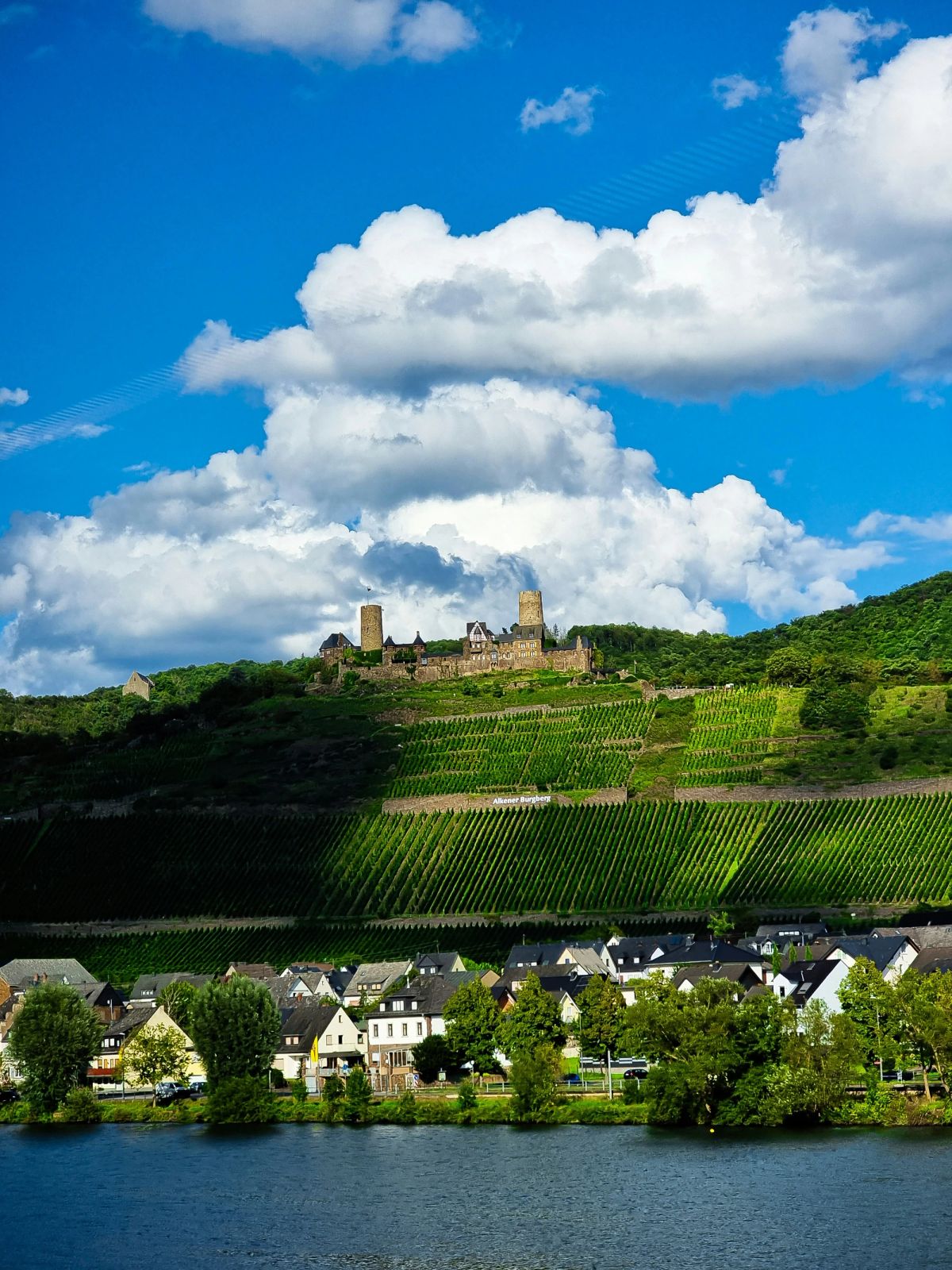
German Wine Regions | The Complete Guide
Germany’s wine world revolves around two iconic varieties: riesling and spätburgunder (pinot noir). Beyond these, the country’s vineyards also yield weissburgunder (pinot blanc), grauburgunder (pinot gris), silvaner, müller-thurgau, and even the aromatic gewürztraminer. In the reds, dornfelder continues to find fans.
While Germany has long been associated with sweeter wines, the shift towards dry styles has redefined its offerings. Today, a wide range of wines showcases the country’s evolving palate, from crisp whites to elegant reds.
What’s Happening in German Wine?
GROSSES GEWÄCHS: GERMANY’S GRAND CRU WINES
The Grosses Gewächs (GG) label signals wines from Germany’s premier vineyards, championed by the VDP (a key growers’ association). These dry wines, often labelled with the GG insignia, reflect a focus on terroir, rivaling Burgundy and Alsace in complexity and prestige.
SPÄTBURGUNDER: THE RISE OF GERMAN PINOT
Germany’s spätburgunder has gained recognition on the global stage. Enhanced vineyard practices and minimal oak usage have elevated the quality of these reds, allowing them to stand alongside the finest pinot noirs in the world.
THE ALLURE OF LOW ALCOHOL WINES
In regions like Mosel and Nahe, the ability to produce aromatic wines with as little as 7–9% alcohol appeals to health-conscious drinkers. These lighter styles offer vibrant fruit, elegance, and a balance rarely found elsewhere.
CRACKING THE GERMAN WINE LABEL CODE
Deciphering a German wine label can feel like tackling a puzzle, but a few key elements can guide your choices:
• Producer: The grower or estate behind the bottle.
• Origin: The region or vineyard where the grapes were grown.
• Sweetness level: Look for terms like Trocken (dry) or consult sweetness scales to decode residual sugar levels.
• Vintage: The year the grapes were harvested.
NB: German wine labels can be a particular challenge, so learning to decode the sometimes confusing German wine labels will prove useful use of time.
IS GERMAN WINE DRY OR SWEET?
Although Germany is famous for its sweeter rieslings, the majority of its wines today are dry. The Prädikat system categorises wines by ripeness at harvest, ranging from the light and dry Kabinett to the opulent Auslese and intensely sweet Eiswein. Vintage variation can influence sweetness, with warmer years yielding richer wines even at lower classifications.
Dry wines, often labelled Trocken, tend to be higher in alcohol (13% or more) due to fully fermented sugars. By contrast, sweeter rieslings are celebrated for their balance of acidity, lower alcohol, and aromatic complexity.
NB: To fully appreciate German wine's crystalline clarity, it's sensible to pay some thought to selecting the right glass to enhance your German wine experience. Prost!
THE VDP CLASSIFICATION SYSTEM
Germany’s top producers often adhere to the VDP system, which emphasises geography over grape ripeness. The classifications, displayed with the VDP eagle logo, are as follows:
1. Gutswein: Estate wines from authorised grape varieties.
2. Ortswein: Single-village wines offering excellent value.
3. Erste Lage: First-class vineyards producing refined, terroir-driven wines.
4. Grosse Lage: Grand Cru-level sites yielding Germany’s most prestigious wines, including Grosses Gewächs (GG) bottlings.
A tour of Germany’s wine regions
MOSEL-SAAR-RUWER
Renowned for producing ethereal low-alcohol rieslings (7–9%), these wines balance natural sweetness with vibrant acidity. The slate-rich slopes of villages like Piesport, Wehlen, and Bernkastel foster unparalleled elegance and age-worthiness.
Key producers include:
MOSEL
J.J. Prüm weaves light and lace where others build walls. While powerful in their own way, these Rieslings float like dragonflies—delicate, shimmering, ephemeral. Decades reveal their secrets, especially in Wehlener Sonnenuhr and Graacher Himmelreich, where quince, pear, and honey emerge like dawn breaking through mist.
Knebel sends roots deep into the vertiginous Mosel Terrassen. Matthias crafts Rieslings that balance ripeness with razor-sharp acidity—green apple meeting lime’s piercing bite. His single-vineyard Uhlen and Röttgen command £40–50, but his entry-level Riesling, often under £20, performs miracles.
Weiser-Künstler sees Konstantin Weiser and Alexandra Künstler handcraft Middle Mosel poetry. Their meticulous touch yields Rieslings of breathtaking precision, each sip demanding contemplation, every nuance etched in light.
SAAR
Egon Müller owns the soul of Scharzhofberg—this legendary hill births Rieslings of unearthly power and purity. Citrus and green fruit strike like lightning, leaving a mineral echo long after the last drop. Even the memory tingles.
Maximin Grünhaus watches Carl von Schubert unlock three vineyards’ secrets—Abtsberg, Herrenberg, and Bruderberg. Each tells a unique tale through Riesling’s lens, yet all share a savoury, electric core that ages as if time itself bends around them.
PFALZ
Home to some of Germany’s most valuable vineyards, including Forst and Deidesheim, the Pfalz region excels in producing dry, full-bodied wines with spicy undertones and impressive depth.
NAHE
This diverse region is famed for its mineral-rich soils and intriguing aromatic wines. With rounded palates and long finishes, producers here continue to set new standards.
Key producers include:
Dönnhoff pushed Nahe into modern prominence with wines of exquisite balance and precision. Rieslings like Hermannshöhle and Dellchen play tricks with time—seeming weighty before taking flight, or ethereal before revealing an iron core.
Kruger-Rumpf sees Georg Rumpf writing new chapters where Nahe meets Rheinhessen. His bold expansion and replanting speak of ambition; his thrilling Rieslings prove its worth. Pittersberg and Burgberg explode with flavour and electric acidity.
Schlossgut Diel sees Caroline Diel elevate an already-great history. She teases subtle differences from three neighbouring Dorsheim vineyards—Goldloch, Burgberg, and Pittermännchen—each yielding wines united by a deep, rich stoniness.
RHEINGAU
Once a hub of church-owned vineyards, the Rheingau boasts steep, south-facing slopes along the Rhine. These sites yield structured, racy rieslings that are invigorating and long-lived.
Key producers include:
Leitz channels Josef’s boundless energy into bottles that hum with their own force. His marketing genius (Eins Zwei Dry at £15 converts newcomers daily) is matched by his dedication to the lower Rheingau’s legacy. His greatest works—Berg Roseneck, Rosengarten, Kaisersteinfels—stand among Germany’s finest.
Eva Fricke trained under Leitz but found her own voice. Her Rieslings dance with effortless grace, mineral cores wrapped in silk. From regional wines through village (Kiedrich, Lorch, Lorch Wisperwind) to single vineyards (Seligmacher, Krone, Schlossberg), each step reveals new depths.
Robert Weil stands among Germany’s most celebrated estates. Their wines marry richness with purity, achieving citrus concentration without heaviness. Kiedrich Gräfenberg leads their single-vineyard charge.
RHEINHESSEN
As Germany’s largest wine region, Rheinhessen benefits from diverse soils and microclimates. Villages like Nierstein and Westhofen are home to some of the country’s top Grand Cru vineyards.
Key producers include:
Wittmann leads Rheinhessen’s Riesling renaissance. Philipp Wittmann balances the region’s inherent power with masterful restraint. His wines walk the tightrope of austerity yet remain fresh, even thirst-quenching. All wines run dry; start with the village Westhofener Riesling.
Dreissigacker carries Jochen’s zeal in every bottle. Trained under Klaus Peter Keller, he bet everything on Riesling when fashion turned elsewhere. Now his breathtakingly racy, piercing wines prove his vision. Seek single vineyards Morstein and Kirchspiel, but his village Bechtheimer Riesling steals hearts at £25.
Keller ignited Rheinhessen’s modern era. Since taking the reins in 2001, he has crafted Rieslings of unprecedented density and power that somehow retain laser precision—like Formula One cars cornering at full throttle. Kirchspiel and Hubacker particularly dazzle.
FINAL THOUGHTS
Germany’s wine evolution showcases a fascinating mix of tradition and innovation. From the steely elegance of Mosel rieslings to the bold complexity of Rheinhessen reds, there’s a world of discovery waiting in every bottle. Whether you’re drawn to the allure of dry Grosses Gewächs or the balance of sweeter Kabinetts, German wine has never been more exciting—or accessible.
THIRSTY FOR MORE?
Ready to discover why sommeliers are obsessed with German wines? Experience Germany's finest with our carefully curated selections. Consider it as having a knowledgeable film buff mate who'll safely steer you to the Oppenheimers and their ilk while avoiding Jaws 3.
To continue the adventure on site, check out our France, Italy, USA, Spain and Austria guides.