
PROLOGUE – TASTE: THE INTIMATE INTELLIGENCE
Taste is the only sense that demands ingestion. Not observation, but incorporation. To taste is to allow the world in. It bypasses the eye's detachment and the ear's echo. Instead, we swallow. We accept. We metabolise. It doesn't get more intimate.
In Ratatouille, a single bite sends Anton Ego straight back to childhood. With Proust, a madeleine dipped in tea unlocks a buried memory and an entire world with it. These are not exaggerations. They are case studies in the profound, time-collapsing power of taste.
I remember my first encounter with proper Burgundy - a Gevrey-Chambertin a mate brought to dinner. The first sip belied complexity worthy of an incomprehensible Chris Nolan plotline. That's when I realised taste isn't just about what's in the glass.
Taste Intelligence Exercise #1: Taste a piece of dark chocolate with your nose closed. Then breathe in. That's not taste. That's memory reassembling.
1. EVOLUTIONARY FOUNDATIONS: WHY WE TASTE
Taste began as a survival tool. Sweetness signalled energy. Bitterness poison. Sourness suggested spoilage. Salt registered the need for hydration. Umami marked protein-rich nourishment. These were not indulgences. They were evolutionary filters that still shape how we discover our wine preferences today.
Some people inherit genetic differences in their taste receptors. Take the PROP gene: those who taste it intensely are more likely to be 'supertasters,' often repelled by bitterness in brassicas or red wine tannins. Others glide through life less sensitive, enjoying bolder, bigger flavours.
Taste, then, is not democratic. It is personal, embodied, and inherited - yet shaped, challenged and expanded by culture and curiosity.
2. THE CELLULAR ORCHESTRA: MECHANICS OF PERCEPTION
Taste buds stand sentinel on the tongue. Within each, receptor cells respond to specific compounds - sugars, acids, salts, amino acids, alkaloids. These are interpreted by protein structures like GPCRs, including the T1R and T2R families. But the five basic tastes - sweet, salty, sour, bitter, umami - are only the beginning.
Scientists now believe taste goes beyond sweet, salty, sour, bitter and umami. The tongue can detect fat, register fizz, and may even respond to calcium or metal. It does not work alone; it behaves like a small orchestra, blending signals into a shifting, layered production.
Yet even this complexity is misleading. For what we experience as "flavour" is not created in the mouth at all.
This is where it gets really interesting, and it's something that completely changed how I think about wine tasting.
3. BEYOND THE TONGUE: THE MULTISENSORY REALITY
Flavour is an illusion. Or rather, it is an orchestration of inputs - retronasal olfaction (smelling from the back of the throat), trigeminal nerve stimulation (the burn of chilli, the chill of mint), visual cues, environmental context, and cultural expectations.
The Oxford University psychologist Professor Charles Spence has spent decades decoding this reality. He explores how shape, colour, sound, and story rewire our sensory experience, particularly when matching wine and food. In his own words:
"I was drawn into wine psychology because any question you are interested in around food and drink perception, or marketing, it turns out there is always ten times more research in the world of wine than for baked beans, tea, coffee, chocolate, you name it. Everything from the impact of glassware, naming, pricing, packaging, labelling, storytelling. Figure out what has been done for wine and you have the state-of-the-art approach. I was recently in a vineyard 90 minutes from Barcelona. And so interesting to see how the winemaker first took us around his plot, then set up a table under the shade of an olive tree, before showing his wines. It is the Provencal Rosé Paradox all over."
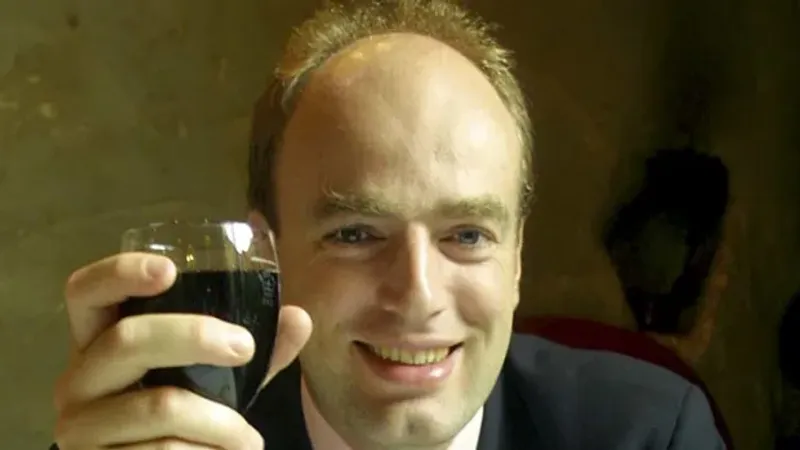
Image credit: Sydney Morning Herald
In other words, the wine under the olive tree tastes different from the same bottle poured at an office in Reading. Because it is different. Context is not a garnish. It is the stage on which flavour performs (Decanter's Lauren Eads explores this in her demystifiying food and wine pairing piece).
Taste Intelligence Exercise #2: Drink coffee with your nose pinched. Then release. The difference you experience is not added aroma. It is flavour returning from exile.
4. THE TASTING BRAIN: NEUROLOGICAL INTEGRATION
Inside the brain, the gustatory cortex receives signals from the tongue. But flavour, as lived, is assembled further downstream - in the orbitofrontal cortex (OFC), the insula, and the hippocampus. It is in these neural backrooms that memory, expectation, and emotional valence reshape the raw input.
If you expect a wine to be expensive, it will taste better. If it comes in a heavier bottle, you will perceive it as higher quality. These aren't tricks. They are how the brain constructs experience. A placebo is still has the potential to heal. A story is still a structure for understanding.
Taste is not just sensation. It is interpretation.
5. THE TASTE BIOGRAPHY: CULTURE, MEMORY & IDENTITY
What you grew up eating changes how you taste. This is not merely preference, but perceptual calibration. A child raised on fermented herring or pickled mango tastes the world differnetly from one raised on toast and Robinson's squash.
Culture trains the palate through cuisines that pair naturally with different wine styles. But so too does memory. The hippocampus, central to recall, is tightly wired to the gustatory and olfactory systems. This is why taste and smell can pull us through time with astonishing speed and specificity.
Flavour is also biography. It is encoded ritual. Whether it is kokumi in Japan, bitterness in Britain, or the earthy funk of Ethiopian injera, taste tells stories about who we are, where we come from, and what we've survived.
Taste Intelligence Exercise #3: Taste Stilton in a white-tablecloth restaurant. Then imagine eating the same cheese in a hospital corridor. The flavour shifts. Not because the compound has changed. Because you have.
6. HOW WINE REGIONS CHANNEL TASTE PSYCHOLOGY
Wine regions understand taste psychology better than almost any other agricultural sector. They don't just grow grapes; they craft perceptual experiences that leverage everything we know about how the brain constructs flavour.
Take Burgundy's approach to terroir. The Côte d'Or doesn't just produce different wines from different vineyards - it creates a psychological architecture where microscopic differences in soil and slope are amplified into massive differences in perceived quality and price. This exploitation of expectation bias is why Burgundy wines often taste more complex than their chemical composition suggests.
Champagne has mastered auditory psychology. The pop of the cork, the whisper of bubbles, even the weight of the bottle - these elements prime your brain for celebration before you've tasted a drop. Sound literally changes how Champagne tastes, making it seem more festive and premium.
German wine regions play a different game entirely. They've weaponised confusion. The complexity of German wine labels - with their Spätlese, Auslese, and seemingly impenetrable classifications - creates what psychologists call the "effort justification effect." The harder you work to understand a wine, the more you value it. This cognitive bias is why German Rieslings often taste more sophisticated to serious wine drinkers.
Provence exploits seasonal psychology. Rosé from this region tastes different in summer not just because of serving temperature, but because your brain associates the pale colour with holiday memories, warm weather, and kicking back. It's the Provençal Rosé Paradox at work - the same wine literally tastes better when you're relaxed and expecting pleasure.
But here's the thing - and this is where it gets really clever - these aren't accidents. Wine regions have been unconsciously experimenting with psychological priming for centuries. They've stumbled onto techniques through tradition and practice that modern neuroscience is only just beginning to understand.
7. COMMON WINE TASTING MYTHS DEBUNKED
The wine world is littered with myths that contradict everything science tells us about how taste actually works. Let's dismantle the biggest ones:
Myth 1: "Do you need an expensive palate to taste good wine?"
Reality: Your genetic makeup matters more than your wallet. Supertasters - roughly 25% of the population - experience flavours more intensely regardless of income. They often prefer simpler wines because complexity can be overwhelming. The science shows that palate sensitivity has nothing to do with wine knowledge or budget.
Myth 2: "Do wine scores reflect objective quality?"
Reality: Wine scores can reflect the scorer's cultural background and personal taste genetics. A wine rated 95 points by Robert Parker might score 85 from a taster with different PROP sensitivity or cultural food memories. The scoring system creates an illusion of certainty – though aggregated scores from several experienced critics mitigates this meaningfully.
Myth 3: "Do older wines always taste better?"
Reality: Age changes wine, but not always for the better. Most wines are designed to be consumed within 2-5 years of release. The belief that older equals better is a cognitive bias rooted in scarcity psychology, not flavour science.
Myth 4: "Is swirling and sniffing is just pretentious theatre?"
Reality: These rituals serve real neurological functions. Swirling increases surface area, releasing more volatile compounds. Sniffing activates your retronasal olfactory system, which processes 80% of what we experience as "taste." These techniques aren't pretentious - they're scientifically proven methods for enhancing flavour perception.
Myth 5: "Are wine and food pairing rules absolute?"
Reality: Pairing "rules" ignore individual genetic differences and cultural conditioning. The classic "red wine with red meat" guideline crumbles when you consider that someone with high tannin sensitivity might prefer a light white with their steak.
8. HOW WINE SUBSCRIPTIONS LEVERAGE TASTE SCIENCE
Modern wine subscriptions aren't just convenient - they're sophisticated applications of taste science designed to accelerate palate development and overcome psychological barriers that prevent wine exploration.
“There are two kinds of taste in the appreciation of imaginative literature: the taste for emotions of surprise and the taste for emotions of recognition.” Henry James
Wine as with literature, I think novelty is underrated. Your brain pays more attention to new experiences. Research shows that neural plasticity increases when we encounter unfamiliar flavours. Wine subscriptions exploit this by introducing regular novelty, forcing your palate to build new neural pathways with each delivery.
Simple choice: The abundance of choice in wine shops creates decision fatigue, often leading people to stick with familiar bottles. Subscriptions eliminate this cognitive load, allowing you to focus energy on tasting rather than choosing. This psychological freed attention dramatically improves learning and memory formation.
In context: The best wine subscriptions provide tasting notes and backstories that give your brain frameworks for organising new flavour experiences. This contextual information doesn't just educate - it literally changes how wine tastes by priming your perceptual system.
Learning together: Many subscriptions include tasting notes from other members or video content from experts. This social dimension activates mirror neurons and social learning pathways, making flavour memories more robust and accessible.
Commitment matters: Paying for a subscription creates psychological commitment that makes you more likely to actually taste thoughtfully rather than drink passively. This financial skin in the game translates to more engaged tasting and faster palate development.
9. BEST WINES FOR DEVELOPING YOUR PALATE
If you want to train your taste intelligence, not all wines are created equal. The most educational bottles offer clear flavour contrasts and showcase specific aspects of winemaking or terroir. Here's your curriculum:
For Understanding Acidity: Start with Sauvignon Blanc from Sancerre versus New Zealand. The French version shows mineral-driven acidity; the Kiwi style demonstrates fruit-forward acidity. This comparison teaches you how climate and winemaking philosophy shape acidity perception.
For Understanding Tannin Structure: Compare young Barolo with aged Burgundy. The Italian wine demonstrates aggressive, structural tannins; the French wine shows how time can soften and integrate tannins into a seamless whole.
For Experiencing Terroir: Taste three different Rieslings: one from Alsace, one from Germany, and one from Australia. Same grape, radically different expressions of place. The Alsatian version often shows power and spice; the German demonstrates delicacy and minerality; the Australian brings tropical fruit intensity.
For Gauging Oak Influence: Compare an unoaked Chardonnay (like Chablis) with a heavily oaked version (like many California Chardonnays). This stark contrast teaches you to identify wood flavours and understand how oak integration affects wine structure.
For Sensitivity to Sweetness: Work through a progression: dry Champagne, off-dry Riesling, late-harvest Chenin Blanc, Port. Each level teaches your palate to detect increasingly subtle sweetness levels and understand how sugar interacts with acidity.
For Mastering Regional Styles: Choose one grape variety and taste it from three different wine regions. Pinot Noir from Burgundy, Oregon, and Central Otago will teach you more about terroir influence than any textbook.
From my experience working with our members, I've noticed that people progress fastest when they focus on one comparison at a time rather than trying to understand everything at once. If this is something you'd like to explore for yourself, let us know, we're always looking for new ways to help people get more out of wine.
10. ADVANCED TASTE TRAINING EXERCISES
Beyond casual wine tasting lies deliberate practice. These exercises train specific aspects of flavour perception with scientific precision:
Exercise 1: Threshold Training
Dilute wines with water in specific ratios (10%, 30%) to train your palate to detect subtle flavour differences. This sharpens sensitivity and teaches you to identify when wines are diluted or lack concentration.
Exercise 2: Blind Varietal Recognition
Taste five different grape varieties blind, focusing only on structure rather than flavour. Pinot Noir typically shows light body and soft tannins; Cabernet Sauvignon demonstrates full body and firm tannins. Train your palate to recognise these structural signatures.
Exercise 3: Temperature Sensitivity Training
Taste the same wine at different temperatures: cellar temperature (12°C), cool (16°C), and room temperature (20°C). This exercise teaches you how temperature affects perception of different flavour compounds.
Exercise 4: Oxidation Detection
Open a bottle of wine and taste it immediately, then after 2 hours, 4 hours, and 24 hours. Learn to identify how oxidation changes flavour profile and when a wine has "gone off."
Exercise 5: Food Pairing Mechanics
Taste a tannic red wine before and after eating dark chocolate, aged cheese, or fatty meat. Notice how the food changes your perception of the wine's tannins and acidity.
(This is probably obvious, but worth saying - these exercises work best when you approach them systematically rather than randomly. I learned this after years of meandering tasting).
11. TECHNOLOGICAL FRONTIERS: THE FUTURE OF TASTE
Technology is inching towards decoding, and even simulating, flavour. AI models can now predict flavour compatibility. Digital scent devices are in development. Genetic testing can identify predispositions to bitterness or coriander aversion.
But none of these will replace attention. Because what matters is not simply what you are tasting, but how - and with whom, and where, and why.
Soundscapes are already being trialled in restaurants to deepen flavour. Music changes mouthfeel. The right playlist can nudge a good bottle into greatness - something that these techniques, when properly understood, can elevate any wine tasting experience.
Virtual reality wine tastings are emerging, where digital environments transport tasters to vineyards while they drink. Early studies suggest these immersive experiences genuinely change flavour perception by providing contextual cues that the brain incorporates into taste construction (more gimmick at this stage in my view).
12. FREQUENTLY ASKED QUESTIONS
Q: How long does it take to develop a sophisticated wine palate?
A: From what I've seen, meaningful improvement occurs within 3-6 months of regular, focused tasting. However, true expertise - the ability to identify grape varieties, regions, and vintages blind - typically requires 2-3 years of deliberate practice.
Q: Can you improve your palate if you're not a "supertaster"?
A: Absolutely. While genetics influence sensitivity, technique and knowledge can dramatically improve anyone's tasting ability.
Q: Do women really have better palates than men?
A: Studies show women are more likely to be supertasters (35% vs 15% of men), but this doesn't automatically translate to superior wine tasting ability.
Q: Should I spit or swallow when wine tasting?
A: Spitting allows you to taste more wines without alcohol impairment affecting your judgment. However, swallowing provides the complete flavour experience, including the finish.
Q: How many wines can I meaningfully taste in one session?
A: Palate fatigue typically sets in after 6-8 wines, though this varies by individual and wine style.
Q: Is expensive wine actually better, or is it psychological?
A: Both. Price influences perception (the brain genuinely tastes expensive wine as better), but expensive wines also typically demonstrate more complexity, better balance, and superior craftsmanship.
EPILOGUE – TASTE INTELLIGENCE
To taste well is to pay attention. To remember. To return. This is not indulgence. It is intelligence. An intelligence not housed in IQ or databases, but in the body, in culture, in memory. In care.
True taste is not about having preferences. It is about presence. Not merely asking, "Do I like this?" but, "What is this telling me?" - a question that becomes central as you develop genuine wine expertise.
The glass in your hand contains more than fermented grape juice. It holds geography, weather, tradition, and time. To taste it fully requires not just a palate, but presence. Not just knowledge, but openness to what it's telling you.
This is the smart palate at work. Not judging, but listening. Not consuming, but conversing. Not just tasting wine, but understanding how taste itself works - and why that understanding transforms every glass from simple refreshment into a complex conversation between your biology, psychology, and the culture that shaped both the wine and you.
The science of taste reveals wine appreciation as neither snobbery nor mere pleasure, taken to its (un)reasonable extreme, as a form of applied neuroscience. Every sip is an experiment. Every bottle is a question about how perception works, how memory functions, how context shapes reality.
In the end, developing your palate isn't really about wine at all. It's about becoming more present, more curious, more alive to the world entering your body with every taste.
About the Authors
Charles Spence is Professor of Experimental Psychology at Oxford University and the world's leading authority on multisensory taste perception. His research demonstrates how context – music, lighting, company, atmosphere – changes everything we taste. Author of Gastrophysics, he advises Michelin-starred restaurants and global brands on sensory design. For Taste Decoded, he reveals how wine taste is constructed by environment, not just the bottle.
Benedict Johnson is the founder of Ourglass, a London-based taste platform dedicated to helping people become confident wine lovers. He writes on the economics of flavour and the psychology of choice, and curates the Taste Decoded series, which brings together sommeliers, communicators, academics and creatives to decode what "great" actually tastes like.