
ALSACE WINE PRODUCERS
From Clos Sainte Hune to biodynamic pioneers. 20+ domaines defining Alsace's terroir-driven wines.
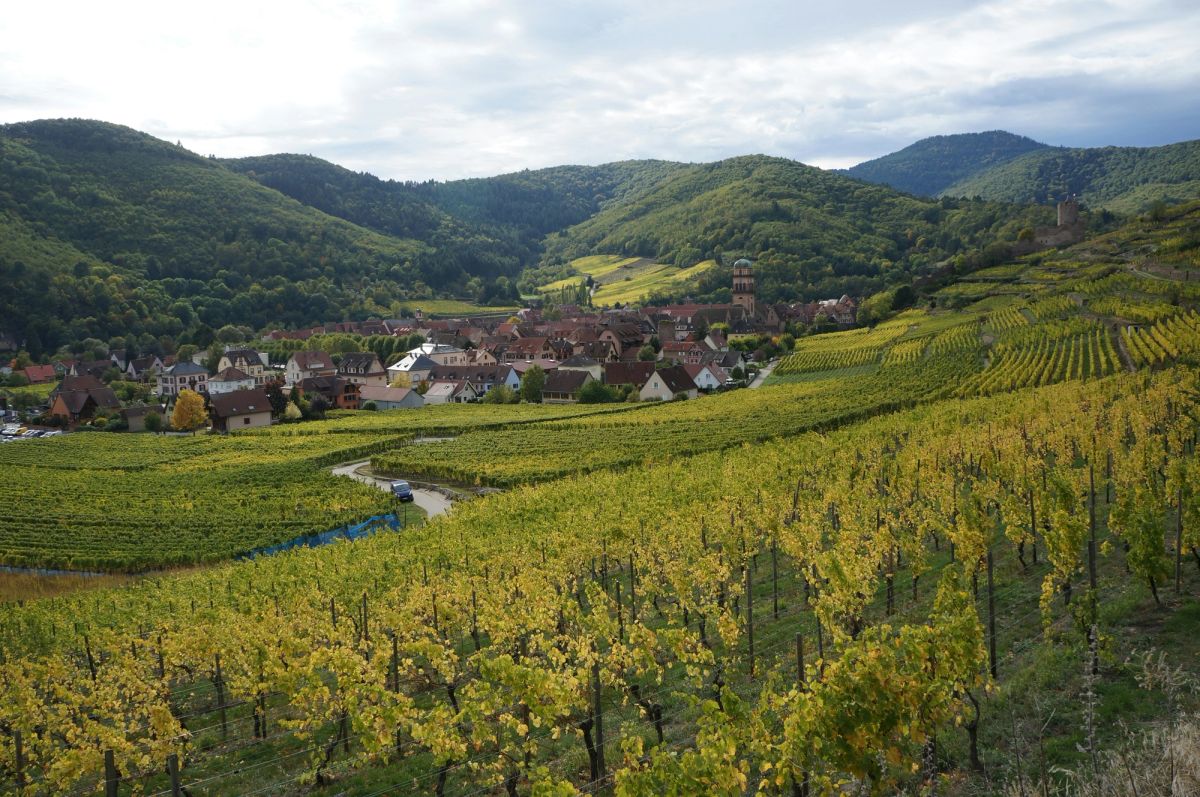
Alsace occupies a unique place in French wine. Shielded by the Vosges mountains, it has a semi-continental climate that emphasises ripeness and purity in white grapes. The wines are labelled by grape variety, but the real story is terroir: 51 Grand Cru sites, each with distinct geology, from granite to limestone to volcanic rock.
Over recent decades, the best producers have moved decisively away from the richer, sweeter styles that once dominated export markets. Today's Alsace is defined by dry, mineral, age-worthy whites that can rival the best of Burgundy in both depth and longevity. Biodynamics has taken hold with unusual intensity, helped by the region's relatively dry conditions.
What follows is not a ranking. It is a geographic grouping of the domaines whose wines repay serious attention.
NORTH ALSACE
Maison Trimbach
Ribeauvillé | Alsace | Traditional
Founded in 1626, Trimbach is one of Alsace's reference points for dry, structured Riesling built for the cellar. Fermentations are taken to completion, élevage is patient, and the house style values line, grip and longevity over charm. Now in its thirteenth generation.
Clos Sainte Hune, a 1.67-hectare monopole within Rosacker Grand Cru, is the calling card: intensely mineral Riesling that develops over decades, produced in tiny quantities by modern standards. Cuvée Frédéric Emile (from Geisberg and Osterberg) gives a more accessible entry to the Trimbach idiom while keeping the same dry, serious posture.
Domaine Hugel
Riquewihr | Alsace | Traditional
Hugel is a foundational Alsace name: classically proportioned wines, built to age, and defined more by balance than by fashion. The family has been making wine since 1639, now in its twelfth generation. The range makes sense as a ladder, from crisp, varietal clarity through to the historic late-harvest categories the family helped shape.
At the top, Jubilee bottlings represent the estate's more serious selections, with a house preference for restraint and slow-burning complexity rather than overt sweetness or obvious winemaking.
Domaine Bott-Geyl
Beblenheim | Alsace | Certified Biodynamic
Bott-Geyl is a modern reference for depth with poise: wines that lean textural and layered without losing definition. Grand Cru holdings anchor the range, but even village wines tend to show a deliberate, composed shape rather than quick fruit.
Look for the way Pinot Gris and Riesling carry weight here without heaviness, with a chalky undertow that makes the richer varieties feel quietly disciplined.
Domaine Marcel Deiss
Bergheim | Alsace | Certified Biodynamic
Deiss is Alsace's great terroir evangelist. The signature is complantation (field blends), where varieties are planted, harvested and fermented together so that site becomes the headline and grape becomes supporting cast.
Some Grand Cru sites, most notably Altenberg de Bergheim, have a long tradition of blended expression, and the regulations explicitly acknowledge that these assemblages can speak terroir with unusual clarity. Expect layered aromatics and a sense of "place-first" architecture, especially in the top bottlings.
CENTRAL ALSACE
Domaine Weinbach
Kientzheim | Alsace | Certified Biodynamic
Weinbach is one of Alsace's most expressive estates, balancing intensity with an almost weightless perfume. The spiritual centre is the Clos des Capucins, with Grand Cru holdings across Schlossberg, Furstentum, Mambourg and Marckrain that give the range serious altitude.
Riesling can be crystalline and long, Gewürztraminer can be expansive without becoming cloying, and the overall feel is of power held on a tight rein.
Domaine Paul Blanck
Kientzheim | Alsace | Certified Organic
Blanck is a quietly important name for breadth with integrity: a large range, but with plenty of wines that still feel site-led rather than "made". Grand Cru holdings include Furstentum, Schlossberg, Sommerberg and Mambourg.
It's a great address when you want to explore across varieties and crus without losing seriousness.
Domaine Albert Boxler
Niedermorschwihr | Alsace | Traditional
Boxler is the postcard made real: impressively steep granite slopes, obsessively farmed, producing Rieslings with tension, minerality and slow-releasing complexity. The focus is Grand Cru Sommerberg and Brand.
This is one of the clearest "site translators" in Alsace, and the wines reward patience more than immediate charm.
Domaine Albert Mann
Wettolsheim | Alsace | Certified Biodynamic
Albert Mann is a benchmark for full-spectrum Alsace. The whites have drive and precision, and the best cuvées manage to be broad in the mouth yet firm at the edges. Holdings span five Grand Crus including Furstentum, Schlossberg, Hengst, Steingrubler and Pfersigberg.
Increasingly, the Pinot Noir work is part of the story too, especially when you want an Alsace red that feels genuinely serious rather than merely "good for the region".
Domaine Josmeyer
Wintzenheim | Alsace | Certified Organic
Josmeyer makes wines that feel lifted and clean, with elegance over force. The range is consistent, and the best bottlings translate site without relying on oak or extraction. Grand Cru holdings include Hengst and Brand.
A great pick for drinkers who like Alsace to feel bright, dry and quietly complex.
Domaine Christian Binner
Ammerschwihr | Alsace | Certified Biodynamic
Binner is one of the region's most talked-about addresses for vivid, expressive wines, often with a more experimental edge. The family has farmed here since 1770, but the current generation has pushed into natural wine territory with minimal intervention and extended maceration work.
If you want an Alsace producer whose wines feel alive, textured and sometimes deliberately unconventional, this is the lane.
Domaine Zind-Humbrecht
Turckheim | Alsace | Certified Biodynamic
A flagship estate with a deep historical lineage and a strong terroir lens, biodynamic since the late 1990s. Zind-Humbrecht's range is a map of Alsace: from dry, structured whites through to wines where a touch of residual sugar is used as balance rather than sweetness.
Holdings span multiple Grand Crus including Rangen in Thann, a volcanic site (not granite) producing wines with ferrous intensity and an almost smoky, elemental drive. Brand, Hengst, Goldert and Clos Saint Urbain round out the portfolio.
The domaine's sweetness index system (1-5) on back labels helps navigate residual sugar levels.
Domaine Schoffit
Colmar | Alsace | Traditional
Schoffit is a strong reference for precision and seriousness, including powerful wines from Alsace's more dramatic terroirs. Holdings include Grand Cru Rangen, the volcanic site in Thann producing some of the region's most intense wines.
A good producer to include when you want to show that Alsace can do both dry authority and high-end sweetness without losing identity.
SOUTH ALSACE
Domaine Marc Kreydenweiss
Andlau | Alsace | Certified Biodynamic
Kreydenweiss is a key name for southern Alsace definition: wines that feel shaped by geology, with a calm, stony structure underneath the fruit. Grand Cru holdings include Kastelberg (schist), Wiebelsberg (sandstone) and Moenchberg (marl and sandstone).
The style generally favours clarity and line over opulence. The domaine also produces wines in the Rhône's Costières de Nîmes.
Domaine Ostertag
Epfig | Alsace | Certified Biodynamic
Ostertag is one of the region's most personal interpreters: precise, expressive, often emotionally described but technically serious. André Ostertag trained in Burgundy and brings that sensibility to his work.
Riesling can feel etched and vibrant, Pinot family wines can have a Burgundian sensibility, and the best bottles feel like they are built around energy rather than weight. Grand Cru Muenchberg is a particular highlight.
Domaine Julien Meyer
Nothalten | Alsace | Certified Organic
A smaller address worth knowing for purity and directness. Patrick Meyer (despite the domaine name) farms around 10 hectares organically, with a focus on expressing terroir through minimal intervention.
If you want an Alsace producer whose wines feel unforced and transparent, Meyer belongs on the list.
Domaine Valentin Zusslin
Orschwihr | Alsace | Certified Biodynamic
Zusslin is a strong southern reference for mineral precision and clean, focused whites. The family has farmed here since 1691, with current generation siblings Marie and Jean-Paul continuing biodynamic conversion begun by their father.
The wines tend to feel cool and exact, even in warmer years. Grand Cru Pfingstberg is a highlight, and the Crémant d'Alsace can be excellent too.
Domaine Muré
Rouffach | Alsace | Certified Organic
Muré brings a warmer, more generous southern register, often with real success in Pinot Noir. The family has farmed Clos Saint Landelin, a monopole within Grand Cru Vorbourg, since 1650.
The top wines show breadth, but with enough underlying structure to stay honest rather than simply lush. The Crémant d'Alsace is consistently strong.
EXPLORE MORE
Other Regions
Burgundy Producers | Jura & Savoie Producers | Rhône, Provence & Corsica | Bordeaux Producers | Loire Producers | Beaujolais Guide
Alsace Reading
Develop Your Palate
How Taste Works | How to Develop Your Palate | Taste Decoded Series
Ready to explore these producers? Join Ourglass for curated selections from the Alsace's finest domaines.