
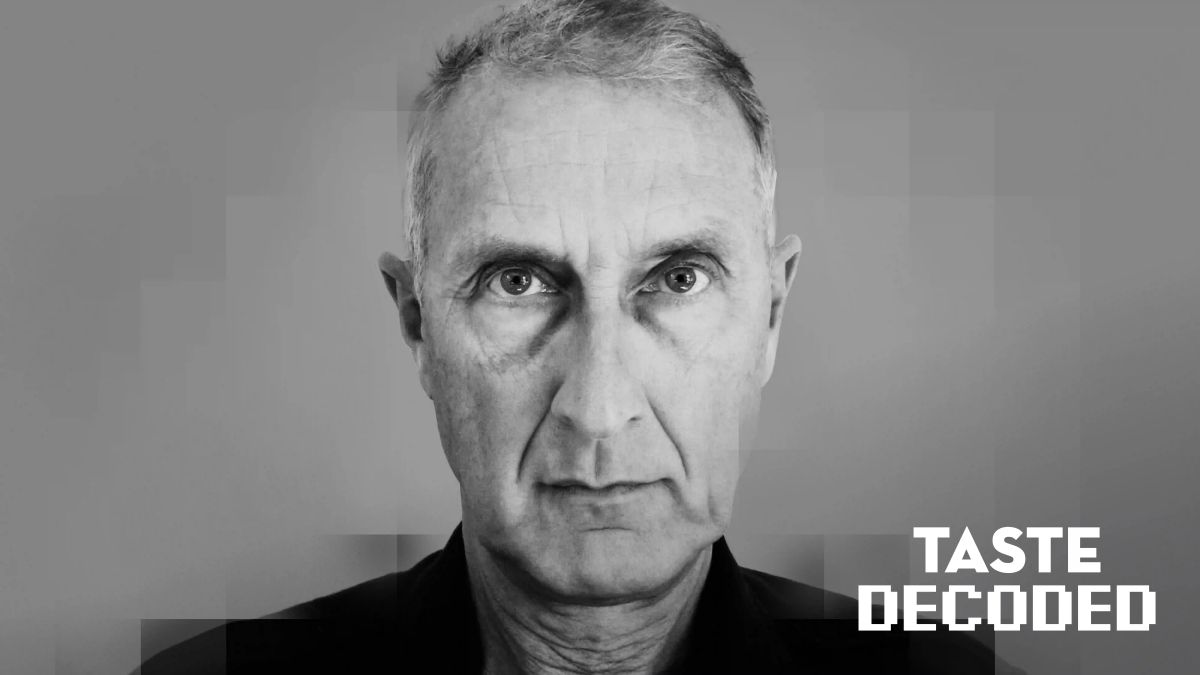
My father did not simply teach art. He lived it.
He studied at Portsmouth, Central Saint Martins, the Slade. He spent decades working with sculpture and photography shown internationally. And when he eventually taught at Shrewsbury, he taught in the way only a working artist can. Through first principles. Through clarity. Through the act of dismantling what you think you already understand.
His first job with new students was never to fill them with technique. It was to empty them out.
"You have to unlearn everything you think you know before you can learn," he would tell them.
Students arrived wanting to be told what was good. He made them ask a different question: what is this actually doing. What is happening here. What are you responding to. Until you strip away the reflex answers, you cannot see the real ones.
Picasso said something similar. "It took me years to paint like Raphael, but a lifetime to paint like a child." Mastery, in other words, is not accumulation. It is a long return to first principles. Not knowing more, but seeing more clearly.
Jon King's story runs similarly. From Sevenoaks to Leeds to the sweat of CBGBs, from post-punk manifestos to Sicilian Chardonnay, his education in taste was never about learning the right answers. It was about stripping out the wrong questions.
Watch the full conversation with Jon King, or read on.
SHOCK TASTE
King arrived at Sevenoaks School as an outsider. A working-class kid from a nearby village who happened to ace an IQ test at eleven, he found himself inside one of the oldest schools in England, founded in 1432.
The art department had a higher budget than Leeds University Fine Art. There were kilns, silk screens, photographic studios. Oil paints were free. And crucially, there was a record player.
"When I was eleven, I was exposed for the first time to music you never heard on the radio. Bob Dylan. Highway 61 Revisited. The Velvet Underground. I was just so thrilled by it. I did not know this was possible."
The lesson was not the content itself. It was the shock. When something jolts you awake, interrupting your default settings. When you are confronted with the unfamiliar and must decide what it means.
He did not like Dylan because someone told him Dylan was important. He liked Dylan because Dylan was different. A puzzle he had never encountered before.
This marked the beginning.
ART SCHOOL AS GRAMMAR
King went to Leeds to study fine art under Lawrence Gowing, the world authority on Vermeer and Cézanne. But the real education happened in the margins.
He and Kevin Lycett from the Mekons took over the film society. He saw four, sometimes five films a week. He went to gigs for nothing at Leeds Refectory, an A-list venue where Led Zeppelin and Bob Marley played to 900 people. He sat in a back room of the Fenton pub with members of Gang of Four, the Mekons, Scritti Politti, Delta Five, Cabaret Voltaire and Marc Almond.
These were not seminars. They were collisions. A cluster of people learning by doing, absorbing influences, discovering limits by breaking them.
"The art college thing allowed that to happen. You could do very little if you wanted. But what it actually taught you was how to think. You set constraints for yourself. You create your own grammar."
This is the heart of art school education. It does not teach you to express yourself. It teaches you to structure your thinking so expression becomes possible. Creativity is not the absence of rules. It is the deliberate construction of rules that free you to work.
"If you try to do something different, you have to set up a vocabulary and rules for it. You end up with a grammatical approach to being creative. You say: these are the rules. And if you have really good musicians who can work within those rules, then you can make something."
Creativity, in this view, is not freedom. It is discipline. It is the constraint you impose on yourself before you begin. Freedom of a tight brief.
This insight that underpins how taste actually works. Perception is not passive reception. It is active construction.
THE DISCIPLINE OF SUBTRACTION
Gang of Four became famous for what they refused to do.
No guitar solos. No love songs. No ornament. Riffs that never changed. Lyrics assembled from fragments, overheard conversations, the texture of everyday speech.
"We were playing pool in Los Angeles with these two redneck truck drivers. They kept saying things like, 'I move from one place to the next. I hope they keep down the price of gas.' I wrote it all down. A lot of those lyrics ended up on the second album."
This was not irony for its own sake. It was a method. If you know everything, King says, you end up knowing nothing. Technique without constraint becomes habit. Virtuosity becomes wallpaper.
He points to the difference between Ingres and Cézanne. Ingres could paint fabric and skin so perfectly you could not see the brushstrokes. But who changed the conversation. Cézanne. And Cézanne could never have painted like Ingres even if he tried.
"Was Robert Johnson the greatest guitarist in the world. No. But was what he did among the most important music of the last 150 years. Yes."
The lesson holds everywhere. Impact is not polish. Originality is not complexity. Clarity emerges when you know what to subtract.
WINE ENTERS THE STAGE
King did not grow up with wine. His parents did not drink at all. His first glass came at sixteen, in a French restaurant on a road trip with a friend whose father worked at the Sunday Times.
"It was like drinking nectar. I had never tasted anything like it. It was like a curtain opening."
Later, on tour with Gang of Four, drinking became a practical question. Two shows a night. Forty gigs in thirty days. Beer and spirits made you bloated, slow, rough. So they changed the rider.
"We said: we do not want any of that stuff. We would rather have six bottles of really nice wine. Only imported beer. No spirits whatsoever."
Eventually they stopped trusting promoters. "Just give us the money and we will bring our own." They would walk into a wine store in San Diego with a trolley and choose for the next three shows.
The wines were mostly Italian reds. Montepulciano d'Abruzzo. Piemontese bottles. Syrah for its spice and edge. Burgundy when someone else was paying. The logic was the same instinct that governs everything King does: set constraints, pay attention, plough your own furrow.
The real epiphany came in Sicily. The promoter had a relationship with a local vineyard called Planeta. The band were given a tour, then lunch with the owner.
"The Planeta Chardonnay was some of the most amazing wine I have ever had. We went back and bought a case to take with us. It was a work of art."
King is not a wine expert. Nor does he aspire to be. But he applies the same method to drinking as to creating. Set constraints. Know the occasion. Pay attention. Do not drink on autopilot.
"I do not see what is wrong with being poncy about it," he says. "If you have a nose and a sensibility, it is a great wonder that these fruits can end up tasting so incredibly different."
This is the argument Rory Sutherland makes about the wine sweet spot. Value is not about price. It is about attention. The right wine for the right moment, chosen with care.
TO TASTE IS TO THINK
King's career resists easy summary. Post-punk icon. Ad man. Expert witness in a major copyright trial. But the thread is consistent. He treats every discipline as a question of attention.
What is this doing. What am I reacting to. What happens if I change the rules.
That is the art school method. And it applies more broadly.
Most people drink with a school mindset. Is this correct. Is this what I am supposed to like. Do I have the right opinion.
The art school mindset asks different questions. What is actually happening in this glass. What am I noticing. If I stay with it a moment longer, what else appears.
Perception is not passive. It is constructed through attention, memory and expectation.
Picasso spent a lifetime learning to see like a child. My father spent years helping students unlearn what they thought they knew so they could finally begin to see. His emphasis was always the same. Strip things back to first principles. Pay attention. Do not accept the first thought as truth. Let the work tell you what it is doing.
Jon King wrote a rulebook for a band that refused to play by the usual rules. Then he applied the same thinking to everything else. Taste, in this sense, is not a list of prescribed pleasures. It is a way of paying attention to both the object and the person experiencing it, in other words you.
The next time you pick up a glass, do not ask whether you like it. Ask what is it doing. It might start something.
MORE FROM TASTE DECODED
How Taste Works: The Science of Flavour and Memory
The Wine Sweet Spot with Rory Sutherland
Tim Hayward: The Art of Not Writing
Context Effect: How Setting Shapes What You Taste
ABOUT THE AUTHORS
Jon King is the singer, songwriter and art-director founding member of Gang of Four, the post-punk band widely recognised as shaping the evolution of rock and pop culture. In 2025 he published his memoir To Hell With Poverty! A Class Act: Inside the Gang of Four (Constable).
Benedict Johnson is the founder of Ourglass, a London-based taste platform dedicated to helping people become confident wine lovers. He writes on everything to do with wine, and curates Taste Decoded, which brings together experts to decode what great actually tastes like.