
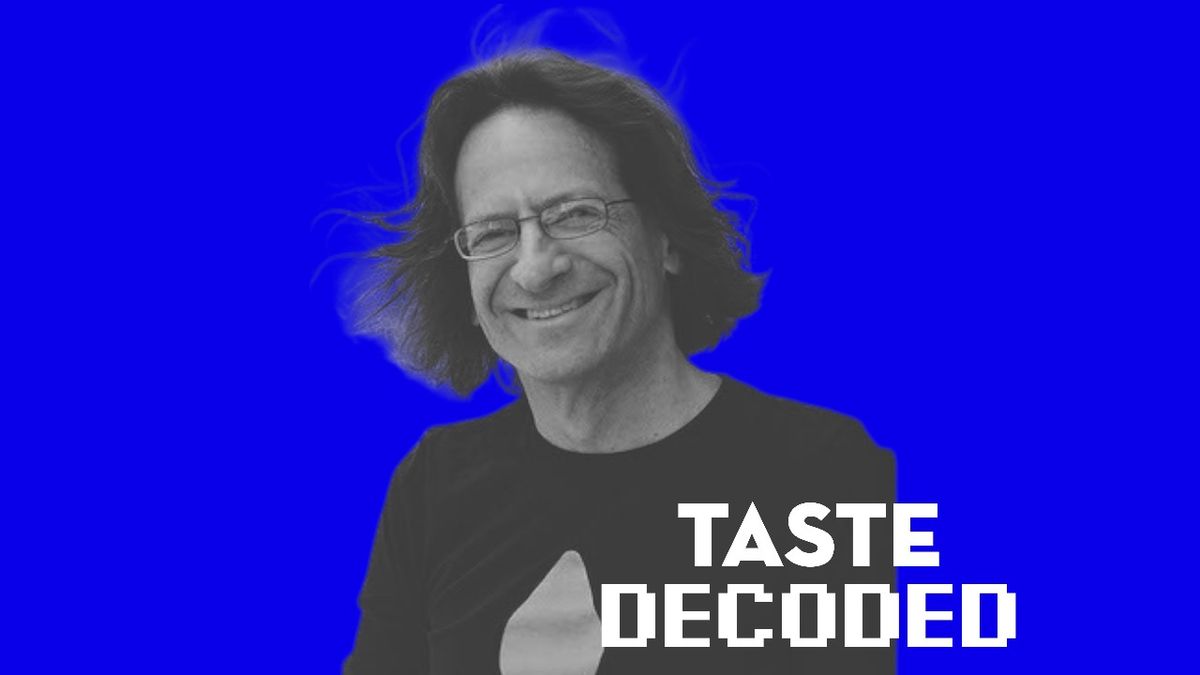
Anthony Rose on judgment, feedback, and why the best founders are just the right side of irrational
Anthony Rose built the BBC iPlayer. Then he built SeedLegals, the platform now used by a huge share of early stage UK startups for their funding rounds. A 160 person company. Thousands of founders. Millions in deal flow.
We met at Noble Rot a few years ago. Afternoon light through the front window, the quiet clatter of wine service, a bottle of something interesting already open. He came expecting a pitch deck. I chose wine. It was unusual, he says. But he still has fond memories.
This is a conversation about startups and investment. But it is also about how expertise travels. When pattern recognition helps. When it blinds you. And why the sommelier question is the same as the boardroom question.
THE LIMITS OF EXPERTISE
Rose divides his knowledge into two categories. Things he knows cold. And things he should shut up about.
"When it comes to SEIS fundraising, I am pretty expert. I am not going to find many people who know more about that area than me. So I am confidently going to wade in with advice."
Then there is everything else.
"There are lots of people who talk a lot of rubbish without any basis on Twitter. And I do not want to be one of those. The areas I am not expert on, I shut up. There is a lot of noise in the world. Why add to it?"
But founders do not get that luxury. You are expected to have views on things you do not fully understand. The market. The technology. The regulatory landscape. Your team is looking to you for answers you do not have.
"As a CEO or a leader, people expect you to be wise and knowledgeable on a range of things. And you have to be."
THE JOY OF INADEQUACY
When SeedLegals expanded to the US, Rose found himself in unfamiliar territory. English law and American law are not the same. The fundraising culture is different. The expectations are different.
"Initially you feel quite inadequate. I was on a pitch practice call with US founders and I had no idea. Would I be offering completely the wrong advice?"
But he kept listening.
"You learn that actually the knowledge you have got is 95% or 80% applicable. Then you learn the rest. And then you find quite quickly, if you love learning, that you now know more than others who are local."
The US equivalents of SEIS and EIS. Rose now knows more about them than most American investors you meet.
The outsider who commits to learning can overtake the insider who coasts. Local knowledge is not the same as deep knowledge. And deep knowledge is portable.
"The joy of learning is coming across a domain where you are not an expert. Do you just need to learn enough to get by? Or do you want to become a domain expert?"
THE 98% TRAP
Rose sees thousands of founders. After a while, patterns emerge.
"I meet someone on a call and they are saying, I am raising five million pounds. And I go, awesome. What have you built? And they go, no no, I have just got a PowerPoint."
The mental response is immediate. Dude, it is not going to work. Investors are going to say come back later. Because everyone else raising at a 25 million valuation has traction. Has revenue. Has something to show.
"Probably 98% of the time that conclusion is going to be correct."
But here is the problem.
"Maybe this is a breakout founder. Maybe they were the CTO at OpenAI. You have to be careful for that 2%."
Rose compares it to medicine. Most of the time, the doctor is right to prescribe aspirin and send you home. But 2% of the time, it is bubonic plague. And if you treat plague with aspirin, they will be dead in the morning.
The cost of missing the 2% is higher than the cost of being wrong in the 98%. That asymmetry is the whole game.
"It leads to favouring well established patterns. Which can nudge you toward the familiar and away from outsiders. Diverse founders. Female founders. So you have to be super cautious when jumping to conclusions."
You stick to Rioja and Marlborough Sauvignon Blanc and never have a bad night. But you also never have a revelation.
THE FEEDBACK PARADOX
Rose gives feedback the South African way. Direct. Unvarnished. Useful.
"If you come to me for feedback and I go, yeah, it looks great, it was a completely useless call. If I say this does not work and that is wrong and by the way I have no idea what your messaging is, boy, you need to get new graphics. That is useful."
But what interests him is not the feedback itself. It is how people receive it.
Founders get advice from everywhere. Investors. Customers. Team members. Friends. If you do everything everyone tells you, you will change direction every two minutes. If you reject all feedback, you will probably build something nobody wants.
"The short answer is if you do everything that somebody says, that is probably not good. Life should not be just more than a sponge."
But the opposite is also fatal.
"If you are cranky and argumentative, you are not investible. Because you can have the same fights with your investors and customers and product managers. And you are never going to get anywhere."
The skill is filtering. Knowing which feedback to absorb. Which to file. Which to ignore entirely.
"If the person is belligerent, they are going to be difficult to work with. If they go thank you wise one, we completely changed our website as a result, now you are feeling a bit guilty. You break it, you bought it."
What do you listen to? What do you push through? The right type of stubborn. The right type of pliable.
THE RATIONAL SIDE OF IRRATIONAL
Rose has seen enough founders to know what investors are actually looking for. It is not the spreadsheet. It is not the market size. It is the person.
"I think many of them are first glance impressions of the founder."
What does that impression need to convey?
"You want a founder who is just the rational side of irrationally exuberant."
The founder who leads you on a journey. Who makes you believe they are going to change the world. You do not know if they will. But you trust them to figure it out. To find water in the desert. To pivot when the path closes.
"But it is not so crazy that they are going to go on this journey where you are going to run out of water and die in the middle of the desert."
Americans do this well, Rose observes. Brits do it less well. The English instinct is modesty. Undersell and overdeliver. But in fundraising, that instinct can work against you.
"Yes yes, we are working on a new nuclear reactor, with English modesty. And you underrate them."
Enough confidence to inspire. Not so much that you trigger scepticism. Enough humility to listen. Not so much that you seem uncertain.
THE SOMMELIER PROBLEM
Near the end of our conversation, Rose makes an unexpected connection.
"You go out with a group of people for dinner and the sommelier comes by with the wine menu and says, what would you like?"
You cannot say you have no idea. But you also cannot perform expertise you do not have.
"You cannot go, the Chateauneuf is very variable, I will take the 87, because everyone knows you are a ponce."
You have to navigate publicly in an area you are not fully confident in. Make a decision with imperfect knowledge. Project enough authority that people follow you. But not so much that you look ridiculous when it turns out to be corked.
The real purchase is not Chateauneuf. It is avoidance of looking clueless. You are not choosing wine. You are choosing a version of yourself to perform for the table.
"If only there was an app to help you. That might also be a good answer."
This is the founder problem. The investor problem. The leadership problem. Decisions under uncertainty. Judgment without complete information. The willingness to be wrong in public.
And it is the wine problem too. Every bottle is a bet. Every recommendation is a risk. The question is not whether you will sometimes be wrong. The question is whether you can be wrong gracefully. Learn from it. Adjust. And make the next call with slightly better judgment.
TO JUDGE IS TO RISK
The 98% is easy. The 2% is where judgment lives.
The next time you pick up a glass, do not ask whether it matches what you expected. Ask whether your expectations were worth matching.
MORE FROM TASTE DECODED
How Taste Works: The Science of Flavour and Memory
The Wine Sweet Spot with Rory Sutherland
(Un)learn Taste with Gang of Four's Jon King
Context Effect: How Setting Shapes What You Taste
Tim Hayward: The Art of Not Writing
Context Effect: How Setting Shapes What You Taste
Watch the Taste Decoded series
ABOUT THE AUTHORS
Benedict Johnson is the founder of Ourglass, a London-based taste platform dedicated to helping people become confident wine lovers. He writes on everything to do with wine, and curates the Taste Decoded series, which brings together sommeliers, communicators, academics and creatives to decode what great actually tastes like.
Anthony Rose is the founder and CEO of SeedLegals, the platform used by a large share of early stage UK startups for funding rounds, share schemes and legal documents. Previously he was controller of vision and online media at the BBC, where he led the team that built BBC iPlayer. He has founded multiple technology companies and advises thousands of founders each year on fundraising, growth and investment readiness.