
Argentinian Wine Regions | The Complete Guide
INTRODUCTION
Argentina's wines are among the best in the world, and its reputation is gathering pace as quickly as Maradona running at the English back four—unstoppable, distinctive, and impossible to ignore. I've been following Argentine wines for over a decade now, and the evolution has been nothing short of remarkable. Bottles that once offered straightforward fruit-bomb pleasure have transformed into complex, terroir-driven expressions that can stand proudly alongside the finest wines from anywhere in the world.
As the eighth largest country in the world, Argentina encompasses a multitude of different climates and varying landscapes, from subtropical northern reaches to the windswept deserts of Patagonia in the south. Thanks to its bountiful terrain—meandering its way towards the towering Andes—Argentina has become one of the top six wine producers in the world by volume and has been producing "juice" (as the locals sometimes call it) for more than 400 years.
What makes Argentine wine so distinctive? It's largely about altitude. While European vineyards typically sit at 200-500 metres above sea level, many Argentine vines grow at a dizzying 1,000-3,000 metres elevation. This extreme altitude creates a magical combination of intense sunlight, dramatic day-night temperature swings, and naturally stressed vines that together produce wines of remarkable concentration, freshness, and character.
A BRIEF HISTORY OF ARGENTINE WINE
Argentine viticulture has Spanish roots dating back to the mid-16th century, when conquistadors and missionaries brought vines to the region. The first documented vineyard was planted in 1557 by Jesuit missionaries, who needed wine for religious ceremonies. For centuries, Argentine wine remained a fairly rustic, local affair, with production focused on quantity rather than quality.
The 19th century brought significant change, as European immigrants—particularly from Italy and Spain—flooded into Argentina, bringing their winemaking traditions with them. Among the grape varieties they introduced was Malbec, a relatively minor Bordeaux grape that would later become Argentina's vinous calling card. The arrival of the railway connecting Mendoza to Buenos Aires further spurred development by making it economically viable to transport wine to population centres.
The 20th century brought challenges, including political instability that hampered investment. Until the 1990s, Argentine wine remained largely domestic in focus, with an emphasis on quantity over quality. Many vineyards were planted on fertile flatlands, producing prodigious yields of rather dilute wine, much of it consumed from large glass demijohns called damajuanas.
The real revolution began in the 1990s, when Argentina's wine industry modernised rapidly. Producers began planting at higher elevations, investing in temperature-controlled stainless steel fermentation, and reducing yields for quality. The arrival of flying winemakers and international investment accelerated this transformation. Suddenly, Argentine wines began receiving international attention for their quality rather than just their value.
I find it fascinating that many of the old-guard producers were initially skeptical about high-altitude vineyards, viewing them as marginal sites where grapes would struggle to ripen. Pioneers like Nicolás Catena Zapata were considered slightly mad for pushing vineyards ever higher up the Andean foothills. History has proven them brilliantly right, of course—those once-marginal sites now produce Argentina's most celebrated wines.
THE MAJOR WINE REGIONS OF ARGENTINA
The four major regions of wine production in Argentina are Salta in the far north, Luján de Cuyo and the Uco Valley in Mendoza province, and Patagonia in the south. Each region's terroir imparts a distinct character to the wines, creating a fascinating spectrum of styles despite often working with the same grape varieties.
SALTA, NORTHERN ARGENTINA
Salta lies at the north of the country and comprises the San Juan and La Rioja regions, which are becoming more recognised areas for wine production globally. When I visited Salta a few years back, I was struck by how different it feels from the rest of Argentina—the indigenous influence is strong here, with many residents of Incan descent, and the cuisine has more in common with Peru than it does with Buenos Aires.
Cafayate, El Arenal, and Los Molinos are key sub-regions of the province and well worth keeping an eye out for on bottle labels. I'm particularly fond of the wines from Cafayate, where the combination of extreme altitude and relatively warmer climate creates wines of remarkable concentration and aromatic intensity.
Salta's Climate and Wine Profiles
Set against the arid Andes, Salta is home to some of the highest-altitude vineyards in the world, where elevation levels can reach as high as 3,111 metres, giving a unique, earthy character to the grapes. To put this in perspective, that's roughly three times the height of Screaming Eagle in Napa Valley or about ten times higher than Château Margaux!
Also known as the capital of the Northwest, the northern province is steeped in history, witnessed in the faces of the indigenous people who are of mostly Incan origin. The landscapes here are otherworldly—multicoloured mountains, giant cacti, and vineyards that appear to touch the clouds.
Salta has a subtropical highland climate, temperate year-round, which lends well to creating intense, rich, and powerful wine flavour profiles. The hotter temperatures allow the grapes to ripen at a faster rate compared to more southerly regions, and this in turn leads to fuller-bodied wines with softer and sweeter flavours, though the altitude ensures they retain sufficient acidity for balance.
The Malbec grape, originating from Cahors in southwest France, is the most planted varietal in Argentina, and the grapes react well to each of the region's micro-climates. The Malbecs from this region hold the complex characteristics you would expect but will be more intense and fruitier than wines from the south. There's often a pronounced floral character to Salta Malbecs that I find particularly appealing—violets and lavender notes that add complexity to the rich fruit core.
But Salta isn't just about Malbec. The region produces what many consider to be Argentina's finest Torrontés, an aromatic white grape unique to Argentina. Grown at these extreme altitudes, Torrontés produces wines with explosive floral aromas (think roses and jasmine) alongside citrus notes, with a texture and acidity that balances the aromatic intensity. I recall tasting a Torrontés from Colomé that smelled sweet but finished bone dry—a captivating combination that makes this grape one of Argentina's most distinctive.
Recommended Wines from the Salta Region
Gaucho features many incredible wines from this region on their wine list, such as the Piatelli Tannat (Bodega El Esteco), a powerful, structured red that showcases this robust French variety's adaptation to high-altitude conditions. The Laborum Torrontés (El Porvenir de Cafayate) brilliantly demonstrates the aromatic intensity and textural balance this grape can achieve in Salta's extreme environment. For a truly special experience, La Linterna Malbec (Bemberg Estate Wines) offers a fascinating high-altitude expression of Argentina's flagship grape, with remarkable complexity and elegance.
Other producers worth seeking out include Colomé (owned by the Hess family from California), whose Altura Maxima comes from what they claim is the world's highest commercial vineyard, and Bodega Tacuil, making extraordinary small-production wines from remote vineyards at over 2,500 metres elevation.
MENDOZA
Slightly further south from Salta lies Mendoza, arguably the most renowned wine-production province of Argentina, and one of the most well-equipped landscapes in the world for a vintner. Responsible for roughly 70% of the country's wine production, Mendoza is the engine room of Argentine wine and home to most of its most celebrated producers.
The province sits in the rain shadow of the Andes, creating an arid, desert-like environment where viticulture would be impossible without irrigation from Andean snowmelt. This controlled water stress, combined with poor, rocky soils and significant elevation, creates ideal conditions for high-quality viticulture.
Mendoza itself contains several distinctive sub-regions, with Luján de Cuyo and the Uco Valley being the most significant for premium wine.
LUJÁN DE CUYO, MENDOZA
Luján de Cuyo, a valley just south of Mendoza City, was the first region in Argentina to be recognised for an appellation. Often called "the cradle of Malbec," this historic region is where Argentina's modern quality wine revolution began. I've always found Luján to offer a perfect middle ground between tradition and innovation—historic estates with modern winemaking, creating wines that offer immediate pleasure but can age gracefully.
Luján de Cuyo's Climate and Wine Profiles
Stretching over 30km between the Andes in the west and the Lunlunta hills in the east with altitudes of 1,000m above sea level, the positioning of Luján de Cuyo creates an intriguing terroir. The drastically cooler temperatures of the night contrast with the intense heat of the day to slow the ripening process and prolong the growing season. During one harvest visit, I recorded a daytime temperature of 35°C (95°F) that dropped to just 12°C (54°F) after sunset—a swing that preserves acidity and aromatic complexity while allowing full phenolic ripeness.
There is little rainfall due to the Andes blocking the clouds, which contributes to creating deliberately stressed vines that grow smaller grapes with more concentrated flavour. The soils here are primarily alluvial—the result of millennia of material washing down from the Andes—with varying compositions of sand, clay, and stone that create subtle variations in wine character even within short distances.
Luján de Cuyo Malbecs tend to be plush and velvety, with ripe black fruit flavours, often a hint of violet, and a chocolatey richness. The tannins are typically soft and integrated, making these wines approachable even when young, though the best examples can age beautifully for a decade or more. There's a generosity to these wines that's immensely appealing, coupled with a structure that prevents them from feeling heavy.
Recommended Wines from Luján de Cuyo
Luján de Cuyo is known for producing excellent Cabernet Sauvignon, Chardonnay and Torrontés, as well as Malbec. Gaucho lists many delicious wines from Luján de Cuyo, such as DV Catena 'Histórico' (Bodega Catena Zapata), a historic blend that pays homage to the region's winemaking traditions while incorporating modern precision. Viña Patricia (Lunlunta) offers a classic expression of Luján terroir through old-vine Malbec, while The Apple Doesn't Fall Far From the Tree showcases Bonarda, Argentina's second most planted red grape, which is experiencing a quality renaissance.
Other standout producers from the region include Achaval-Ferrer, whose single-vineyard Malbecs set new standards for the variety; Pulenta Estate, making elegantly balanced wines from Italian varieties; and Viña Cobos, the project of renowned winemaker Paul Hobbs, producing some of Argentina's most polished and sophisticated wines.
UCO VALLEY, MENDOZA
Just south of Luján de Cuyo, the Uco Valley represents the cutting edge of Argentine winemaking. If Luján is the traditional heart of Mendoza wine, the Uco Valley is its progressive soul—a region where the boundaries of quality and site expression are constantly being pushed. Twenty years ago, much of this area was considered too high and cool for quality viticulture. Today, it's home to many of Argentina's most celebrated and sought-after wines.
Uco Valley's Climate and Wine Profiles
Vineyard altitudes range from 1,100 to a staggering 2,000m above sea level, and while sunny for most of the year, the climate is cool compared to the north. This terroir allows for a longer growing season, which wine producers simply adore for the complexity and balance it brings to their wines.
Important sub-regions to the valley include Tupungato, Tunuyán, and San Carlos, where Syrah and Malbec grape varietals are grown for red wines as well as Chardonnay, Sauvignon Blanc, and Torrontés for white wines. Within these areas, even more specific appellations like Gualtallary, Vista Flores, and Paraje Altamira have emerged as distinctive terroirs producing wines with unique characters.
The Uco Valley is a relative newcomer to the wine production scene, having only started producing significant quantities of wine from the 1990s; before that, the valley was predominantly used for fruit and vegetable cultivation. Sitting in the foothills of the Andes, the soil in this area is a mix of clay and sand, often with significant calcium carbonate (limestone) deposits that contribute mineral complexity to the wines. These soils are great for retaining water and allowing the roots of the grapevines to absorb nutrients while maintaining the stress necessary for quality.
The combination of high altitude, poor soils, and significant day-night temperature variation creates wines that somehow manage to be both intense and fresh—ripe and concentrated from the abundant sunshine, yet vibrant and balanced from the cool nights. Uco Valley Malbecs tend to show more red fruit character (rather than the black fruit typical of Luján), often with floral notes and a distinctive mineral undertone that reflects the complex soils. The structure tends to be firmer than in Luján, with more pronounced acidity and slightly grippier tannins that suggest good ageing potential.
One aspect of the Uco Valley I find particularly fascinating is how quickly producers have moved from broad regional designations to increasingly specific site expressions. Wines that a decade ago would have been simply labelled "Uco Valley" are now identified by sub-region, commune, and even individual parcel—a rapid development of terroir classification that parallels what took centuries in regions like Burgundy.
Recommended Wines from the Uco Valley
White wines are especially good from this region for their freshness, purity, and elegant flavour profiles. Some popular and truly excellent white wines Gaucho offers include Terrazas De Los Andes Chardonnay (Gualtallary), which showcases the mineral tension this high-altitude sub-region can bring to Chardonnay. Susana Balbo Barrel Fermented 'Signature' (Paraje Altamira) demonstrates how judicious oak can complement the fruit purity of the region, while What About Me? Sauvignon Blanc (Bodega Alpasion) offers vibrant, aromatic freshness that reflects the cool nights of the Uco Valley.
Other producers crafting exceptional wines in the Uco Valley include Zuccardi, whose Piedra Infinita from Paraje Altamira is one of Argentina's most profound wines; Catena Zapata, whose Adrianna Vineyard in Gualtallary is often called "the Grand Cru of South America"; and Clos de los Siete, Michel Rolland's ambitious multi-winery project in Vista Flores.
PATAGONIA, SOUTH ARGENTINA
Patagonia is the southernmost wine region of Argentina, with two main wine-growing areas: Río Negro and Neuquén. This feels like yet another Argentina entirely—a stark, windswept landscape that seems an unlikely place for viticulture, yet produces wines of remarkable elegance and purity.
Patagonia's Climate and Wine Profiles
This desert region, covering an area of roughly 300km, provides an unexpectedly great terroir for producing wines in a much lighter style compared to the rest of the country. The cool, moderate climate of the vineyards here extends the length of the growing season and in turn makes the whole ripening process for the grapes slower, allowing the fruits to develop rich character while retaining acidity.
For those who favour more tart and bright flavours and aromas—perhaps those more accustomed to European wine styles—the wines of this region are the perfect pour. Expect more acidity, less sweetness, lighter body, lower alcohol percentage, and a grippier overall tannin profile compared to wines from Mendoza or Salta.
As Patagonia is officially classified as a desert due to its lack of rainfall, viticulture is only possible near the rivers, where run-off from the Andes is used for irrigation. Out of the two wine producing areas, Río Negro is more established, with some vineyards dating back to the early 20th century. Both regions follow more traditional European styles of winemaking due to the starkly different climate in comparison to the rest of the country.
While Malbec is popular all over Argentina, here Pinot Noir is a widely used varietal, producing wines that combine the fruit purity of New World examples with the structure and complexity associated with the Old World. Many white wine grape varieties are grown as they are well-suited to the terroir, including Chardonnay, Sauvignon Blanc, and Semillon, which develops beautiful texture and complexity in these conditions.
I've always found Patagonian wines to offer a fascinating contrast to those from further north. Where Mendoza wines speak of sunshine and power, Patagonian wines whisper of wind and elegance. They're proof of Argentina's remarkable diversity and its capacity to produce world-class wines in a variety of styles.
Recommended Wines from Patagonia
A few excellent wines worth trying from the Gaucho selection include Chacra Chardonnay (Bodega Chacra & Jean Marc Roulot), a collaboration between a Patagonian specialist and a Burgundian master that showcases the region's potential for world-class white wines. Black River Sauvignon Blanc (Humberto Canale) offers vibrant, fresh flavours with a distinctive mineral note from the region's rocky soils, while Soul N Pinot Noir (Bodegas Verum) demonstrates the elegant red fruit and silky textures that make Patagonian Pinot Noir so appealing.
Other notable producers from Patagonia include Bodega Noemia, crafting some of Argentina's most sought-after wines from old-vine Malbec in the Río Negro Valley, and Bodega Chacra, specializing in biodynamic Pinot Noir that rivals good Burgundy for complexity and finesse.
KEY ARGENTINE GRAPE VARIETIES
RED GRAPES
Malbec: Argentina's flagship varietal is unquestionably Malbec. Originally from southwest France, where it was a minor blending grape in Bordeaux and the primary variety in the "black wines" of Cahors, Malbec has found its spiritual home in Argentina. It's well-known for producing award-winning red wines and is often regarded as the signature wine of Argentina.
What makes Argentine Malbec distinctive? It offers a richness of fruity and floral aromas with well-developed complexity and soft tannins that create a dry wine of remarkable approachability. Typical flavours include black cherry, plum, and blackberry, often complemented by violet florals, sweet spice, and sometimes a hint of chocolate or mocha.
Regional variations are becoming increasingly important. Salta Malbecs tend to be intensely aromatic with pronounced floral notes. Luján de Cuyo produces velvety, chocolatey expressions with plush tannins. The Uco Valley creates more structured, mineral-driven styles with vibrant acidity. Patagonian examples show elegant red fruit with bright acidity and fine tannins.
Bonarda: Argentina's second most planted red variety deserves more attention than it receives. Originally from Savoie in France (where it's known as Douce Noire) and also grown in Italy's Piedmont as Charbono, Bonarda produces juicy, fruit-forward wines with soft tannins and moderate acidity. Traditionally used for bulk production, quality-focused Bonarda is now emerging, offering tremendous value and sheer drinking pleasure.
Cabernet Sauvignon: This international variety thrives in Argentina's sunny climate, particularly in Luján de Cuyo and parts of the Uco Valley. Argentine Cabernet typically shows ripe blackcurrant fruit, often with a distinctive minty or eucalyptus note that seems to be a signature of the region. The structure tends to be firmer than Malbec, with more pronounced tannins that benefit from ageing.
Cabernet Franc: A rising star in Argentina, particularly in the cooler sites of the Uco Valley. In these high-altitude vineyards, Cabernet Franc develops intense aromatics of red fruit, flowers, and herbs, with fine tannins and vibrant acidity. Some of the most exciting new wines from Argentina are varietal Cabernet Francs that combine New World fruit purity with Old World structure and complexity.
Pinot Noir: Finding a natural home in the cooler climate of Patagonia, Argentine Pinot Noir offers excellent value compared to equivalent quality from Burgundy, New Zealand, or California. The best examples show pure red fruit (cherry, raspberry), floral notes, and silky textures, with a freshness that makes them extremely versatile with food.
WHITE GRAPES
Torrontés: Argentina's signature white grape is a cross between Muscat of Alexandria and Criolla Chica that exists nowhere else in the world. It produces intensely aromatic wines with pronounced floral notes (roses, jasmine) alongside citrus and stone fruit. The best examples come from Salta, where high altitude creates perfect conditions for this aromatic variety to develop complexity while maintaining freshness.
Chardonnay: Increasingly impressive at higher elevations in the Uco Valley and in Patagonia, Argentine Chardonnay offers excellent value compared to equivalent quality from more established regions. Styles range from unoaked and fruit-driven to more complex, barrel-fermented expressions that can rival good Burgundy at a fraction of the price.
Sauvignon Blanc: While not historically significant in Argentina, Sauvignon Blanc is emerging as a category to watch, particularly from cooler sites in the Uco Valley and Patagonia. The style tends toward the tropical end of the spectrum but with sufficient acidity to maintain freshness and balance.
Semillon: A historical variety experiencing a small renaissance, Semillon was once widely planted in Argentina but fell out of favour. Today, forward-thinking producers are rediscovering old Semillon vineyards and using this versatile grape to create whites of remarkable complexity and ageing potential, particularly in the cooler climate of Patagonia.
TOP ARGENTINE WINE PRODUCERS
While there are hundreds of wineries in Argentina, certain producers stand out for their quality, innovation, and contribution to the country's wine culture. Here are some names to look for, organized by region:
MENDOZA
Catena Zapata: No discussion of quality Argentine wine would be complete without mentioning the Catena family. Dr. Nicolás Catena Zapata was instrumental in Argentina's fine wine revolution, pushing vineyards to ever-higher elevations and focusing on quality when others were still prioritising quantity. Today, his daughter Laura (a biologist who has conducted groundbreaking research on high-altitude viticulture) continues this legacy of innovation.
Luigi Bosca: Family-owned since 1901, Luigi Bosca represents the deep Italian influence on Argentine wine culture. Their DOC Malbec was the first Argentine wine to receive a Denomination of Origin designation, while their Gala collection showcases sophisticated Bordeaux-inspired blends.
Bodega Norton: Founded in 1895 by an English engineer who planted vines brought from France, Norton is one of Mendoza's historic producers. Now owned by the Swarovski family (of crystal fame), the winery produces a range of consistently high-quality wines from five estate vineyards at different elevations.
UCO VALLEY INNOVATORS
Zuccardi: Perhaps no producer better exemplifies the evolution of Argentine wine than Zuccardi. From humble beginnings, this family operation has transformed itself into one of South America's most innovative and quality-focused wineries. Their Piedra Infinita winery in Altamira is a stunning architectural statement designed around the concept of terroir expression.
Bodega Piedra Negra: The Argentine outpost of François Lurton, this winery in the Los Chacayes district of the Uco Valley specializes in high-altitude expressions of both traditional varieties like Malbec and emerging categories like Pinot Gris and Cabernet Franc.
Susana Balbo: Argentina's first female winemaker has built a formidable reputation for elegant, balanced wines that showcase fruit purity and varietal character. Her Signature series demonstrates her masterful touch with oak, which complements rather than dominates the fruit.
SALTA
Bodega Colomé: Owned by the Hess family (of Napa Valley fame), Colomé is home to some of the world's highest vineyards in Salta's Calchaquí Valley. Their Altura Maxima Malbec comes from vines planted at an astonishing 3,111 metres above sea level.
El Porvenir de Cafayate: A family-owned winery in the Cafayate Valley of Salta, producing excellent Torrontés and Malbec that showcases the unique character of this high-altitude northern region.
Bodega El Esteco: Dating back to 1892, this historic estate in Cafayate combines traditional knowledge with modern technology to craft wines that express the distinctive terroir of northern Argentina, including outstanding Torrontés and age-worthy Cabernet Sauvignon.
PATAGONIA
Bodega Chacra: Founded by Piero Incisa della Rocchetta (of the family behind Sassicaia), Chacra focuses on biodynamic Pinot Noir from old vineyards in Patagonia's Río Negro Valley. Recent vintages have included a collaboration with Burgundian legend Jean-Marc Roulot to produce a Chardonnay of remarkable finesse.
Bodega Noemia: Founded by Italian winemaker Countess Noemi Marone Cinzano and Danish winemaker Hans Vinding-Diers, Noemia crafts some of Argentina's most elegant and sought-after wines from old vineyards in the Río Negro Valley.
Humberto Canale: One of Patagonia's oldest wineries, founded in 1909, producing excellent cool-climate expressions of both international varieties like Merlot and Semillon and Argentine specialties like Malbec.
SUSTAINABILITY AND INNOVATION
Argentine wine producers face significant sustainability challenges, particularly regarding water usage. In these arid regions, viticulture is entirely dependent on irrigation, traditionally using water from Andean snowmelt. As climate change reduces this snowpack and increases drought frequency, producers are developing innovative approaches to water conservation.
Drip irrigation has largely replaced flood irrigation, significantly reducing water use. Some forward-thinking producers are experimenting with dry farming once vines are established, forcing roots to penetrate deeply into the soil. Others are exploring drought-resistant rootstocks and grape varieties better adapted to water stress.
Organic and biodynamic viticulture is gaining ground, with producers like Chakana, Colomé, and Bodega Chacra leading the way. The dry, sunny climate actually facilitates organic growing, as disease pressure is minimal compared to more humid wine regions.
Argentina has also emerged as a centre for research on high-altitude viticulture, with the Catena Institute of Wine leading studies on how elevation affects grape development and wine quality. This research is increasingly valuable as climate change pushes vineyards to higher, cooler sites worldwide.
WINE TOURISM
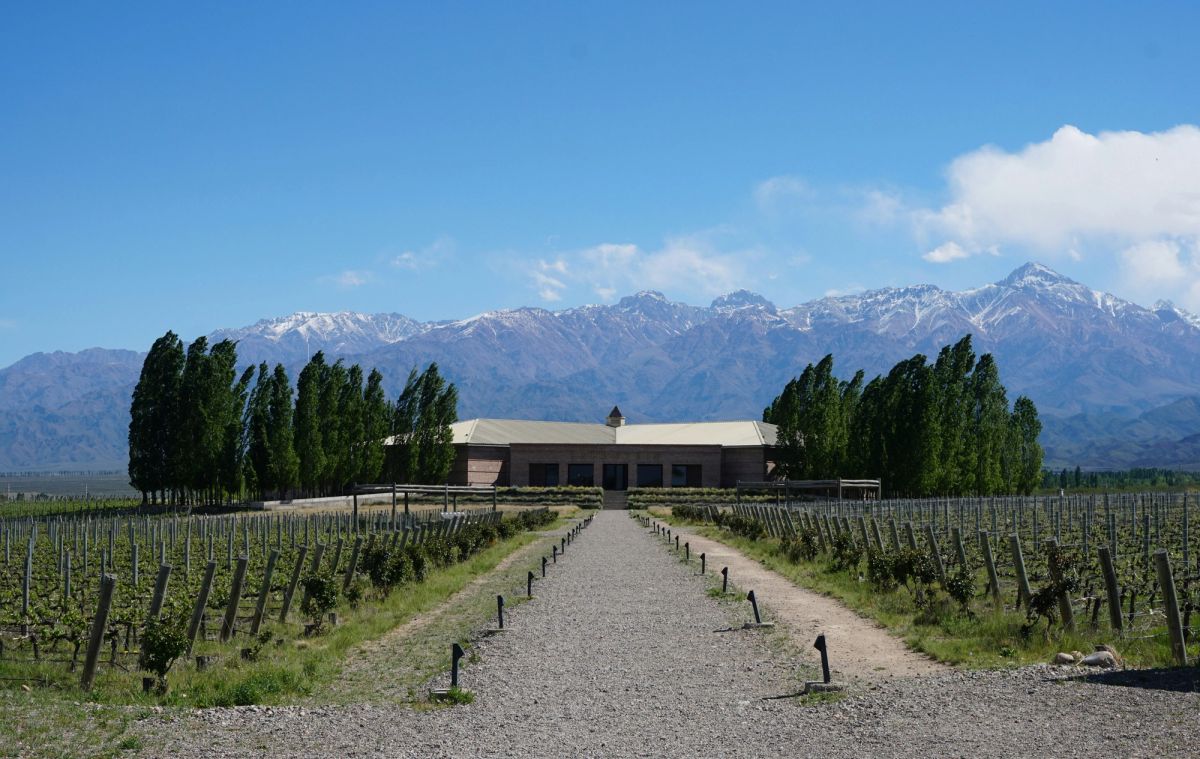
Argentina offers some of the world's most spectacular wine tourism experiences, combining world-class wines with breathtaking landscapes, excellent cuisine, and warm hospitality. Mendoza dominates the wine tourism scene, with hundreds of wineries offering experiences ranging from casual tastings to elaborate paired lunches and luxury accommodations. The backdrop of the snow-capped Andes makes even a simple cellar door visit memorable.
Cuisine is a highlight of any visit to Argentine wine country. Beyond the world-famous beef (often cooked asado-style over open flames), regional specialties include empanadas, locro (a hearty stew), and in Mendoza, dishes showing the Italian influence like pasta with rabbit ragu. Many wineries now offer restaurant experiences that rival the quality of their wines.
For more adventurous wine tourists, the northern region of Salta combines high-altitude vineyards with breathtaking landscapes and strong indigenous cultural influences. The colonial city of Salta makes an excellent base for exploring the wineries of Cafayate and the Calchaquí Valley, with the dramatic drive through polychromatic rock formations a highlight in itself.
Patagonia offers a different but equally compelling wine tourism experience, with the stark beauty of the desert landscape contrasting with the verdant oases of the wine regions. The area around General Roca in the Río Negro Valley contains most of the visitable wineries, while adventure activities like fishing, hiking, and horseback riding can complement the wine experiences.
FREQUENTLY ASKED QUESTIONS ABOUT ARGENTINA'S WINES
What food pairs best with Argentinian wines?
Argentina's robust reds pair brilliantly with chargrilled meats, but discover more inspired perfect food companions for South American styles beyond the obvious steak pairing.
What is the most famous wine in Argentina?
Argentina's flagship varietal is Malbec – it is well-known for producing award-winning Malbec red wines and is often regarded as the signature wine of Argentina. Malbec originates from France but has adapted well to the climate of Argentina and offers a richness of fruity and floral aromas with well-developed complexity and soft tannins that create a dry wine.
What is the wine capital of Argentina?
The region of Mendoza is home to Uco Valley and Lujan de Cuyo, which are both huge producers of wine in Argentina. Mendoza makes up about 70% of the country's total wine production with its 800 wineries.
What wines does Argentina produce?
Argentina is known for a great variety of wines such as Malbec, Chardonnay, Cabernet Sauvignon, Torrontés, and Pinot Noir, among many more. While Malbec dominates the international perception of Argentine wine, the country produces excellent examples of numerous varieties, with regional specialisation increasingly important.
Does Argentina have good red wine?
Argentina is one of the largest producers of red wine in the world and is highly regarded and well-known by wine connoisseurs for its variety of red wines. Beyond the famous Malbec, Argentina produces excellent Cabernet Sauvignon, Bonarda, Cabernet Franc, Syrah, and increasingly impressive Pinot Noir from cooler regions.
FINAL THOUGHTS
Argentine wine represents one of the world's most exciting vinous propositions—combining centuries of tradition with forward-thinking innovation. The extreme altitude of the vineyards creates conditions unlike anywhere else on earth, producing wines that combine intensity and freshness in a way few other regions can match.
What excites me most about Argentine wine today is the increasing focus on terroir expression. Producers are moving beyond simply showcasing grape varieties to expressing the unique character of specific regions, sub-regions, and even individual parcels. This evolution parallels what we've seen in other New World regions but is happening at an accelerated pace, driven by a new generation of winemakers with both global perspective and deep local knowledge.
For wine lovers seeking quality, diversity, and value, Argentina rewards exploration beyond the familiar names and regions. From the aromatic whites of Salta to the elegant Pinot Noirs of Patagonia, from the plush Malbecs of Luján de Cuyo to the mineral-driven reds of the Uco Valley, Argentina offers a remarkably diverse palette of wine styles united by a distinctive sense of place that could come from nowhere else on earth.
EXPLORE MORE?
Ready to taste firsthand? Our subscription members are currently exploring Argentina's high-altitude wines with selections from pioneering producers that rarely reach UK shores. View our subscription options and start your journey (limited spots available).
Also don't miss our Australia, South Africa, Italy, USA, Spain, Germany, and Austria wine region guides to equip yourself for any dinner party wine blag off. Or if you want a guide on your travels, explore our packages.