
South African Wine Regions | The Complete Guide
INTRODUCTION
South Africa's wine heritage dates back more than 350 years, yet it remains something of a hidden gem in the global wine scene. With a perfect balance of Old World elegance and New World fruit-forward appeal, South African wines offer exceptional quality and value. This guide explores everything you need to know about South African wine—from its fascinating history to the diverse regions, grape varieties, top producers, and most celebrated bottles.
A BRIEF HISTORY OF SOUTH AFRICAN WINE
The South African wine story began in 1655 when Jan van Riebeeck, a Dutch surgeon representing the Dutch East India Company, planted the first vineyard at the Cape of Good Hope. By 1659, the first South African wine was produced. The industry received a significant boost in 1688 when Huguenot refugees from France, fleeing religious persecution, brought their winemaking expertise to the Cape.
For centuries, the South African wine industry operated in relative isolation. Under apartheid, international sanctions limited exports, and many vineyards focused on quantity over quality. The end of apartheid in 1994 marked a renaissance for South African wine, with producers embracing modern techniques while honouring their heritage.
Today, South Africa ranks as the eighth-largest wine producer globally, crafting wines that increasingly capture international attention and acclaim.
NB: Before delving deeper to South Africa's regions, you may wish to hone the skills to best appreciate South Africa's unique expressions, which often bridge Old and New World styles.
SOUTH AFRICAN WINE REGIONS
COASTAL REGION
The Coastal Region encompasses several key sub-regions including Stellenbosch, Constantia, Paarl, Franschhoek, Swartland, and Darling.
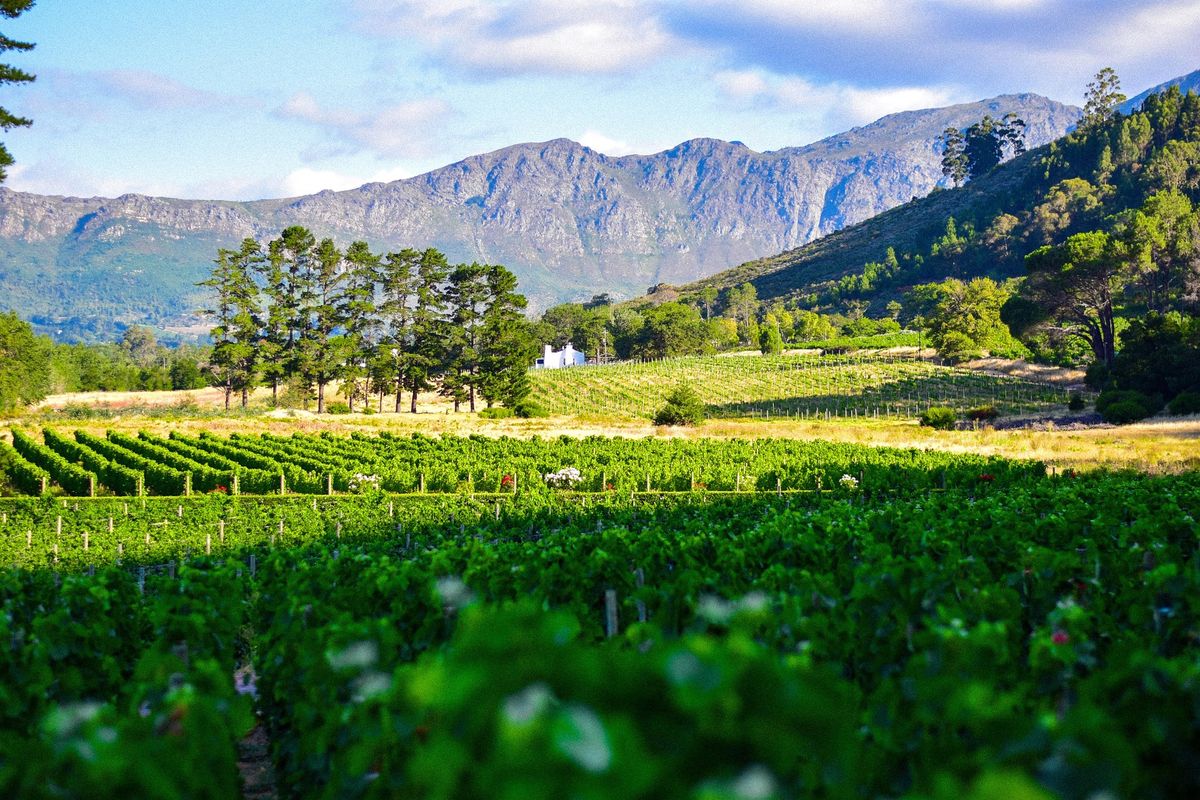
Stellenbosch: The crown jewel of South African wine, Stellenbosch is home to more than 200 wine producers. Its Mediterranean climate, diverse soils, and cooling ocean breezes create ideal conditions for Cabernet Sauvignon, Syrah, Pinotage, and Chenin Blanc. The region's dramatic mountain backdrops and Cape Dutch architecture make it a must-visit for wine tourists.
Constantia: South Africa's oldest wine region, Constantia is famous for its cool climate and elegant wines. Historically celebrated for sweet wines that were favoured by European nobility (including Napoleon), today it excels in Sauvignon Blanc and white blends.
Paarl: With a warmer climate than nearby Stellenbosch, Paarl produces fuller-bodied red wines from Shiraz, Cabernet Sauvignon, and Pinotage. It's also home to the headquarters of the KWV, once a powerful cooperative that played a central role in South African wine history.
Franschhoek: The "French Corner" lives up to its name with a distinctly French character. Settled by Huguenots, this picturesque valley produces excellent Semillon, Chardonnay, and Cabernet Sauvignon. It's also become South Africa's culinary capital.
Swartland: Once overlooked, Swartland has become a hotbed of innovation led by a new generation of winemakers. The region is known for old-vine Chenin Blanc and Mediterranean varieties like Syrah, Grenache, and Mourvèdre, often produced with minimal intervention.
Darling: A cooler coastal region that's gaining recognition for its Sauvignon Blanc and Shiraz.
BREEDE RIVER VALLEY
This large, fertile valley includes the sub-regions of Worcester, Robertson, and Breedekloof.
Robertson: Known as the "valley of wine and roses," Robertson has limestone-rich soils that produce exceptional Chardonnay and sparkling wines made in the traditional method. It's also becoming known for quality Shiraz and Cabernet Sauvignon.
Worcester: This large district produces about one-fifth of South Africa's wine, primarily for brandy production and bulk wine.
CAPE SOUTH COAST
This cool-climate region includes:
Walker Bay: Home to the acclaimed Hemel-en-Aarde Valley, which produces some of South Africa's finest Pinot Noir and Chardonnay that rivals Burgundy in style and quality.
Elgin: Originally an apple-growing region, Elgin's cool climate now produces outstanding Sauvignon Blanc, Chardonnay, and Pinot Noir with bright acidity.
Elim: One of South Africa's southernmost wine regions, Elim is windswept and cool, producing intense Sauvignon Blanc and Syrah.
KLEIN KAROO
This semi-desert region is known for fortified wines and brandies, though increasingly for unique, terroir-driven wines from varieties like Muscat, Hanepoot, and robust reds.
KEY SOUTH AFRICAN GRAPE VARIETIES
RED GRAPES
Pinotage: South Africa's signature grape, created in 1925 by crossing Pinot Noir and Cinsault (then called Hermitage). Long maligned for rustic flavours, modern Pinotage can be exceptional—ranging from bold and smoky to elegant and fruit-forward, with notes of blackberry, plum, and sometimes a distinctive banana-like aroma.
Cabernet Sauvignon: Widely planted, particularly in Stellenbosch, where it produces structured, age-worthy wines that often show a distinctive minty character alongside blackcurrant and cedar notes.
Syrah/Shiraz: Thriving in diverse terroirs from cool Walker Bay to warmer Swartland and Paarl. Styles range from peppery and refined to rich and robust, often with a distinctive olive and black fruit character.
Merlot: Often blended with Cabernet but increasingly impressive as a single varietal, especially in cooler sites.
Cinsault: An historic variety experiencing a renaissance, particularly in Swartland, where old vines produce delicate, perfumed wines with bright red fruit.
WHITE GRAPES
Chenin Blanc: South Africa has the most Chenin Blanc plantings outside of France's Loire Valley. Known locally as "Steen," it shows remarkable versatility—from sparkling to dry, off-dry to sweet, and fresh and fruity to rich and wooded. Old vine Chenin has become South Africa's white wine calling card, offering extraordinary complexity and value.
Sauvignon Blanc: Excels in cooler regions like Elim, Constantia, and Elgin, producing wines with vibrant acidity and expressive aromatics ranging from green pepper and grass to tropical fruit.
Chardonnay: Finds its finest expression in cooler sites like Hemel-en-Aarde and Elgin, where it rivals fine Burgundy with its balance of fruit purity and elegant structure.
Semillon: Historically important and experiencing a small revival, particularly in Franschhoek, where it produces wines with distinctive lanolin texture and subtle citrus notes.
Viognier: Increasingly popular, offering aromatic alternatives with its characteristic peach, apricot, and floral notes.
TOP SOUTH AFRICAN WINE PRODUCERS
STELLENBOSCH
Kanonkop: The standard-bearer for Pinotage and classic South African red blends, Kanonkop's Paul Sauer (a Bordeaux-style blend) and Pinotage have achieved cult status.
Meerlust: Historic estate producing the legendary Rubicon blend since 1980—a pioneer of Bordeaux-style blends in South Africa.
Jordan: Consistently excellent across its range, particularly noted for Chardonnay and Cabernet Sauvignon.
Rustenberg: Historic estate dating to 1682, known for its Bordeaux-style blends and exceptional Chardonnay.
Thelema: Mountain vineyards producing outstanding Cabernet Sauvignon and Chardonnay.
SWARTLAND REVOLUTIONARIES
Sadie Family Wines: Eben Sadie's Columella and Palladius blends, alongside his Old Vine Series, have achieved global recognition and collector status.
Mullineux: Chris and Andrea Mullineux craft acclaimed Syrah and old-vine Chenin Blanc, showcasing Swartland's distinct terroir.
A.A. Badenhorst: Adi Badenhorst's characterful wines champion old vines and traditional winemaking.
HEMEL-EN-AARDE VALLEY
Hamilton Russell: Pioneers of cool-climate viticulture producing Burgundian-style Pinot Noir and Chardonnay that rank among South Africa's finest.
Bouchard Finlayson: Founded by pioneering winemaker Peter Finlayson, known for outstanding Pinot Noir and Chardonnay.
Newton Johnson: Family winery crafting world-class Pinot Noir and Chardonnay.
CONSTANTIA
Klein Constantia: Historic estate reviving the legendary Vin de Constance sweet wine that was favoured by European royalty in the 18th and 19th centuries.
Buitenverwachting: Consistent producer of elegant Sauvignon Blanc and Bordeaux blends.
FRANSCHHOEK
Boekenhoutskloof: Marc Kent's flagship Syrah and The Chocolate Block blend have achieved cult status, while the winery also produces excellent Semillon and Cabernet Sauvignon.
Chamonix: Outstanding Chardonnay, Pinot Noir, and Cabernet Franc from mountain vineyards.
ICONIC WINES AND CUVÉES
Kanonkop Paul Sauer: A classic Bordeaux blend (Cabernet Sauvignon, Merlot, Cabernet Franc) that consistently achieves international acclaim and ages beautifully for decades.
Sadie Family Columella: Eben Sadie's flagship Syrah-based blend that helped put Swartland on the global wine map.
Vin de Constance (Klein Constantia): The historic sweet wine made from Muscat de Frontignan that was once coveted by European nobility and mentioned in works by Jane Austen and Charles Dickens.
Meerlust Rubicon: One of South Africa's first and most consistent Bordeaux-style blends, first released in 1980.
Hamilton Russell Pinot Noir: The benchmark for South African Pinot Noir, demonstrating the potential of cool-climate viticulture in Hemel-en-Aarde.
Boekenhoutskloof Syrah: A powerful, Northern Rhône-inspired Syrah that showcases South Africa's ability to produce world-class examples of this variety.
The Chocolate Block (Boekenhoutskloof): A beloved Syrah-led blend that combines power with accessibility.
Mullineux Granite Syrah: Part of a series of single-terroir Syrahs that highlight the diverse soils of Swartland.
Alheit Cartology: A revelatory old-vine Chenin Blanc blend that's become emblematic of South Africa's white wine renaissance.
SUSTAINABILITY AND INNOVATION
South Africa leads the wine world in conservation efforts through the Biodiversity & Wine Initiative (BWI), which encourages producers to conserve natural habitats. The industry has established the Integrated Production of Wine (IPW) certification, a sustainability scheme followed by most producers.
Innovation thrives in regions like Swartland, where winemakers are rediscovering old vines and employing minimal intervention approaches. Meanwhile, climate change has pushed exploration into cooler, higher-altitude sites for varieties that benefit from slower ripening.
WINE TOURISM
South Africa offers perhaps the world's most beautiful wine country, with dramatic mountain backdrops, Cape Dutch architecture, and excellent food. The Stellenbosch Wine Route, established in 1971, was the first wine tourism route in the country and remains a major draw.
Many estates offer excellent restaurants alongside tasting rooms, particularly in Franschhoek, which has become a culinary destination. Accommodations range from luxury lodges to charming guesthouses on wine estates.
SUMMING UP
South African wine represents one of the world's most exciting vinous propositions—combining centuries of tradition with forward-thinking innovation. The wines offer remarkable value compared to their European and American counterparts of similar quality.
Whether you're drawn to the bold red blends of Stellenbosch, the pioneering spirit of Swartland, or the elegant cool-climate wines of Hemel-en-Aarde, South Africa offers a wine for every palate. As global interest grows, these distinctive wines continue to gain the recognition they deserve while maintaining a sense of place that could come from nowhere else.
EXPLORE MORE?
Ready to explore beyond the obvious South African brands? Experience the remarkable diversity of South African wines through our thoughtfully curated subscription options. It's like discovering a brilliant author's work by going straight to their masterpieces novels while avoiding their early, still-finding-their-voice efforts—you get to experience the mastery straight off the bat.
Also check out our Italian guide plus our USA, Spain, Germany, Austria and Argentina wine region guides to equip yourself for any dinner party wine blag off. Or if you want a guide on your travels, explore our packages.