
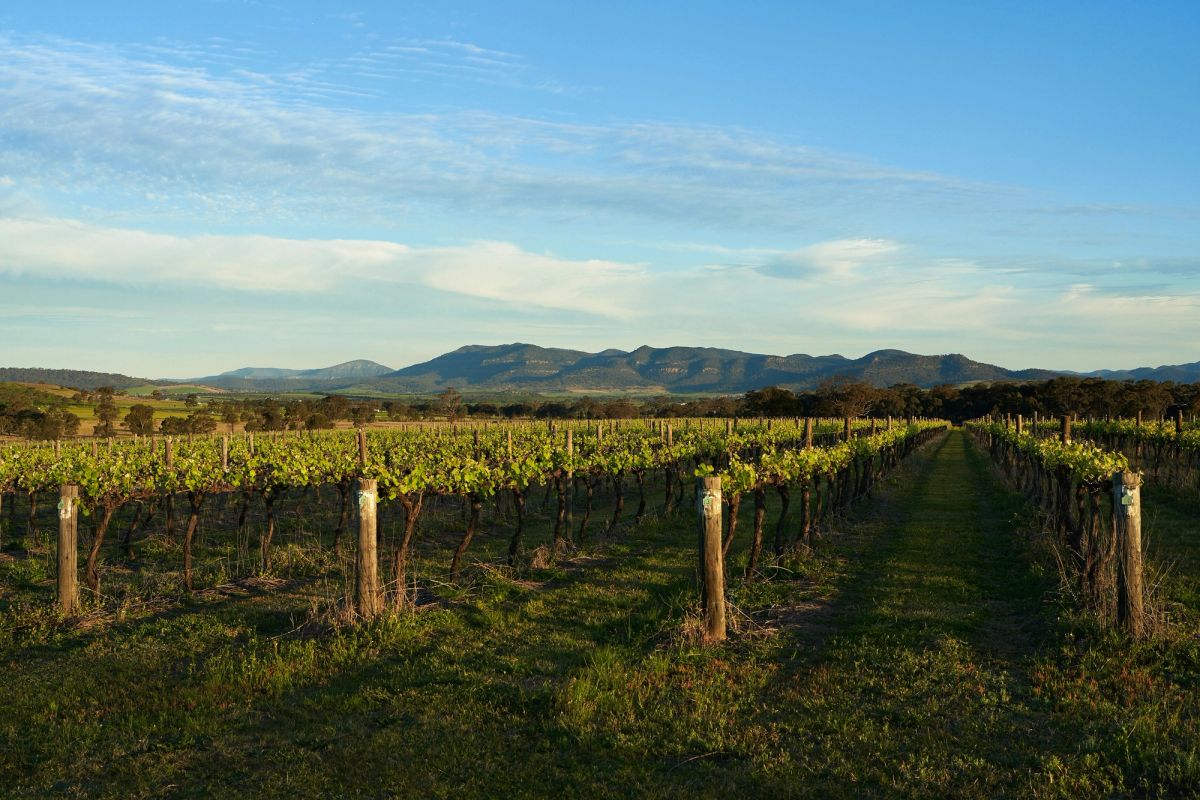
Australian Wine Regions | The Complete Guide
INTRODUCTION
Australia has more than proved itself as a country where wine quality and diversity go hand in hand. This vast island continent – more than 7.5 million square kilometres, you could fit the UK into it 30 times over – creates conditions for almost every imaginable wine style.
The wine scene Down Under has undergone nothing short of a revolution in the past 20 years. Gone are the days when "Australian wine" simply meant over-ripe Shiraz and oak-bomb Chardonnay with cartoon animals on the label. Today's Aussie wines show remarkable regional identity, with winemakers embracing their unique terroirs rather than pursuing a homogenised national style.
The best vineyards are concentrated along the cooler southern edge of this ancient continent, where the moderating influence of the Southern Ocean creates ideal conditions for quality viticulture. It's here, from Western Australia's isolated Margaret River to the island of Tasmania, that Australia crafts wines that increasingly command international respect – and rightly so.
A BRIEF HISTORY OF AUSTRALIAN WINE
The story of Australian wine begins, rather inauspiciously, with the arrival of the First Fleet in 1788. Governor Arthur Phillip brought vines from South Africa, but these initial plantings near Sydney Cove largely failed in the unfamiliar climate. It wasn't until the 1820s that more successful vineyards were established in the Hunter Valley and around Sydney.
A pivotal moment came in 1833 when James Busby, often called the "father of Australian viticulture," returned from Europe with a collection of vine cuttings representing hundreds of varieties. Many of these became the foundation of Australia's vineyards and are still producing remarkable wines today.
The Victorian gold rush of the 1850s brought a population boom and increased demand for wine, spurring the development of new regions like Rutherglen, where fortified wine production flourished. The industry was devastated by the arrival of phylloxera in the late 19th century, destroying many vineyards – yet unlike Europe, some regions (particularly in South Australia) escaped the louse entirely. This historical accident has preserved some of the oldest productive vines on the planet, with Barossa Valley boasting Shiraz and Grenache vines dating to the 1840s that still produce exceptionally concentrated fruit today.
Until the 1960s, Australia focused primarily on fortified wines – ports, sherries, and muscats – that are now just a tiny fraction of production. The shift to table wines coincided with changing consumer tastes and European immigration bringing new wine traditions. The 1980s and 1990s saw Australia emerge on the global stage with bold, fruit-forward wines that became international bestsellers, if sometimes criticised for their lack of subtlety.
The modern era has seen a remarkable pivot toward elegance, regional expression, and sustainability. Many producers who once chased ripeness and extraction now harvest earlier, use less new oak, and focus on vineyard character rather than winemaking wizardry.
AUSTRALIAN WINE REGIONS
The huge climate variations across Australia's wine regions create strikingly different wine styles – from the delicate, acid-driven Rieslings of Clare Valley to the powerful, sun-baked Shiraz of the Barossa. Understanding Australian wine is all about geography – where a wine comes from tells you more about what's in the bottle than the grape variety or producer name.
NB: Australian terroir creates distinctive flavour profiles, so it pays to spend time discovering your palate to best appreciate Australia's distinct terroir expression on its own terms.
WESTERN AUSTRALIA
Western Australia is mind-bogglingly remote – Perth is closer to Singapore than Sydney! This isolation has shaped a distinctive wine industry that's often overlooked by newcomers to Australian wine, despite producing some of the country's most elegant bottles.
Margaret River: One of the most beautiful wine regions, with vineyards nestled between tall eucalyptus forests and the turquoise Indian Ocean. Surfers and winemakers share this paradise (sometimes they're the same people), creating a laid-back atmosphere that belies the serious quality of the wines.
The Cabernet Sauvignon from Margaret River has a distinctive violet and bay leaf perfume rarely encountered elsewhere in Australia. These wines can age beautifully, developing complexity over decades. Chardonnay here manages to combine ripe stone fruit flavours with a seam of flinty minerality that reminds more of Puligny-Montrachet than typical New World examples.
Great Southern: If Margaret River is remote, Great Southern is positively isolated – a 4-hour drive south-east of Perth brings you to this wild, windswept region. Five distinct sub-regions here (Frankland River, Mount Barker, Porongurup, Denmark, and Albany) create a variety of styles, but the stars are the taut, lime-driven Rieslings and the medium-bodied, aromatic Shiraz that shows more black pepper than jammy fruit.
The Rieslings from producers like Castle Rock Estate in Porongurup age magnificently, developing complex kerosene and honeyed notes while retaining their razor-sharp acidity – yet they sell for a fraction of the price of German Grands Crus. Absolute bargains.
Swan Valley: Just outside Perth, this is Western Australia's oldest wine region but suffers from the intense heat. Fortified wines and robust reds can work well here, and some producers are creating interesting wines from heat-tolerant Mediterranean varieties. Climate change may make this an increasingly important region for certain styles.
SOUTH AUSTRALIA
South Australia is the undisputed powerhouse of Australian wine, producing around 50% of the country's total output. It's also home to some of Australia's most historic estates and oldest vineyards.
Barossa Valley: The spiritual home of Australian Shiraz, Barossa is a region steeped in German heritage – a legacy of 19th-century Lutheran immigrants fleeing religious persecution in Prussia. This influence is still evident in the Germanic village names, stone churches, and traditional foods like mettwurst and streuselkuchen that pair perfectly with the region's robust reds.
The valley floor produces Shiraz of extraordinary power – wines like Torbreck's RunRig or Penfolds Grange showcase the chocolate-rich, blackberry-laden style that made Australia famous. Yet there's more nuance here than outsiders often recognise. The Eden Valley sub-region at higher elevation creates more elegant, spice-driven styles, while old-vine Grenache (some bush vines over 150 years old) produces wines of remarkable complexity and perfume.
Henschke's Hill of Grace, from pre-phylloxera Shiraz vines planted in the 1860s, offers a combination of power and finesse that is revelatory – like an iron fist in a velvet glove, as the saying goes.
Clare Valley: About two hours north of Adelaide, Clare Valley is one of Australia's most distinctive regions. Despite being relatively warm, the significant day-night temperature variation (diurnal range, in wine-speak) preserves acidity in the grapes. This creates the distinctive, bone-dry Rieslings that have become Clare's calling card – wines of searing lime intensity and sleek, racing structure.
Producers like Grosset craft Rieslings that evolve beautifully over decades, developing complex toasty, honeyed characters while maintaining that spine of acidity. Clare also produces excellent Shiraz and Cabernet, often with distinctive eucalyptus notes that some love and others find too medicinal – an example of how polarising wine can be!
McLaren Vale: Just south of Adelaide, McLaren Vale combines Mediterranean warmth with cooling sea breezes to create red wines of impressive depth and complexity. Traditional Shiraz and Grenache still dominate, but the region has been at the forefront of experimenting with alternative varieties suited to warm climates – Tempranillo, Nero d'Avola, Touriga Nacional, and others thrive here.
The geological diversity of McLaren Vale is extraordinary – identical winemaking methods applied to Shiraz from different soil types produce wildly different wines. The red earth of Blewitt Springs creates perfumed, elegant reds, while the heavier clays of the valley floor produce more muscular styles.
Coonawarra: This small, isolated region in South Australia's southeast is defined by its unique "terra rossa" soil – a thin layer of rusty-red clay over limestone that creates ideal conditions for Cabernet Sauvignon. These distinctive soils only exist in a narrow strip about 20km long and 2km wide, making Coonawarra one of Australia's most geographically defined wine regions.
The Cabernets here show distinctive mint and eucalyptus notes – some critics consider this a regional character, while others attribute it to the proximity of eucalyptus trees. Whatever the cause, these wines have a distinctive cool climate elegance despite being from a relatively warm area.
Wynns Black Label Cabernet vintages going back to the 1960s age remarkably well, developing complex cedar, tobacco, and blackcurrant characteristics. Australia's best-kept secret by many accounts.
Adelaide Hills: Just 20 minutes from downtown Adelaide, this cool, elevated region has become a hotbed of innovation, particularly with minimal intervention techniques – architects of the "natural wine" movement that's captivated younger drinkers.
The region excels with aromatic whites like Sauvignon Blanc and cool-climate Chardonnay, while the Pinot Noir can be excellent in the right hands. The devastating 2020 bushfires destroyed many vineyards here, and the determined growers who are slowly rebuilding deserve much admiration.
VICTORIA
Victoria packs remarkable diversity into a relatively small area, with more individual wineries than any other Australian state despite producing less volume. The Victorian wine scene has a distinctly European sensibility compared to South Australia's more robust approach – perhaps reflecting Melbourne's cosmopolitan cafe culture.
Yarra Valley: Just an hour from Melbourne, the Yarra combines accessibility with serious quality. Once known primarily for sparkling wine, the region now excels with Pinot Noir and Chardonnay that balance richness with restraint. There has been a definite stylistic shift here over the past decade – away from heavy extraction and oak toward more transparent expressions of site.
Some producers distinguish between the valley floor (warmer, earlier ripening) and the Upper Yarra (cooler, higher elevation) on their labels, recognising the significant climatic differences. The Yarra's proximity to Melbourne makes it a perfect wine tourism destination, with excellent restaurants and accommodation complementing the cellar doors.
Mornington Peninsula: Surrounded on three sides by water, this boot-shaped peninsula creates a perfect environment for maritime-influenced viticulture. The best Pinot Noir here shows a silky texture and complex savoury elements alongside the primary fruit – a far cry from the simple, fruity styles that once dominated Australian Pinot.
The peninsula has seen huge investment in recent years, with vineyard land reaching astronomical prices. This has attracted serious winemaking talent but has also pushed bottle prices higher than many other Australian regions. Still, the quality is undeniable, and the combination of excellent wine, beaches, and restaurants makes Mornington a wonderful place to visit.
Heathcote: This inland region has emerged as a powerhouse for structured, mineral-driven Shiraz. The ancient Cambrian soils – some of the oldest viticultural soils on Earth at 500+ million years – create distinctive wines with impressive longevity. The Italian and Greek families who settled here have also introduced Mediterranean varieties that thrive in the warm climate.
Rutherglen: In northeast Victoria, Rutherglen specialises in fortified "stickies" that are among the world's great sweet wines. The classification system for these muscats and topaques (formerly called tokay) – from the basic Rutherglen to the rare "Rare" designation – reflects increasing concentration and complexity.
A Rare classification Muscat is a wine matured in barrel for decades, concentrating to a syrup of extraordinary complexity, with notes of toffee, dried fruits, coffee, and spice. Some of these wines contain small amounts of material dating back to the 19th century, making them living history.
NEW SOUTH WALES
Australia's most populous state has a diverse wine industry, though it lacks the cohesion of South Australia or Victoria. The Hunter Valley is the star attraction, but exciting developments are happening in high-altitude regions like Orange and Tumbarumba.
Hunter Valley: Australia's oldest continuous wine region has a unique place in the country's wine culture. Despite challenging growing conditions – summer rainfall, humidity, and disease pressure make consistent quality difficult – the Hunter produces two distinctive wine styles unlike anything else in Australia.
Hunter Semillon is a global anomaly – harvested early at low sugar levels (often just 10-11% potential alcohol), it starts life austere and lemony before developing remarkable complexity with age. Tyrrell's Vat 1 Semillon from the 1960s shows an astonishing transformation from crisp simplicity to rich, toasty complexity.
Hunter Shiraz is medium-bodied and savoury, with distinctive earthy, leathery notes – a world away from the fruit bombs of South Australia. In good vintages from top producers like Tyrrell's, Mount Pleasant, or Brokenwood, these wines age gracefully for decades.
Orange: This high-altitude region west of Sydney is producing increasingly impressive cool-climate wines. Elevations range from 600m to over 1000m, creating a variety of mesoclimates suited to different varieties. Chardonnay and Shiraz have shown the most promise, combining fruit intensity with elegant structure.
TASMANIA
If there's one Australian wine region generating genuine excitement for the future, it's Tasmania. This island state, separated from the mainland by the Bass Strait, has a truly cool climate that's producing wines of remarkable finesse. Climate change has actually benefited Tasmania, making ripening more consistent while hotter mainland regions struggle with increasing temperatures.
The sparkling wines are world-class – producers like House of Arras are creating complex, age-worthy wines that can compete with Champagne at a fraction of the price. Pinot Noir shows a delicacy and perfume that's rare in Australia, while the Chardonnay combines citrus freshness with subtle complexity.
Investment from major mainland producers has accelerated in recent years, with companies like Treasury Wine Estates (owners of Penfolds) and Brown Brothers securing cool-climate vineyards as insurance against warming temperatures in their traditional regions. This influx of capital has raised quality further.
Tasmania's pristine environment hosts many small, family-owned vineyards creating wines with a real sense of place. The combination of excellent wine, spectacular scenery, and amazing seafood makes Tasmania a must-visit for any wine lover.
KEY AUSTRALIAN GRAPE VARIETIES
RED GRAPES
Shiraz: Australia's signature grape appears under two names – traditionally as Shiraz for fuller-bodied styles and increasingly as Syrah for more restrained, peppery expressions. The regional diversity is fascinating – from the powerful, chocolate-rich Barossa styles to the medium-bodied, spicy wines of cooler regions like the Yarra Valley or Canberra District.
Some of the world's oldest productive Shiraz vines grow in Australia, creating wines of extraordinary concentration and complexity. Australian Shiraz often ages better than many critics give it credit for – even the bigger styles can develop fascinating secondary characteristics of leather, game, and spice after 15-20 years.
Cabernet Sauvignon: Coonawarra and Margaret River lead the way, producing distinctive regional expressions that combine the variety's classic blackcurrant fruit with unique local character – mint and eucalyptus in Coonawarra, bay leaf and violets in Margaret River.
Australian Cabernet often represents better value than the equivalent quality from Bordeaux or Napa Valley, particularly from classic producers like Wynns, Moss Wood, or Cullen. The best examples develop beautifully with age, gaining complexity while maintaining fruit integrity.
Pinot Noir: Once a weakness in Australia's varietal arsenal, Pinot Noir has improved dramatically in the past 20 years. Tasmania, Mornington Peninsula, and Yarra Valley lead the way, with individual vineyards increasingly being bottled separately to showcase site expression.
The diversity of styles can be confusing – from the delicate, red-fruited wines of Tasmania to the more structured, savoury examples from the best Yarra Valley sites. Prices have risen substantially for the top examples, but quality now rivals New Zealand and matches all but the best Burgundy.
Grenache: This underappreciated variety has been grown in Australia since the 19th century, primarily in South Australia. Once used mainly for fortified wine production or anonymous blends, old-vine Grenache is now creating some of Australia's most exciting red wines.
McLaren Vale and Barossa lead the way, with gnarled bush vines over 100 years old producing wines of remarkable complexity – perfumed, with red fruits, spice, and a distinctive sandy texture. The best examples evoke high-quality Châteauneuf-du-Pape but often at half the price.
Alternative Varieties: As climate change makes conditions more challenging for traditional varieties in some regions, Australia has enthusiastically embraced Mediterranean grapes better suited to heat and drought. Tempranillo, Sangiovese, Montepulciano, Nebbiolo, Touriga Nacional, and even obscurities like Saperavi and Lagrein are producing impressive results.
WHITE GRAPES
Chardonnay: What a transformation Australian Chardonnay has undergone! The over-oaked, buttery styles that dominated in the 1990s (and gave us the derogatory term "Chardonnay" as a dismissive descriptor) have largely disappeared, replaced by more restrained, balanced wines that showcase fruit and vineyard character rather than winemaking artifacts.
Cool-climate regions like Margaret River, Adelaide Hills, Yarra Valley, and Tasmania now produce world-class Chardonnay that combines fruit richness with acid structure. The best examples can rival white Burgundy at a fraction of the price – Leeuwin Estate Art Series, Giaconda, and Penfolds Yattarna showcase the heights Australian Chardonnay can reach.
Riesling: Clare Valley and Eden Valley produce distinctive dry Rieslings that showcase intense lime and lemon fruit with razor-sharp acidity. These wines age magnificently, developing complex toasty, honeyed characters while maintaining their structure.
Unlike their German counterparts, Australian Rieslings are almost always bone-dry, making them perfect food wines – particularly with Asian cuisines. They represent some of Australia's best value white wines, with even top examples from producers like Grosset rarely exceeding £30.
Semillon: Hunter Valley Semillon is a unique Australian contribution to the wine world – harvested early at low ripeness levels, it starts life lean and citrusy before developing remarkable complexity with age. These wines can evolve for decades, gaining toasty, honeyed richness while maintaining vibrant acidity.
Elsewhere in Australia, particularly Barossa, Semillon is made in a fuller-bodied style, often with some oak influence. It's also a key component in the distinctive Semillon-Sauvignon Blanc blends of Western Australia.
Sauvignon Blanc: While never reaching the heights (or volumes) of New Zealand's examples, Australian Sauvignon Blanc from cool regions like Adelaide Hills can be excellent – less overtly herbaceous than Marlborough, with more texture and complexity.
The barrel-fermented examples from producers like Shaw + Smith add complexity without sacrificing freshness, while the Semillon-Sauvignon blends of Western Australia combine tropical fruit with grassy freshness and extra textural dimensions.
TOP AUSTRALIAN WINE PRODUCERS
Rather than attempt a comprehensive list, here are some standout producers that showcase the diversity and quality of Australian wine:
SOUTH AUSTRALIA STARS
Henschke: Family-owned since 1868, Henschke produces the iconic Hill of Grace Shiraz from pre-phylloxera vines in Eden Valley. Fifth-generation winemaker Stephen Henschke and viticulturist wife Prue have been pioneers in organic and biodynamic viticulture.
Cullen: Diana Cullen was a Margaret River pioneer, and daughter Vanya has taken their Cabernet Sauvignon and Chardonnay to world-class heights through biodynamic farming and sensitive winemaking. Their Diana Madeline Cabernet blend is consistently one of Australia's finest reds.
Grosset: Jeffrey Grosset has focused almost obsessively on Riesling since establishing his Clare Valley winery in 1981. His Polish Hill and Springvale Rieslings showcase distinctive vineyard characters and age beautifully for decades.
Clonakilla: Located in the cool Canberra District, Clonakilla's Shiraz Viognier was inspired by the wines of Côte-Rôtie and has become an Australian icon – aromatic, spicy, and complex rather than simply powerful.
Bass Phillip: Phillip Jones established these close-planted Pinot Noir vineyards in Gippsland, Victoria in the 1970s against conventional wisdom. Now among Australia's most sought-after wines, the Premium and Reserve Pinots combine intensity with delicacy in a way few Australian reds manage.
Bindi: Michael Dhillon crafts beautiful Pinot Noir and Chardonnay from the Macedon Ranges, northwest of Melbourne – one of Australia's coolest viticultural areas. The Original Vineyard Pinot Noir shows remarkable consistency vintage after vintage.
Giaconda: Rick Kinzbrunner's Chardonnay from Beechworth in northeast Victoria is often compared to fine white Burgundy for its complexity and ageability. The underground granite cave cellar provides perfect natural conditions for maturation.
NEW GENERATION
Mac Forbes: After working in Austria and France, Mac returned to the Yarra Valley to make wines of restraint and elegance. His single-vineyard Pinots and Chardonnays showcase the subtle differences between sites in this diverse valley.
Ministry of Clouds: Bernice Ong and Julian Forwood left corporate wine jobs to establish this McLaren Vale producer focused on elegant expressions of traditional varieties like Grenache and Shiraz alongside emerging Mediterranean grapes.
Timo Mayer: German-born Timo makes distinctive, often polarising wines in the Yarra Valley, including whole-bunch fermented "Bloody Hill" Pinot Noir. His philosophy of "bring back the funk" emphasizes character over polish.
La Violetta: Andrew Hoadley works with uncommon varieties and produces wines of remarkable personality from sites across Western Australia's Great Southern region. His "Up!" Shiraz defies regional stereotypes with its perfume and elegance.
ICONIC WINES AND CUVÉES
Penfolds Grange: Australia's most famous wine deserves its reputation. Created secretly by winemaker Max Schubert in the 1950s against his employers' wishes, this Shiraz-dominant multi-regional blend has become a global icon. Current vintages command £500+ per bottle, but the wine's consistency and longevity justify the investment for collectors.
Henschke Hill of Grace: Unlike Grange, Hill of Grace comes from a single vineyard of ancient Shiraz vines planted in the 1860s by early German settlers. Its combination of power and elegance makes it one of Australia's most sought-after wines.
Leeuwin Estate Art Series Chardonnay: Margaret River's flagship white wine consistently ranks among Australia's finest Chardonnays, combining rich fruit with precise structure. The vineyard's cool mesoclimate and meticulous winemaking create a wine that develops beautifully with age.
Bass Phillip Reserve Pinot Noir: From low-yielding, close-planted vineyards in Gippsland, Victoria, this is arguably Australia's greatest Pinot Noir – combining intensity with finesse in a way that's rarely matched outside Burgundy.
Grosset Polish Hill Riesling: Jeffrey Grosset's flagship Riesling from a hard rock quartz site produces wines of extraordinary minerality and precision. Despite modest prices compared to German Grand Cru Rieslings, these wines develop magnificent complexity with age.
Clonakilla Shiraz Viognier: Inspired by the wines of Côte-Rôtie, Tim Kirk's co-fermented Shiraz with a touch of Viognier creates a perfumed, spicy wine that reimagined what Australian Shiraz could be.
Best's Thomson Family Shiraz: Made only in exceptional years from vines planted in 1868, this Great Western Shiraz demonstrates the complexity old vines can bring to Australian wine.
There are many more – Jim Barry The Armagh, Wendouree Shiraz, Cullen Diana Madeline, Rockford Basket Press, Tyrrell's Vat 1 Semillon – Australia produces numerous distinctive, world-class wines that deserve wider recognition.
SUSTAINABILITY AND INNOVATION
Australia has faced significant environmental challenges that have spurred innovation in sustainable viticulture. Water scarcity in particular has driven advances in irrigation efficiency and drought-resistant rootstocks. Many leading producers have embraced organic and biodynamic practices, with certification becoming increasingly common.
The Australian Wine Research Institute in Adelaide leads research into climate adaptation, disease resistance, and winemaking technologies that benefit producers across the country. This scientific approach, combined with the practical problem-solving mentality typical of Australian farmers, has created a dynamic, forward-looking industry.
Climate change presents significant challenges – bushfires, drought, and heat waves have all affected recent vintages. Yet it's also driving positive changes, from the exploration of heat-tolerant Mediterranean varieties to the development of vineyards in cooler southern and high-altitude areas.
WINE TOURISM
Australian wine regions offer some of the world's best wine tourism experiences, combining excellent cellar doors with stunning landscapes and world-class restaurants. From the spectacular coastal scenery of Margaret River to the historic stone buildings of the Barossa, each region has its own distinct character.
The proximity of regions like the Yarra Valley and Mornington Peninsula to Melbourne, or the Adelaide Hills to Adelaide, makes day trips easy for visitors. Tasmania combines wine tourism with wilderness experiences – visitors can taste world-class Pinot Noir in the morning and hike through pristine rainforest in the afternoon.
Many wineries have invested heavily in visitor experiences, with architectural statement buildings, art collections, and restaurants showcasing local produce. D'Arenberg's Cube in McLaren Vale – a five-storey glass and steel structure inspired by a Rubik's cube – exemplifies this trend, though many find the wines more compelling than the building!
FINAL THOUGHTS
Australian wine has undergone a remarkable transformation in the past two decades. While the commercial success of brands like Yellow Tail created a perception of Australia as a source of simple, fruit-driven wines, the reality today is far more nuanced and exciting.
The diversity of climates across Australia's wine regions creates a spectrum of styles that rivals any wine-producing country. From the delicate, acid-driven Rieslings of Clare Valley to the powerful, sun-baked Shiraz of the Barossa, from the elegant Cabernets of Margaret River to the refined Pinot Noirs of Tasmania – Australia truly offers a wine for every palate.
What's most exciting about Australian wine today is the combination of historical depth – those ancient vines producing wines of singular character – with forward-thinking innovation. The willingness to challenge convention, experiment with new varieties and techniques, and adapt to changing climate conditions ensures that Australian wine will remain dynamic and relevant.
For wine lovers seeking quality, diversity, and value, Australia rewards exploration beyond the familiar names and regions. The best Australian wines combine fruit clarity with structural integrity in a way that makes them both immediately appealing and capable of long-term development – a rare combination in the wine world.
Whether you're drawn to traditional varieties and regions or excited by the new wave of alternative grapes and minimal-intervention winemaking, Australia's vinous landscape offers rich terrain for discovery. The future looks bright indeed for this island continent's wines.
EXPLORE MORE?
Curious about the new face of Australian wine? Discover the elegance and diversity of modern Australian winemaking through our curated subscription options. Think of it as having access to the director's cut of a film you thought you only knew from the heavily edited television version—the full story has nuance, complexity, and unexpected twists rendering a an all together more rewarding experience.
Also check out our South Africa, Italy, USA, Spain, Germany, Austria and Argentina wine region guides to equip yourself for any dinner party wine blag off. Or if you want a guide on your travels, explore our packages.