
WHAT TO DRINK INSTEAD OF NEBBIOLO
Five wines similar to Nebbiolo, and a tasting game to find your favourite.
THE SHORT ANSWER
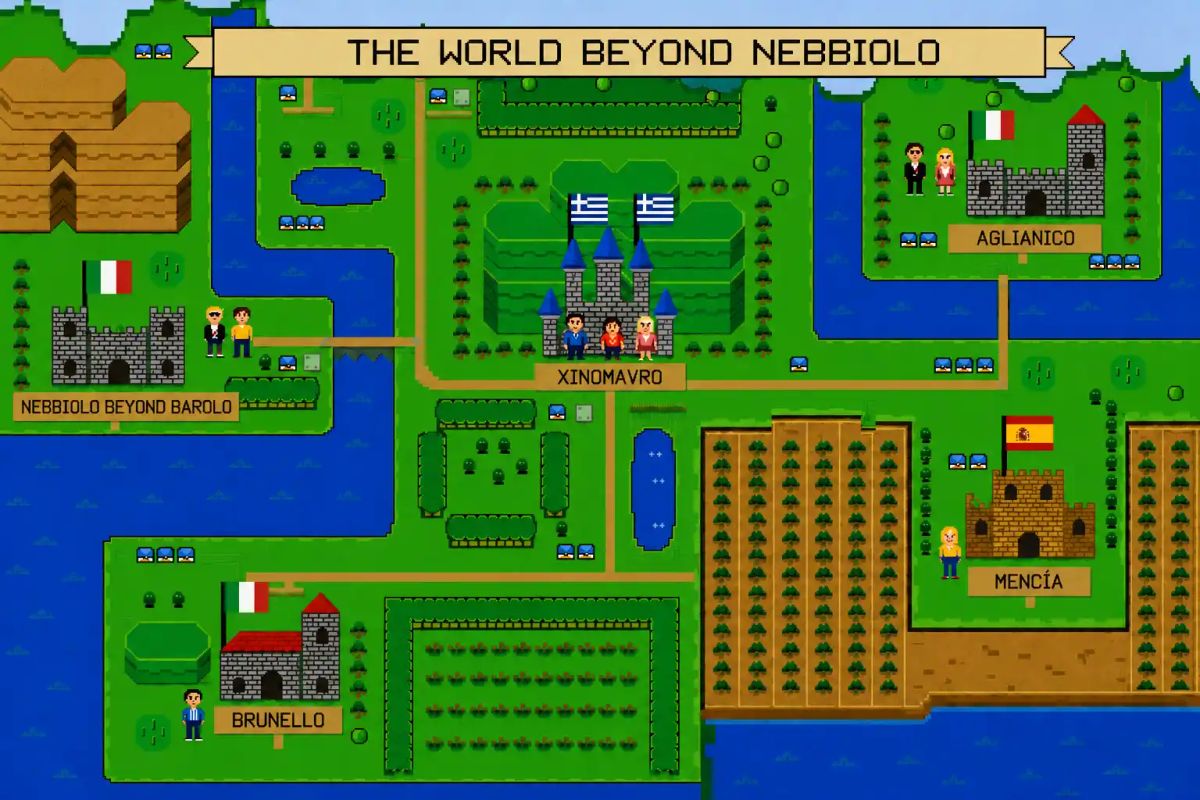
If you like Nebbiolo, try these five wines: Nebbiolo beyond Barolo, meaning Langhe, Gattinara and Valtellina, for the same grape at a kinder price, Xinomavro from Greece for the wine so similar that experts mistake it for Nebbiolo, Aglianico from southern Italy for the same towering structure in a darker key, Mencía from north-west Spain for a fresher, more perfumed take on high-acid red, and Brunello di Montalcino for Tuscany's most serious savoury answer.
Five wines to try if you like Nebbiolo:
- Nebbiolo beyond Barolo (Piedmont, Italy): the grape, more affordably (£15 to £35)
- Xinomavro (Naoussa, Greece): the uncanny twin (£12 to £25)
- Aglianico (Campania and Basilicata): the southern powerhouse (£12 to £30)
- Mencía (Ribeira Sacra and Bierzo, Spain): the perfumed one (£12 to £25)
- Brunello di Montalcino (Tuscany, Italy): the Tuscan answer (£30 to £60+)
THE MAP
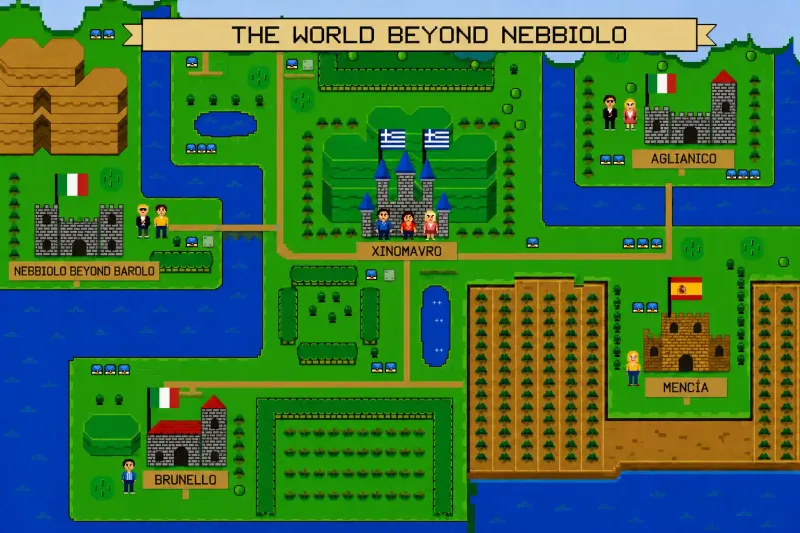
| Nebbiolo beyond Barolo | Xinomavro | Aglianico | Mencía | Brunello | |
|---|---|---|---|---|---|
| Body | Medium to full | Medium | Full | Medium | Medium to full |
| Acidity | High | Very high | High | High | High |
| Tannin | Very firm | Very firm | Very firm | Medium | Firm |
| Closest match to Nebbiolo | The grape | The soul | The structure | The perfume | The savour |
| Price band | £15 to £35 | £12 to £25 | £12 to £30 | £12 to £25 | £30 to £60+ |
| Best occasion | Sunday roast | The table, debate | Slow-cooked, age | Midweek, lighter | Cellar, occasion |
QUICK LEGEND
If you love Nebbiolo and want it without the Barolo price tag: go Langhe Nebbiolo or Valtellina.
If you want the wine that tastes most like Nebbiolo without being Italian: go Xinomavro.
If you want the same fearsome structure turned darker and broodier: go Aglianico.
If you want high acidity and perfume with gentler tannin: go Mencía.
If you want the savoury, ageworthy soul of great Italian red: go Brunello.
WHAT CONNECTS THESE WINES
Nebbiolo is the grape that converts people, usually slowly and then completely.
It is the variety behind Barolo and Barbaresco, the two great reds of Piedmont in north-west Italy, named after the autumn fog, the nebbia, that rolls through the vineyards at harvest. What makes Nebbiolo extraordinary is the contradiction in the glass. The colour is pale, often bricking to orange within a few years, so it looks delicate. Then it hits you: ferocious tannin, searing acidity, and aromas of tar, dried rose, sour cherry, leather, truffle and dried herb. It is powerful and ethereal at once, demanding food and patience, and rewarding both like almost nothing else.
That combination, pale but powerful, high in both acid and tannin, savoury rather than fruity, is the thread through all five wines here. None of them is a soft, fruity crowd-pleaser. Each one offers structure, savour and a long life, the qualities that make Nebbiolo lovers fall for Nebbiolo in the first place. The differences lie in where the emphasis falls: more perfume, more power, more affordability, or more pure savour.
If you are still getting to know the grape, our guide to Barolo is the place to start, and the wine regions of Italy sets the whole landscape in context.
Serve these at 16 to 18 degrees Celsius, give them air, and put food on the table. These are not sipping wines.
THE FIVE WINES
1. Nebbiolo Beyond Barolo, the Grape More Affordably
The first answer to Nebbiolo is more Nebbiolo, just not from the most expensive postcodes.
Barolo and Barbaresco command serious prices, but the grape grows beautifully elsewhere. Langhe Nebbiolo is effectively younger or declassified wine from the same hills, often from the same growers, at a fraction of the cost. North of there, Gattinara and Ghemme make structured, mineral Nebbiolo under their own names. Higher still, in the Alpine Valtellina, the grape is called Chiavennasca and makes lighter, fragrant reds, with a richer dried-grape style called Sforzato. All of it gives you the tar, rose and sour-cherry signature, with the firm tannin and high acidity intact.
This is the move for the Nebbiolo lover who wants the real grape on a weeknight budget.
What you will recognise: tar, dried rose, sour cherry, firm tannin, high acidity. What changes: usually lighter and more approachable young than Barolo, and far kinder on the wallet. Look for: Langhe Nebbiolo to start, then Gattinara, Ghemme and Valtellina Superiore. Budget: £15 to £35.
2. Xinomavro, the Uncanny Twin
The wine that tastes most like Nebbiolo is grown a thousand miles away in northern Greece.
Xinomavro, the great red of Naoussa, is so close in character to Nebbiolo that experienced tasters routinely confuse the two. The name means acid-black, which tells you most of what you need. It is pale in colour, savage in tannin, high in acidity, and smells of sour cherry, dried tomato, olive, sun-dried herb and a leathery, almost balsamic savour. Like Nebbiolo it can be austere when young and unfolds into something haunting with age. And like Nebbiolo a decade ago, it remains seriously underpriced, largely because the name is unfamiliar.
This is the discovery on the list, the closest thing to Nebbiolo's soul from another country entirely.
What you will recognise: pale colour, fierce tannin, high acidity, savoury dried-fruit aromatics. What changes: an olive and tomato-leaf note that is its own, and a price that still flatters the quality. Look for: Xinomavro from Naoussa, with Amyndeon for a lighter style. Budget: £12 to £25.
3. Aglianico, the Southern Powerhouse
If Nebbiolo is the structured grape of the Italian north, Aglianico is its equal in the deep south.
Grown chiefly in Campania, where it makes Taurasi, and in Basilicata, where it makes Aglianico del Vulture, this is one of Italy's most formidable reds. It shares Nebbiolo's high acidity and ferocious tannin but pours them into a darker, denser frame: black cherry, plum, leather, tar, dried herb and a smoky volcanic minerality from the soils it grows on. Young Taurasi can feel like a locked door. Given a decade, or a slow-cooked meal tonight, it opens into something genuinely profound, and it still costs a fraction of equivalent Barolo.
This is for the drinker who loves Nebbiolo's structure and wants it with more weight and darkness.
What you will recognise: high acidity, savage tannin, savoury depth, an obvious need for food. What changes: darker and more brooding than Nebbiolo, with volcanic minerality in place of tar and rose. Look for: Taurasi and Aglianico del Vulture, with younger Campania Aglianico as the affordable way in. Budget: £12 to £30.
4. Mencía, the Perfumed One
Mencía is the answer for the Nebbiolo lover who wants the acidity and perfume but a softer grip.
Grown in the steep, slate-strewn valleys of north-west Spain, above all in Ribeira Sacra and Bierzo, Mencía makes medium-bodied reds of real fragrance and freshness. Expect red cherry, blackberry, violet, graphite and a cool, mineral, almost floral lift, carried by high acidity and fine, gentler tannin. It shares Nebbiolo's perfume and its sense of place, its way of tasting like the rock it grows on, without the tannic severity. For anyone who finds Barolo punishing when young, Mencía offers a similar aromatic thrill that is ready to enjoy now.
This is for the drinker who loves Nebbiolo's nose and high acid but wants an easier, fresher wine on the palate.
What you will recognise: high acidity, perfume, a mineral sense of place. What changes: lighter in tannin and more immediately drinkable, with cool blue and red fruit rather than tar. Look for: Mencía from Ribeira Sacra and Bierzo, especially old-vine and single-slope bottlings. Budget: £12 to £25.
5. Brunello di Montalcino, the Tuscan Answer
For the savoury, ageworthy soul of great Italian red, Tuscany answers with Brunello.
Made from a special clone of Sangiovese around the hilltop town of Montalcino, Brunello is one of Italy's most prestigious wines, and it speaks the same language as Nebbiolo even though the grape is different. High acidity, firm tannin, and aromas of sour cherry, dried herb, leather, tobacco and earth, all built for a long life in the cellar. It is more red-fruited and a touch less tarry than Nebbiolo, but the savoury structure and the demand for food and time are exactly the same. Rosso di Montalcino is the younger, more affordable way to meet the style.
This is for the drinker who wants Nebbiolo-level seriousness from Italy's other great region.
What you will recognise: high acidity, firm tannin, savoury cherry-and-herb depth, real ageability. What changes: a Sangiovese profile, brighter red fruit and a touch less of the tar-and-rose signature. Look for: Brunello di Montalcino for the full experience, Rosso di Montalcino to start. Budget: £30 to £60 and beyond, with Rosso from around £18.
A NOTE ON BAROLO, BARBARESCO AND NEBBIOLO
These three words confuse a lot of people, and the distinction is simple once stated.
Nebbiolo is the grape. Barolo and Barbaresco are two places in Piedmont, near the town of Alba, where that grape makes its most celebrated wines. So all Barolo and all Barbaresco are made from Nebbiolo, but plenty of Nebbiolo is made outside those two zones, under names like Langhe Nebbiolo, Gattinara, Ghemme and Valtellina. Barolo is the bigger, more powerful and longer-lived of the two famous wines; Barbaresco is generally a touch more elegant and quicker to open, though the best of both age for decades.
If you have only ever met the grape as an expensive Barolo, you have met it at its grandest and most demanding. The wider world of Nebbiolo, and the other grapes in this guide, gives you the same thrill without always asking for a long wait or a deep wallet. Our guide to Barolo goes deeper on the heartland, and the wine regions of Italy places it all on the map.
THE TASTING GAME
What You Need
Five bottles, one of each wine above. Four to five red wine glasses per person. A pen and the rating table below. Food that loves tannin and acidity: a slow-cooked beef or mushroom ragù, hard aged cheese, anything rich and savoury. One person who insists they do not like tannic wine, so the meal can prove them wrong.
Optional but recommended: add a Barolo or Barbaresco as the reference point everything else is measured against.
The Rating Table
| Characteristic | What you are looking for |
|---|---|
| Acidity | How much the wine makes your mouth water |
| Tannin | The drying, gripping pull, where 5 is firmest |
| Savoury aromatics | Tar, rose, dried herb, leather, earth |
| Pale but powerful | A light colour hiding real intensity |
| Food transformation | How much better the food tastes with the wine |
Ourglass Benchmarks
| Characteristic | Nebbiolo | Langhe Nebbiolo | Xinomavro | Aglianico | Mencía | Brunello |
|---|---|---|---|---|---|---|
| Acidity | 5 | 5 | 5 | 5 | 4 | 5 |
| Tannin | 5 | 4 | 5 | 5 | 3 | 4 |
| Savoury aromatics | 5 | 4 | 5 | 5 | 3 | 4 |
| Pale but powerful | 5 | 4 | 5 | 3 | 3 | 3 |
| Food transformation | 5 | 4 | 5 | 5 | 4 | 5 |
The decisive row is tannin. It is the gatekeeper of this whole style and the thing that decides whether a high-acid red feels thrilling or punishing to you. The game is to find your tolerance, from the gentler grip of Mencía to the full ferocity of Xinomavro and Aglianico, because once you know it, you know exactly how to buy in this corner of the wine world.
If you would rather have wines chosen for the way they actually behave at the table than the way they read on a shelf, that is what Ourglass is for. Start here.
WHAT YOUR SCORES REVEAL ABOUT YOUR PALATE
Loved Langhe Nebbiolo most? You are a committed Nebbiolo drinker who values the grape over the postcode. Next: Gattinara, Ghemme, Valtellina, and eventually Barolo itself.
Found Xinomavro uncannily familiar? You respond to savoury, high-acid, high-tannin reds wherever they come from. Next: more Naoussa, and a Nebbiolo-versus-Xinomavro blind tasting.
Drawn to the dark power of Aglianico? You want structure with weight. Next: Taurasi, Aglianico del Vulture, and other southern Italian reds.
Preferred the perfume and ease of Mencía? You love aromatics but want gentler tannin. Next: more Ribeira Sacra, and our guide to what to drink instead of Pinot Noir, for fragrant reds.
Fell for the savour of Brunello? You want serious, ageworthy Italian red. Next: Rosso di Montalcino, then top Sangiovese and structured Tuscan reds.
Want to swing to the opposite, fruit-forward pole of red wine? See what to drink instead of Zinfandel.
YOUR SHOPPING LIST
| Nebbiolo beyond Barolo | Xinomavro | Aglianico | Mencía | Brunello | |
|---|---|---|---|---|---|
| Region | Piedmont, Italy | Naoussa, Greece | Campania / Basilicata | Ribeira Sacra / Bierzo | Montalcino, Italy |
| Budget | £15 to £35 | £12 to £25 | £12 to £30 | £12 to £25 | £30 to £60+ |
| Start with | Langhe Nebbiolo | Naoussa Xinomavro | Younger Campania Aglianico | Ribeira Sacra Mencía | Rosso di Montalcino |
Langhe Nebbiolo and Brunello sit at the specialist or supermarket-premium end. Xinomavro, Aglianico and Mencía almost always mean an independent merchant, which is exactly why all three are still such good value for the seriousness in the bottle.
GO DEEPER
A guide to Barolo. The Nebbiolo heartland, in full.
A guide to the wine regions of Italy. Where most of this lives.
What to drink instead of Pinot Noir. The other pale, perfumed, food-loving red.
What to drink instead of Cabernet Sauvignon. For structured reds built to age.
What to drink instead of Zinfandel. The opposite, fruit-forward pole of red wine.
If you like that wine, try this. The full map of alternatives.
FREQUENTLY ASKED QUESTIONS
What does Nebbiolo taste like?
Pale in colour but powerful in the glass: tar, dried rose, sour cherry, leather, truffle and dried herb, carried by searing acidity and ferocious tannin. It looks delicate and tastes anything but, which is exactly what makes it so distinctive.
Is Nebbiolo the same as Barolo?
Nebbiolo is the grape; Barolo is a place in Piedmont where that grape makes one of its most famous wines. Barbaresco is another. Plenty of Nebbiolo is also grown outside those zones under names like Langhe Nebbiolo, Gattinara and Valtellina.
If I like Nebbiolo, what else will I like?
Langhe Nebbiolo for the same grape at a lower price, Xinomavro from Greece for the uncanny twin, Aglianico for darker southern power, Mencía for high-acid perfume with softer tannin, and Brunello di Montalcino for savoury, ageworthy Tuscan red.
What wine is most like Nebbiolo?
Xinomavro, the great red of Naoussa in northern Greece. It shares Nebbiolo's pale colour, high acidity, firm tannin and savoury dried-fruit aromatics so closely that experienced tasters regularly confuse the two in blind tastings.
Why is Nebbiolo so tannic?
The grape is naturally high in both tannin and acidity, and the best examples are made to age, so winemakers extract and structure them for the long term. Young Barolo can feel austere; with food, air or years, the tannin softens and the perfume blooms.
What food pairs with Nebbiolo and its alternatives?
Rich, savoury, slow-cooked dishes: beef and mushroom ragù, braised meat, truffle, hard aged cheese. The high acidity cuts through fat and the firm tannin loves protein, so these wines come alive at the table and can feel severe without food.
Is Aglianico similar to Nebbiolo?
In structure, very much so: both have high acidity and firm tannin and both age for years. Aglianico is darker, denser and more brooding, with volcanic minerality, where Nebbiolo is paler and built around tar, rose and sour cherry.
Which Nebbiolo alternative should a beginner try first?
Langhe Nebbiolo, for the real grape in a softer, cheaper form, or Mencía from Ribeira Sacra for high-acid perfume with gentler tannin. Both deliver the character without the full tannic severity of a young Barolo.