
WHAT TO DRINK INSTEAD OF PINOT NOIR
Five wines similar to Pinot Noir, and a tasting game to find your favourite.
THE SHORT ANSWER
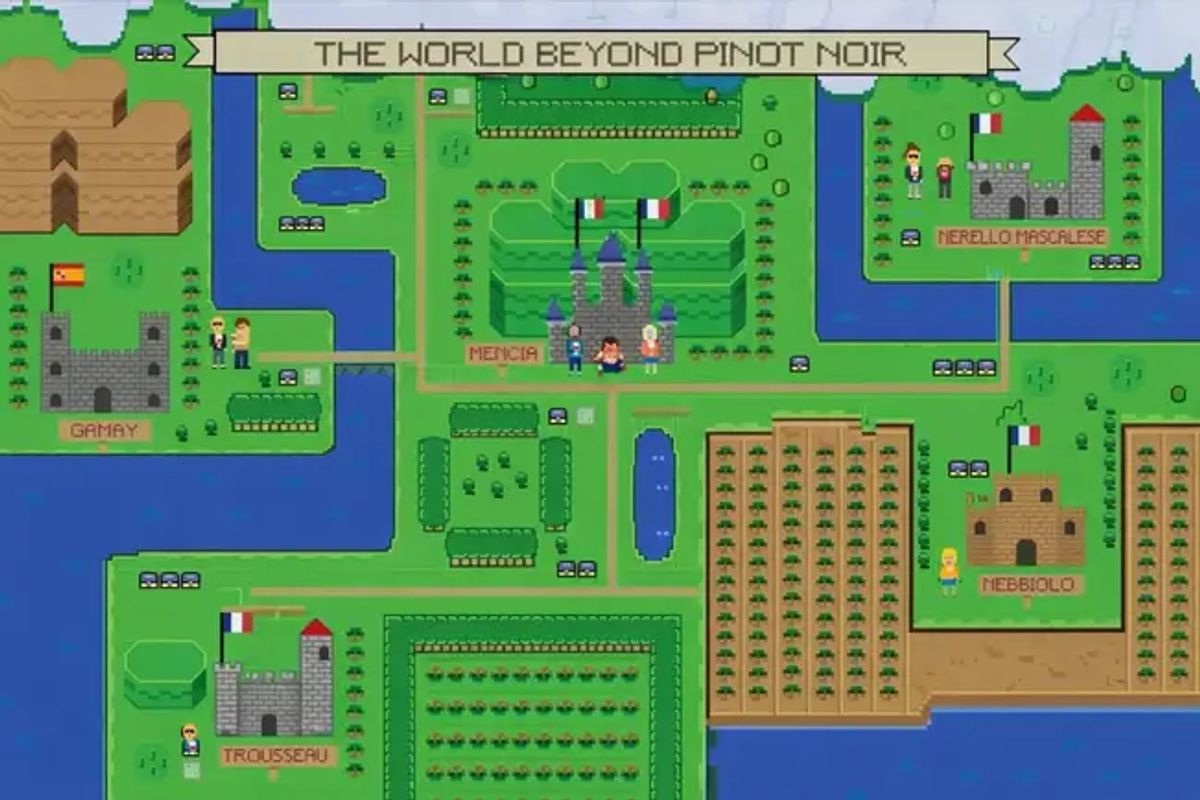
If you like Pinot Noir, try these five wines: Gamay from Beaujolais for bright, crunchy fruit with no ceremony required, Mencía from Bierzo for aromatic dark berry with floral lift, Nerello Mascalese from Mount Etna for volcanic elegance and fine-grained tannin, Nebbiolo from Piedmont for structured depth with tar-and-roses complexity, and Trousseau from the Jura for translucent, wild-strawberry charm. They all share the things that make Pinot Noir work: lightness of touch, transparency, fruit you can see through rather than hide behind, and a sensitivity to place that heavier reds rarely achieve.
Five wines to try if you like Pinot Noir:
- Gamay (Beaujolais): bright, crunchy, immediately joyful (£8 to £18)
- Mencía (Bierzo, Spain): aromatic, floral, dark berry with mineral edge (£9 to £20)
- Nerello Mascalese (Etna, Sicily): volcanic, silky, fine-grained (£12 to £30)
- Nebbiolo (Piedmont, Italy): structured, transparent, tar and roses (£12 to £60+)
- Trousseau (Jura, France): wild, translucent, strawberry and earth (£12 to £25)
The longer answer involves a map, a blind tasting game, and a scoring system that will teach you more about what you actually want from red wine than years of defaulting to Pinot.
QUICK LEGEND
If you like the bright, crunchy, fruit-forward side: go Gamay. If you like the aromatic, floral, dark berry side: go Mencía. If you like the silky, savoury, structured side: go Nerello Mascalese. If you like the firm, transparent, age-worthy side: go Nebbiolo. If you like the wild, earthy, transparent side: go Trousseau.
WHAT CONNECTS THESE WINES
These four wines don't taste identical to Pinot Noir. They share its temperament, not its flavour profile:
Light to medium body. Red fruit at the core: cherry, raspberry, strawberry, cranberry. Tannins that guide rather than grip. A transparency that lets you taste where the wine comes from, not just what grape it is made from. The kind of red you can drink slightly cool on a warm evening without anyone raising an eyebrow.
Pinot Noir drinkers are already explorers. You chose a grape that rewards attention over power. These four wines speak the same language. Serve all four slightly chilled (14 to 16 degrees) for maximum lift.
If Pinot Noir is your usual, these are the closest side-steps. They keep the same weight and change one variable at a time: fruit character, tannin texture, aromatic intensity, earthiness.
THE FOUR WINES
1. GAMAY, THE JOYFUL ONE
Gamay is Pinot Noir's next-door neighbour. Literally. Beaujolais sits just south of Burgundy, and for centuries the two grapes grew side by side. But where Pinot Noir asks you to slow down and concentrate, Gamay grabs you by the arm and says let's go.
The first sip is all crunch: fresh cherry, crushed raspberry, a snap of acidity like biting into a cold plum straight from the fridge. There is little oak to speak of. Tannins are low and friendly. Just fruit and energy and the kind of drinkability that empties a bottle before anyone notices.
That is the entry level. Cru Beaujolais, from villages like Morgon, Fleurie, and Moulin-à-Vent, is where Gamay gets serious. The granite soils give the wines a mineral spine that Pinot Noir drinkers will recognise immediately. Morgon in particular has a depth and structure that regularly gets mistaken for Burgundy in blind tastings. Our guide to the wines of Beaujolais covers all ten crus.
What you'll recognise from Pinot Noir: the lightness, the red fruit, the way it works slightly chilled. What's different: juicier, crunchier, less savoury, less oak. More immediate joy, less contemplation. Look for: Cru Beaujolais (Morgon, Fleurie, Moulin-à-Vent) for depth. Beaujolais-Villages for everyday drinking. £8-18.
2. MENCÍA, THE AROMATIC ONE
From Bierzo in northwest Spain, tucked up against the mountains near Galicia. Mencía is what happens when you take Pinot Noir's berry-and-violet promise and add a floral intensity that Burgundy rarely reaches. Dark cherry, violets, and a perfume that lifts off the glass before you get anywhere near it.
The texture is closer to Pinot than almost any other grape on this list. Silky, medium-bodied, with tannins that feel polished rather than rough. But there is a mineral edge underneath, something slate-like and cool, that gives the wine a seriousness its fruit-forward first impression might not suggest.
Bierzo is one of Spain's most exciting wine regions. The old-vine Mencía from steep hillside parcels has a concentration and sense of place that competes with good Burgundy at a fraction of the price. For a broader picture of Spanish wine, our guide to the wine regions of Spain puts Bierzo in context. If you want to understand how Mencía fits alongside the major grape varieties, our definitive guide to wine grapes covers the full field.
What you'll recognise from Pinot Noir: the silky texture, the medium body, the red-to-dark berry fruit. What's different: more floral, more aromatic, a slate mineral edge, less earthy. Look for: Mencía from Bierzo. £9-20. Also worth exploring from Valdeorras and Ribeira Sacra.
3. NERELLO MASCALESE, THE VOLCANIC ONE
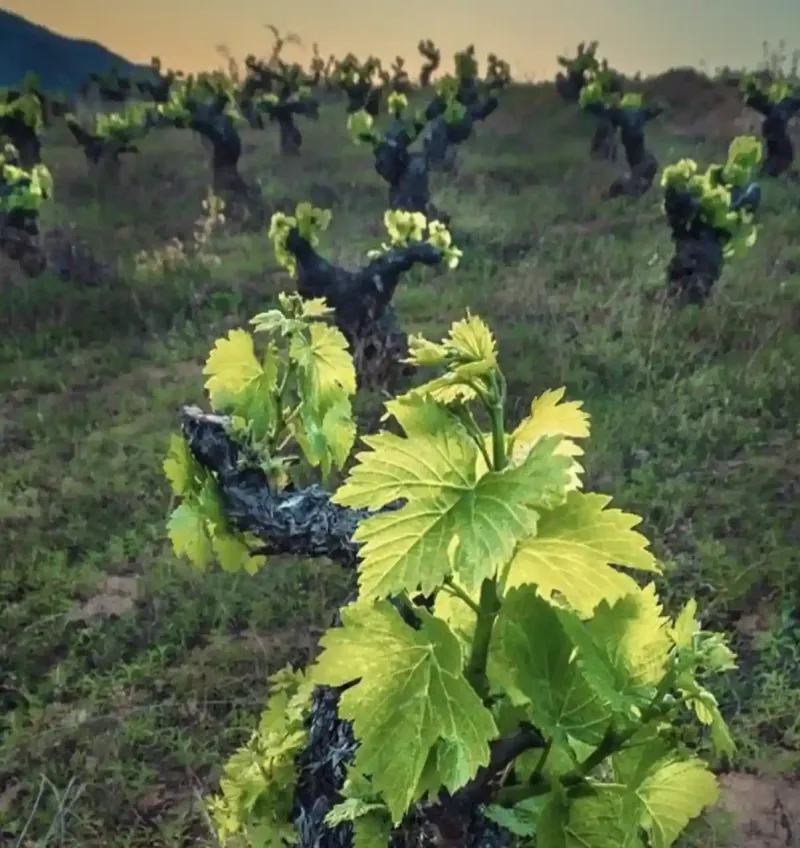
From the slopes of Mount Etna in Sicily. Nerello Mascalese is sometimes called "the Pinot Noir of the Mediterranean" and for once the comparison is earned. It has the same pale colour, the same fine-grained tannin, the same ability to express exactly where it was grown with an almost unsettling precision.
The volcanic soil is the headline. Etna's lava flows create vineyards where the terroir changes every few hundred metres, and Nerello Mascalese translates those differences with a fidelity that only Pinot Noir normally achieves. The wine itself tastes of dried red cherry, blood orange, crushed herbs, and something faintly smoky that you cannot quite place. It has a savouriness that sits between Burgundy and Barolo, borrowing from both without imitating either.
This is the least obvious wine on this list and the one most likely to become an obsession. Our guide to Italian wine regions covers Etna alongside the rest of the country. For more on why place matters to taste, our Taste Decoded series explores the science and culture behind how we experience flavour.
What you'll recognise from Pinot Noir: pale colour, silky tannin, transparency, sense of place. What's different: more savoury, more herbal, a volcanic mineral character, blood orange rather than raspberry. Look for: Etna Rosso DOC. £12-30. Tenuta delle Terre Nere, Graci, and Passopisciaro are reliable starting points. For Sicily beyond Etna, Cos and Arianna Occhipinti are worth knowing. And for a different expression of Italian terroir-driven winemaking, our piece on Chiara Pepe and the Emidio Pepe estate explores what four generations of listening to the vine looks like in Abruzzo.
4. NEBBIOLO, THE SERIOUS ONE
From Piedmont in northwest Italy, where it makes Barolo, Barbaresco, and some of the most age-worthy red wines on the planet. Nebbiolo shares more with Pinot Noir than almost any other grape: pale colour, high acidity, fine-grained tannin, and an obsession with exactly where it was grown. But where Pinot seduces, Nebbiolo challenges. The tannins are firmer, the acidity sharper, the finish longer. It asks you to come back tomorrow and try again.
The classic description is "tar and roses" and it is not wrong. But young Langhe Nebbiolo, the entry-level expression from the hills around Alba, has a cranberry-and-dried-herb brightness that sits much closer to Pinot Noir than most people expect. The austerity comes with age and ambition, not with the grape itself.
You do not need to start with Barolo. Langhe Nebbiolo gives you the structure, the transparency, and the terroir sensitivity at a fraction of the price. When you are ready for the full experience, our guide to Barolo goes deep.
What you'll recognise from Pinot Noir: pale colour, high acidity, transparency, terroir expression. What's different: firmer tannins, more structured, tar and rose petal, longer finish. Rewards patience. Look for: Langhe Nebbiolo (£12-18) as the starting point. Roero (£15-22) for a step up. Barolo and Barbaresco (£25-60+) when you want to understand what the fuss is about.
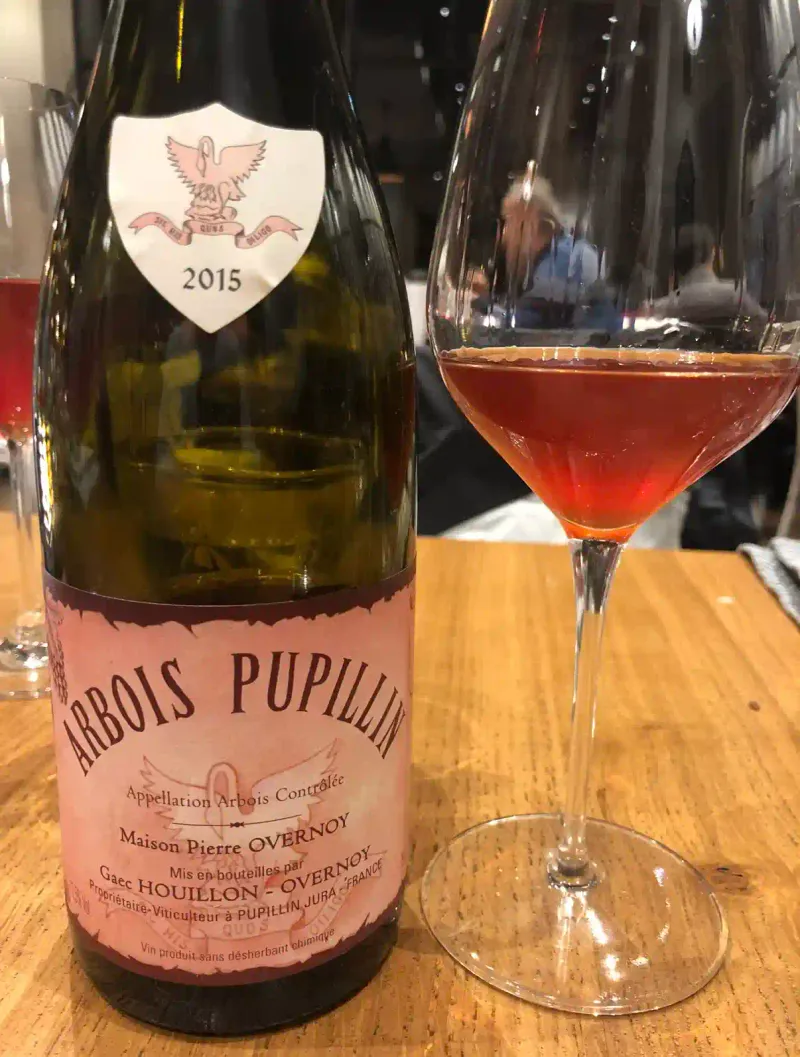
5. TROUSSEAU, THE WILD ONE
From the Jura in eastern France, a region that does nothing the way everyone else does. Trousseau is pale, fragrant, earthy, and completely unlike anything you have tasted if your red wine experience stops at the supermarket shelf.
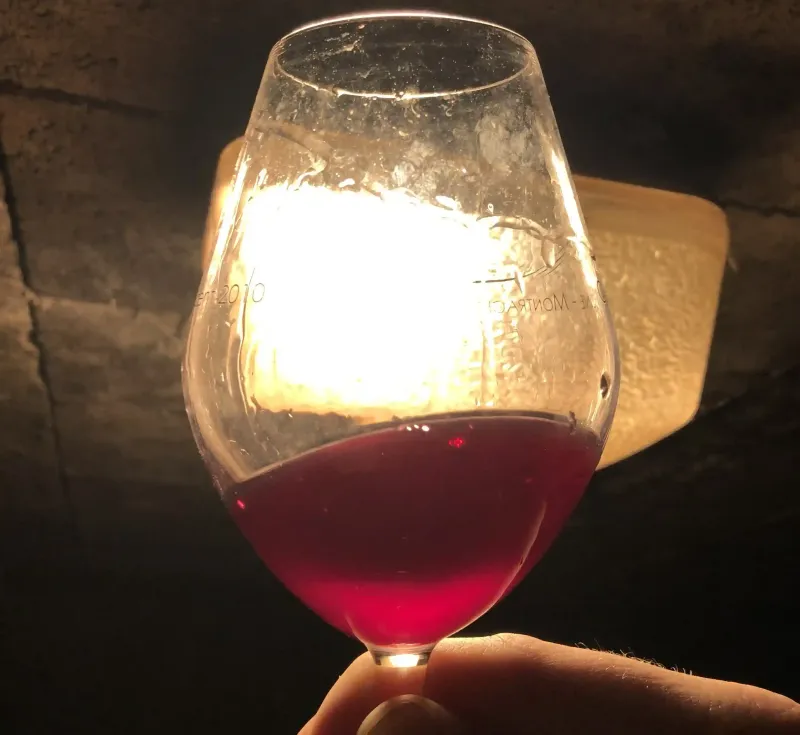
The colour alone is arresting. Hold a glass up to the light and you can read a newspaper through it. Wild strawberry, rose petal, a whiff of undergrowth, and a savoury, almost salty finish that makes you want to eat charcuterie immediately. It has the transparency of great Pinot Noir with none of the polish. This is wine that still has soil under its fingernails.
The Jura is a region for people who are bored of playing it safe. If Gamay is the introduction and Nerello is the deep cut, Trousseau is the B-side that the devoted fans argue is actually the best track. Our guide to Jura and Savoie producers covers the key names.
What you'll recognise from Pinot Noir: the lightness, the transparency, the red fruit, the sensitivity to terroir. What's different: wilder, earthier, more rustic, less polished. Stranger in the best way. Look for: Trousseau from Arbois and around Pupillin. £12-25.
THE TASTING GAME
WHAT YOU NEED
Five bottles (one of each wine above). Four glasses per person (pick four of the five, or go all in with five if your group is committed). A pen and the rating table below. Friends who think they know what Pinot Noir tastes like. Optional: bring your usual Pinot Noir as a sixth bottle for direct comparison.
If you want to sharpen your technique before game night, Michael Sager's guide on how to taste wine is worth ten minutes of your time.
THE RATING TABLE
Rate each wine 1-5:
| Characteristic | What you're looking for |
|---|---|
| Red fruit intensity | Cherry, raspberry, strawberry, cranberry, redcurrant |
| Dark fruit and floral | Blackberry, violet, plum, rose petal, blueberry |
| Perceived tannin | How grippy or silky the wine feels on your gums |
| Earthiness and savour | Mushroom, herbs, smoke, undergrowth, minerality |
| Acidity and freshness | How bright and mouthwatering the wine feels |
This is a training wheel, not a laboratory result. Our wine flavour tasting chart is a useful reference if you want more specific language for what you're tasting.
HOW TO PLAY
Step 1: Pour blind. Label the wines A, B, C, D. Don't reveal which is which.
Step 2: Taste and score. Each person rates every wine 1-5 across the five characteristics above. 1 is low, 5 is high.
Step 3: Compare scores. See where you agree and where you don't. The disagreements are the interesting part.
Step 4: Reveal the wines. Then compare your scores with the Ourglass benchmarks below.
Step 5: Retaste in a different order. Re-score. Notice how your perceptions shift once you know what you're drinking. This is where the real learning happens: your palate is not fixed. It changes with context, expectation, and experience.
OURGLASS BENCHMARKS
These scores are relative to each other, not absolute. If your table argues with ours, trust your table.
| Characteristic | Red fruit intensity | Dark fruit and floral | Perceived tannin | Earthiness and savour | Acidity and freshness | |
|---|---|---|---|---|---|---|
| Pinot Noir | 4 | 3 | 3 | 4 | 3 | |
| Gamay | 5 | 2 | 1 | 2 | 5 | |
| Mencía | 3 | 5 | 3 | 2 | 4 | |
| Nerello Mascalese | 3 | 3 | 3 | 5 | 3 | |
| Nebbiolo | 3 | 4 | 4 | 4 | 4 | |
| Trousseau | 4 | 2 | 2 | 4 | 4 |
THE FIVE QUESTIONS
Between rounds, pick a contestant. Pour them one wine. Ask:
- Old world or new world?
- Would you serve this chilled or at room temperature?
- More or less than 13% alcohol?
- Would you drink this without food?
- Is this [Wine A] or [Wine B]?
Make that last question as easy or cruel as you like. Question 2 is the sneaky one. All four of these wines benefit from a slight chill, but Gamay and Trousseau actively demand it. If someone instinctively says "room temperature," they are probably tasting Nerello or Mencía. That instinct is palate knowledge they did not know they had.
WHAT YOUR SCORES REVEAL ABOUT YOUR PALATE
Look at where you scored highest across all four wines. That's your palate talking.
High red fruit + high acidity? You like wines that are bright, crunchy, and energetic. Gamay is your home territory. Next: Frappato from Sicily, Barbera from Piedmont, young Zweigelt from Austria. Your palate wants freshness and immediacy.
High dark fruit and floral + moderate tannin? You like wines that are aromatic and layered. Mencía is your grape. Next: Lagrein from Alto Adige, Dolcetto from Piedmont, or young Nebbiolo from Langhe.
High earthiness + moderate tannin? You like wines that taste of place. Nerello Mascalese is your starting point. Next: aged Burgundy (when the fruit recedes and the earth emerges), Xinomavro from Naoussa in northern Greece, Nebbiolo from the Langhe. Your palate wants complexity and terroir transparency.
High tannin + high acidity + high earthiness? You want structure and depth. Nebbiolo is your grape. Next: Barolo and Barbaresco when you are ready for the full experience, Tannat from Madiran, or aged Aglianico from Taurasi. Your palate wants wines that push back and reward patience. Our guide to Barolo goes deep.
High red fruit + high earthiness? You want both the fruit and the wildness. Trousseau is your wine. Next: Poulsard from the Jura (even paler, even stranger), skin-contact reds, field blends from small producers. Your palate wants authenticity over polish.
Everything scored around 3? You're either impressively balanced or you need another glass. Either way, that's what round two is for.
For more on how your palate develops over time, our guide on how to develop your wine palate covers the principles behind everything in this game. If you want to go further, our five expert methods for discovering your palate takes a different angle.
YOUR SHOPPING LIST
| Wine | Gamay | Mencía | Nerello Mascalese | Nebbiolo | Trousseau |
|---|---|---|---|---|---|
| Region | Beaujolais, France | Bierzo, Spain | Etna, Sicily | Piedmont, Italy | Jura, France |
| Budget | £8-18 | £9-20 | £12-30 | £12-22 | £12-25 |
| Start with | Morgon or Fleurie (Cru Beaujolais) | Bierzo DO | Etna Rosso DOC | Langhe Nebbiolo or Roero | Arbois or Pupillin |
Total for the game: roughly £50-100 for five bottles (or pick four of the five). Split between four people, that's less than dinner out for an evening that will teach you more about red wine than months of guessing.
Good wine lists often have at least one of these. If choosing from a wine list feels daunting, our guide on how to choose wine from a restaurant wine list takes the stress out of it.
GO DEEPER
- What to drink instead of Chardonnay. The full-bodied white version of this game.
- What to drink instead of Sauvignon Blanc. The crisp white version of this game.
- What to drink instead of Malbec. The bold red version of this game.
- If you like that wine, try this: 14 alternative styles. The broader alternatives map.
- How to develop your wine palate. The principles behind everything in this game.
- A beginner's guide to wine. If you're just getting started.
- Is a wine subscription worth it?. How Ourglass works and what you get.
Or skip the shopping and let us do the work. Every Ourglass box is built around this principle: wines picked to stretch your palate, with tasting notes, pairing suggestions, and short videos that help you understand what you're tasting and why you like it. No algorithms. No guesswork. Just great wine, understood.
FREQUENTLY ASKED QUESTIONS
If I like Pinot Noir, what else will I like?
Wines with similar characteristics include Gamay from Beaujolais (bright, crunchy, red fruit), Mencía from Bierzo (aromatic, floral, silky), Nerello Mascalese from Etna (volcanic elegance, fine tannin), Nebbiolo from Piedmont (structured transparency, tar and roses), and Trousseau from the Jura (wild, earthy, translucent). All share lightness of body, red fruit character, and sensitivity to where they were grown. For something slightly bolder, try Frappato from Sicily or Barbera from Piedmont.
What wine tastes most like Pinot Noir?
Gamay from Cru Beaujolais is the closest in spirit. Morgon and Moulin-à-Vent in particular have a depth and structure that regularly gets mistaken for Burgundy Pinot Noir in blind tastings. For a non-French alternative, Mencía from Bierzo has a similar silky texture and medium body with more floral aromatics.
Is Gamay similar to Pinot Noir?
Very. Gamay grows just south of Burgundy's Pinot Noir vineyards and shares its light body, red fruit character, and food-friendliness. The main differences: Gamay tends to be juicier, crunchier, and less savoury. Cru Beaujolais (Morgon, Fleurie, Moulin-à-Vent) bridges the gap, with granite-derived minerality that Pinot drinkers recognise immediately. Our guide to the wines of Beaujolais covers all ten crus.
What is Nerello Mascalese and why is it compared to Pinot Noir?
Nerello Mascalese is the red grape of Mount Etna in Sicily. It is compared to Pinot Noir because it shares its pale colour, fine-grained tannin, high acidity, and ability to express terroir with precision. The volcanic soils give it a distinctive smoky, herbal character that Burgundy does not have, but the structural parallels are real.
Is Nebbiolo similar to Pinot Noir?
Nebbiolo shares Pinot Noir's pale colour, high acidity, and terroir transparency, but has firmer tannins and a longer finish. Where Pinot seduces immediately, Nebbiolo asks for patience. Langhe Nebbiolo (£12-18) is the best entry point and sits closer to Pinot in weight than Barolo or Barbaresco. The classic "tar and roses" character develops with age; young Nebbiolo often has a cranberry brightness that Pinot drinkers find familiar.
What is Mencía and is it like Pinot Noir?
Mencía is a red grape from northwest Spain, primarily Bierzo. It shares Pinot Noir's silky texture and medium body but has more floral aromatics (violets, dark cherry) and a slate mineral edge. It appeals to Pinot drinkers who want similar elegance with more aromatic intensity.
What is Trousseau?
Trousseau is a red grape from the Jura in eastern France. It makes pale, translucent, earthy wines with wild strawberry fruit and a savoury finish. It is one of the lightest reds you will encounter and appeals to Pinot Noir drinkers who value transparency and terroir over power and polish.
What light red wines are similar to Pinot Noir?
Gamay (Beaujolais), Trousseau (Jura), Frappato (Sicily), and Poulsard (Jura) are all light-bodied reds with similar weight to Pinot Noir. Nerello Mascalese (Etna) and Mencía (Bierzo) are slightly fuller but share the elegance and fine tannin structure. All are best served at a slight chill.
Can you drink Pinot Noir alternatives chilled?
Yes. All four wines on this list benefit from a slight chill (14-16 degrees Celsius). Gamay and Trousseau in particular are at their best lightly chilled, similar to how you might serve a lighter Burgundy. Our guide on the right serving temperature for wine covers the details.
What is a cheaper alternative to Burgundy Pinot Noir?
Cru Beaujolais (£8-18) is the best value alternative with a similar philosophy. Mencía from Bierzo (£9-20) offers Pinot-like elegance from Spain. Trousseau from the Jura (£12-25) appeals to the more adventurous Burgundy drinker. All three deliver transparency and terroir expression at a fraction of the price of decent Burgundy rouge.