
WHAT TO DRINK INSTEAD OF PINOT GRIGIO
Five wines similar to Pinot Grigio, and a tasting game to find your favourite.
THE SHORT ANSWER
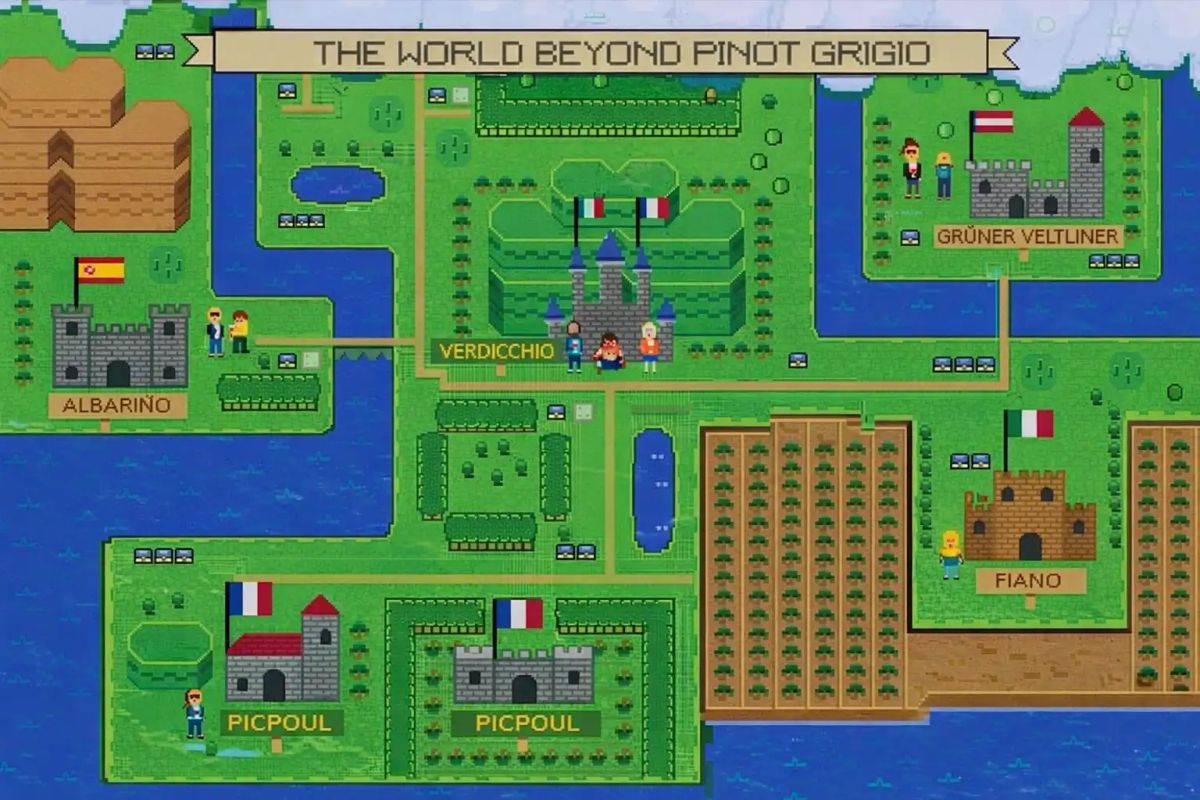
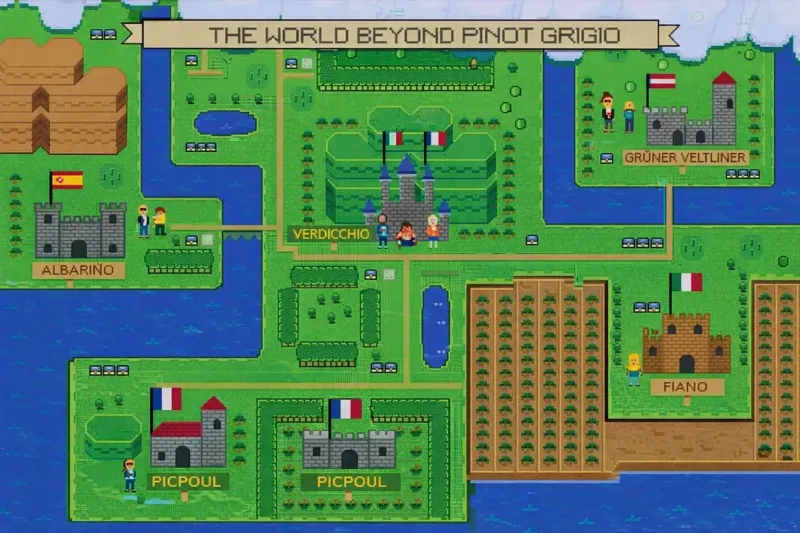
If you like Pinot Grigio, try these five wines: Verdicchio from the Marche for lemony precision with a bitter almond finish and an actual backbone, Albariño from Galicia for peachy, saline freshness that Pinot Grigio gestures towards but rarely achieves, Grüner Veltliner from Austria for white pepper, citrus, and the kind of mineral structure that makes you pay attention, Fiano from Campania for honey, hazelnuts, and genuine complexity, and Picpoul de Pinet from the Languedoc for searingly crisp, seafood-specific freshness at a price that is almost unfair.
They all share Pinot Grigio's lightness and easy drinkability. They each have something more to say.
Five wines to try if you like Pinot Grigio:
- Verdicchio (Marche, Italy): lemony, almond-edged, structured (£8 to £16)
- Albariño (Galicia, Spain): peachy, saline, aromatic (£10 to £20)
- Grüner Veltliner (Austria): white pepper, citrus, steely mineral (£9 to £20)
- Fiano (Campania, Italy): honey, hazelnuts, genuine depth (£10 to £20)
- Picpoul de Pinet (Languedoc, France): searingly crisp, ideal with seafood (£8 to £14)
The longer answer is about why Pinot Grigio became the default white and what you find when you take one step to the left.
THE MAP
QUICK LEGEND
If you like Pinot Grigio's clean, citrusy freshness: go Verdicchio or Picpoul.
If you like peachy fruit with more texture and aromatic lift: go Albariño.
If you want something more interesting in the glass: go Grüner Veltliner.
If you want depth and complexity without heaviness: go Fiano.
WHAT CONNECTS THESE WINES
Pinot Grigio is not a preference. It is a decision to avoid a bad one.
In a category where half the bottles disappoint, it has built a reputation for consistent inoffensiveness. You know what you are getting. The wine will not embarrass you at dinner. It will not challenge you on a Tuesday. That is a genuine service. It is also an extremely low bar.
These five wines are what Pinot Grigio could be if it tried harder. Same weight, same freshness, same approachability. More character. More sense of where they come from. More reason to reach for the glass a second time.
Pale to medium straw colour. Citrus and stone fruit. Crisp acidity. Dry finish. Serve all five well chilled, 8 to 10 degrees Celsius.
THE FIVE WINES
1. Verdicchio, the Structured One
From the Marche on Italy's Adriatic coast. Lemon, green apple, white blossom, and a distinctive bitter almond finish that comes directly from the grape and does not apologise for being there.
The acidity is bracing but not aggressive. There is a mineral spine that Pinot Grigio conspicuously lacks, something chalky and purposeful that makes the wine feel like it has somewhere to be. This is white wine with actual posture.
Verdicchio dei Castelli di Jesi is the most widely available expression. Verdicchio di Matelica, from higher inland vineyards, has more concentration and structure and repays attention. Both are serious wines at prices that still feel like they have not quite noticed.
What you will recognise: pale colour, citrus freshness, dry finish. What changes: bitter almond character, mineral backbone, more persistence, a sense that someone meant it. Look for Verdicchio dei Castelli di Jesi DOC Classico as the starting point. Budget: £8 to £16.
2. Albariño, the Peachy One
From Rías Baixas in Galicia, northwest Spain, where granite soils and Atlantic influence produce a white grape with more personality than almost anything at the same price.
Peach, apricot, white grapefruit, and a saline freshness that arrives from the proximity to the ocean. The acidity is high but the fruit is generous enough that the wine never turns austere. There is a slight floral quality that Pinot Grigio simply does not bother with. The texture is rounder than Verdicchio or Grüner Veltliner, making it the most immediately welcoming wine on this list for anyone who wants more character without more challenge.
Look for producers with estate fruit from granite soils. The volume-produced supermarket versions are a different wine and should not be held against the grape.
What you will recognise: freshness, light body, easy drinkability. What changes: peachy stone fruit, saline quality, rounder texture, more aromatic. Look for Rías Baixas DO. Budget: £10 to £20.
3. Grüner Veltliner, the Peppery One
Austria's signature white grape and one of the most versatile dry whites in the world at its price. Lemon, green herbs, and white pepper, with a mineral backbone that makes it work across a remarkable range of food.
The white pepper is the signature. It sits at the back of the finish, characteristic to the grape, distinctive once you know it. Not aggressive. Persistent. The acidity is brisk, the texture clean, the finish longer than Pinot Grigio drinkers are likely to expect.
Better examples from the Wachau, Kremstal, and Kamptal achieve a density and length that competes with white Burgundy at a fraction of the price. This is the wine for Pinot Grigio drinkers who have been growing quietly bored without quite knowing why.
What you will recognise: freshness, crispness, pale colour. What changes: white pepper character, mineral backbone, more persistence in the finish. Look for Wachau, Kremstal, or Kamptal. Smaragd classification for the most serious examples. Budget: £9 to £20.
4. Fiano, the Complex One
From Campania in southern Italy, where volcanic soils and the temperature swings between warm days and cool nights produce a white grape that smells like a good bakery and tastes like it has been thinking about things.
Honey, toasted hazelnuts, white peach, and a slightly waxy texture that makes Fiano feel more substantial than its alcohol would suggest. White wine with depth without heaviness. A slight bitter almond quality at the finish, similar to Verdicchio but warmer and more generous.
Fiano di Avellino DOCG is the benchmark appellation. Good examples genuinely benefit from a year or two in the bottle. This is not a wine that wants to be rushed.
What you will recognise: dry finish, light-medium body, approachability. What changes: honey and hazelnut character, more texture, volcanic depth, the feeling that something is actually going on. Look for Fiano di Avellino DOCG. Budget: £10 to £20.
5. Picpoul de Pinet, the Searingly Crisp One
From the Languedoc, where the Picpoul grape grows in the shadow of the Thau lagoon, not far from the Mediterranean. The name means "lip stinger" in Occitan. It is not a metaphor.
Lemon, lime, green apple, and an acidity that makes your mouth water about three seconds after the first sip, before you have even had time to form a thought about it. Pale, nearly colourless, bone dry. Zero fat, zero floral, zero ceremony. Designed principally for seafood, and for that purpose almost impossible to improve on.
Good Picpoul de Pinet rarely costs more than £12. It is the house white for anyone who eats fish more than twice a week and wants the wine to get out of the way and let the food be the point.
What you will recognise: paleness, crispness, easy character. What changes: considerably more acidic, overtly lemony, designed for a specific purpose, uncompromising dryness. Look for Picpoul de Pinet AOP. Budget: £8 to £14.
THE TASTING GAME
What You Need
Five bottles, one of each wine above. Four to five white wine glasses per person. A pen and the rating table below. Friends who order Pinot Grigio without looking at the rest of the list.
Optional but recommended: bring your usual Pinot Grigio as a sixth bottle for direct comparison.
The Rating Table
Rate each wine from 1 to 5:
| Characteristic | What you are looking for |
|---|---|
| Citrus character | Lemon, lime, grapefruit |
| Stone fruit | Peach, apricot, nectarine |
| Mineral and savoury | Chalk, salinity, white pepper, almond |
| Freshness and acidity | How much the wine makes your mouth water |
| Complexity | How much there is beyond the first sip |
How to Play
Step 1: Pour blind. Label the wines A, B, C, D, E.
Step 2: Taste and score.
Step 3: Compare scores. Stone fruit versus citrus tends to be where the group splits.
Step 4: Reveal the wines.
Step 5: Taste again with food. A simple piece of grilled fish will completely change the ranking.
Ourglass Benchmarks
| Pinot Grigio | Verdicchio | Albariño | Grüner | Fiano | Picpoul | |
|---|---|---|---|---|---|---|
| Citrus | 3 | 5 | 3 | 4 | 2 | 5 |
| Stone fruit | 2 | 1 | 5 | 2 | 4 | 1 |
| Mineral/savoury | 2 | 4 | 3 | 5 | 3 | 3 |
| Freshness | 3 | 4 | 4 | 4 | 3 | 5 |
| Complexity | 2 | 3 | 3 | 4 | 5 | 2 |
The Five Questions
Between rounds, pour one wine blind and ask:
1. Citrus or stone fruit?
2. More or less mineral than Pinot Grigio?
3. What would you eat with this?
4. Would you serve this slightly warmer or slightly colder than the last one?
5. Would you drink this without food?
Question 5 separates Fiano, which says yes and means it, from Picpoul, which says yes but is clearly waiting for anchovies. That instinct tells you something about whether you want a white wine to be an event in itself or a supporting act.
If this is the kind of discovery you enjoy, that is the entire point of Ourglass. See how it works.
WHAT YOUR SCORES REVEAL ABOUT YOUR PALATE
High citrus + high freshness + low complexity? You want clean, crisp, uncomplicated. Picpoul is your house white. Verdicchio gives the same freshness with more structure. Next: Muscadet, Vinho Verde, Chablis.
High stone fruit + moderate acidity? Albariño is your grape. You want fresh but peachy. Next: Roussanne from the Rhône, white Grenache, Viognier.
High mineral + high complexity? Grüner Veltliner is where you are heading. Next: Riesling from the Mosel, Chablis Premier Cru, white Burgundy.
High complexity + warmth? Fiano is your discovery. Next: aged white Rioja, Grenache Blanc from the southern Rhône.
YOUR SHOPPING LIST
| Verdicchio | Albariño | Grüner Veltliner | Fiano | Picpoul | |
|---|---|---|---|---|---|
| Region | Marche, Italy | Galicia, Spain | Austria | Campania, Italy | Languedoc, France |
| Budget | £8–16 | £10–20 | £9–20 | £10–20 | £8–14 |
| Start with | Verdicchio dei Castelli di Jesi | Rías Baixas DO | Wachau or Kremstal | Fiano di Avellino DOCG | Picpoul de Pinet AOP |
GO DEEPER
What to drink instead of Sauvignon Blanc. The more aromatic crisp white version.
What to drink instead of Chardonnay. The full-bodied white version.
What to drink instead of Malbec. The other half of this conversation.
What to drink instead of Cabernet Sauvignon. The structured red version.
What to drink instead of Rioja. The oak-aged red version.
What to drink instead of Rose. The pink version.
What to drink instead of Pinot Grigio. The non-obvious version.
How to develop your wine palate.
Is a wine subscription worth it?
FREQUENTLY ASKED QUESTIONS
If I like Pinot Grigio, what else will I like?
Verdicchio from Italy gives citrus freshness with more structure and that distinctive bitter almond finish. Albariño adds peachy stone fruit and saline character. Grüner Veltliner has white pepper and mineral complexity. Fiano from Campania offers warmth and genuine depth. Picpoul de Pinet is searingly crisp and ideal with seafood.
What wine is most similar to Pinot Grigio?
Picpoul de Pinet: pale, dry, crisp, and uncomplicated. Verdicchio is the closest Italian alternative with more structure and considerably more character.
What is Albariño?
A Spanish white grape from Galicia with peachy, saline freshness. Shares Pinot Grigio's easy drinkability but has more aromatic character, stone fruit, and a distinctive oceanic salinity from Atlantic influence.
What is Grüner Veltliner?
Austria's signature white grape. Makes dry, crisp wines with lemon, white pepper, and a mineral backbone. The white pepper character is characteristic and distinctive. The correct choice for Pinot Grigio drinkers who have quietly outgrown it.
What is Picpoul de Pinet?
A searingly crisp French white from the Languedoc. Bone dry, highly acidic, lemony, and designed for seafood. One of the best-value whites available.