
WHAT TO DRINK INSTEAD OF MALBEC
Six wines similar to Malbec, and a tasting game to find your favourite.
THE SHORT ANSWER
If you like Malbec, start with these four wines: Cahors for the grape's brooding French original, Douro red for sun-baked dark fruit and structure, Mencía for juicy, aromatic reds with real finesse, and Mourvèdre for wild, meaty intensity. Then try the two bonus picks: Primitivo for generous warmth and spice, and Nero d'Avola for bold Sicilian dark fruit with a bitter cherry edge. They all share the things that make Malbec work: dark fruit, approachable tannins, warmth without heaviness, and a generosity that makes them ridiculously easy to drink.
The rest is a map, a blind tasting, and a scoring system that turns hunches into something you can actually compare.
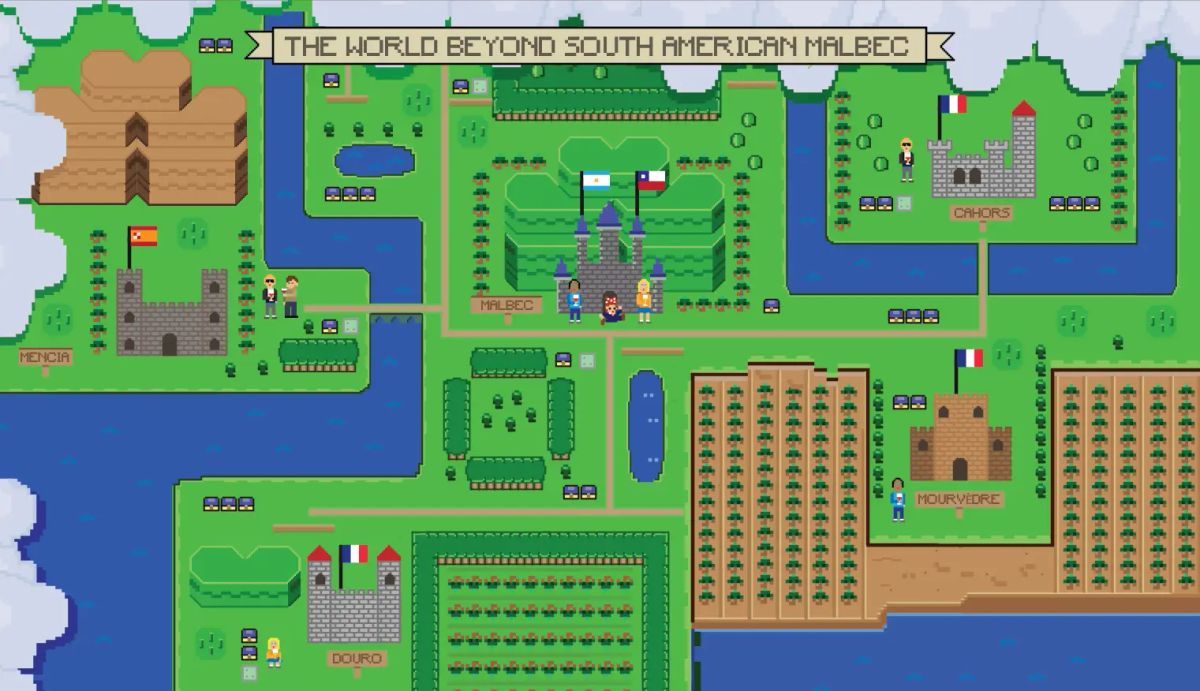
THE MAP
QUICK LEGEND
If you like the dark, brooding intensity: go Cahors. If you like the sun-baked richness and structure: go Douro. If you like the juicy, aromatic finesse: go Mencía. If you like the wild, meaty, savoury power: go Mourvèdre.
Bonus regions: If you like the ripe, spicy warmth: go Primitivo. If you like the bold fruit with a bitter cherry edge: go Nero d'Avola.
WHAT CONNECTS THESE WINES
These six wines don't taste identical to Argentine Malbec. They share its basic promise:
Dark fruit. Plum, blackberry, cocoa. Soft to medium tannins that don't fight you. Warmth and generosity over austerity, often with oak that supports rather than dominates. The kind of red you'd happily drink on a Tuesday without feeling like you're settling, though some are at their best with food.
Argentine Malbec sits at the centre of the map. It's the castle. The surrounding regions are dungeons waiting to be explored, each with its own character, its own rewards, and the occasional monster lurking behind a barrel.
If you want something lighter and more aromatic, start with Mencía. If you want something leaner and more structured, go Douro or Cahors. If you want something with wild, savoury complexity, Mourvèdre is your move. If you want something plusher and easier, Primitivo is closest in style.
THE FOUR MAP WINES
1. CAHORS, THE ORIGIN STORY
Argentine Malbec is the same grape, transplanted from southwest France to Mendoza in the 1850s. But the two taste remarkably different. Where Argentine Malbec is plush, fruity, and immediately charming, Cahors is darker, tighter, and more tannic. It used to be called "the black wine of Cahors" for a reason. This is Malbec before it moved to the sunshine and loosened up.
Old-school Cahors can be a bit stern. Modern Cahors from good producers has kept the depth but added polish. It's the difference between a blues guitarist playing a stadium and the same guitarist playing a basement bar. The basement version has more edge.
For the full picture of where Cahors sits within France's southwest, our guide to French wine regions covers it alongside Bordeaux, the Rhône, and the rest.
What you'll recognise from Argentine Malbec: dark plum, violet, that satisfying weight in the mouth. What's different: firmer tannins, less overt fruit, more savoury and earthy. Needs food. Look for: Cahors (the appellation), especially anything labelled "pur Malbec" or from the limestone plateau. £9-16.
2. DOURO RED, THE POWERHOUSE
From the steep terraced vineyards of northern Portugal where they also make port. Douro reds are built from blends of indigenous grapes (Touriga Nacional, Tinta Roriz, Touriga Franca) and they deliver a similar promise to Malbec: dark, ripe, generous, easy to love.
But there's more going on. The best Douro reds have a structure and complexity that Argentine Malbec at the same price point rarely matches. Sun-baked dark fruit layered with herbs, graphite, and a dry finish that makes you reach for another sip instead of another gulp. Port producers making table wine is one of the great underrated stories in wine right now.
Understanding what makes wine cheap vs expensive helps explain why Douro reds at £10 often outperform Malbec at £15.
What you'll recognise from Argentine Malbec: dark berry fruit, warmth, that generous mouthfeel. What's different: more structured, drier finish, savoury herbs, blended complexity rather than single-grape simplicity. Look for: Douro DOC reds. Names to trust: Niepoort, Quinta do Crasto, Quinta do Vallado, Chryseia. £8-15 for the everyday wines, £15-25 for the ones that will make you forget Malbec exists.
3. MENCÍA, THE LIGHT ON ITS FEET ONE
From Bierzo in northwest Spain, tucked up against the mountains near Galicia. Mencía is what happens when you take the berry-and-violet promise of Malbec and strip out the weight. It's juicy, aromatic, and surprisingly delicate for a red this coloured. Think blackberry and violet with a floral lift and a minerality that Malbec almost never has.
If Malbec is a bear hug, Mencía is a firm handshake from someone interesting. It has the fruit but also the restraint. It's the wine on this list most likely to make a Pinot Noir drinker sit up and pay attention.
Bierzo is one of Spain's most exciting regions right now, and Mencía is the grape driving it. Producers like Descendientes de J. Palacios and Dominio de Tares have put it on the map.
What you'll recognise from Argentine Malbec: dark berry fruit, violet notes, that immediate appeal. What's different: lighter body, more floral, more mineral, much less oak. Closer to Beaujolais than Barolo. Look for: Mencía from Bierzo. £9-15. Closer to Pinot-adjacent freshness than blockbuster tannin. Also worth trying from Valdeorras and Ribeira Sacra.
4. MOURVÈDRE, THE WILD ONE
Also known as Monastrell in Spain and Mataro in Australia. Mourvèdre is the wine on this list that will challenge you the most. It's dark, meaty, savoury, and a bit feral. Where Malbec smooths everything into easy-drinking plushness, Mourvèdre leaves the rough edges on. Leather, smoke, black fruit, dried herbs. It's not trying to be liked. It's trying to be remembered.
The best Mourvèdre comes from Bandol in Provence (serious, age-worthy, expensive) and from the southern Rhône as a blending partner with Grenache and Syrah. For pure, affordable Mourvèdre, look to Jumilla in southeast Spain where it's called Monastrell and sells for next to nothing.
Our Rhône producers guide covers the key names if you want to go deeper into the blend.
What you'll recognise from Argentine Malbec: dark fruit, body, warmth. What's different: much more savoury, more tannic, wilder. Game meat and leather instead of plum jam. Needs patience or food. Look for: Bandol (typically £20+) for the serious version. Jumilla Monastrell (£6-10) for the everyday entry point. Absurd value at the lower end.
TWO BONUS REGIONS
5. PRIMITIVO, THE CROWD-PLEASER
From Puglia in the heel of Italy's boot. Primitivo is the same grape as Zinfandel (same DNA, different passport) and it delivers exactly what Malbec drinkers want: ripe dark fruit, a perception of sweetness from ripe fruit and alcohol warmth, soft tannins, and a generosity that feels like a bear hug from someone you actually like.
This is the most immediately likeable wine on the list. It has less subtlety than Cahors and less structure than Douro, but it has charm by the bucketload. The bottle most likely to disappear before anyone thinks to photograph it.
If Cahors is the origin story and Douro is the powerhouse, Primitivo is the mate who shows up with pizza and somehow makes the whole evening better. Our guide to Italian wine regions puts Puglia in context with the rest of the country.
What you'll recognise from Argentine Malbec: ripe dark fruit, soft tannins, that "another glass" warmth. What's different: more spice (cinnamon, clove), less violet and plum, more dried fig and cherry. Look for: Primitivo di Manduria for the richer style, or straight Primitivo Puglia IGT for the lighter, everyday version. £7-12. One of the best value reds for the money right now.
6. NERO D'AVOLA, THE DARK HORSE
Sicily's signature red grape. Nero d'Avola means "black of Avola" and the name tells you what you need to know: this is a dark, full-bodied, sun-drenched red with serious intensity.
Good Nero d'Avola shares Malbec's generosity but adds a bitter cherry and dried herb edge that Argentine Malbec rarely has. There's a Mediterranean quality to it, a dustiness, that makes it feel rooted in a specific place in a way that mass-produced Malbec often doesn't. It's also the wine on this list that pairs best with food. Lamb, aubergine, hard cheese, anything chargrilled. For pairing ideas beyond the obvious, our guide to matching wine and food is worth a look.
This is the least obvious choice for Malbec drinkers. It's here because it delivers the same bold, dark, satisfying red wine experience through a completely different lens. If the map wines are variations on a theme, this is the remix.
What you'll recognise from Argentine Malbec: dark fruit, body, that sense of generosity. What's different: bitter cherry finish, dried herbs, more Mediterranean character, better with food. Look for: Nero d'Avola from Noto or Vittoria for the best quality. Planeta, Cusumano, Feudo Maccari. £8-14.
THE TASTING GAME
WHAT YOU NEED
Pick four of the six wines above (or go all in with six if your friends are committed). Four glasses per person. A pen and the rating table below. Friends who have opinions about steak.
If you want to sharpen your technique before game night, Michael Sager's guide on how to taste wine is worth ten minutes of your time.
THE RATING TABLE
Rate each wine 1-5:
| Characteristic | What you're looking for |
|---|---|
| Dark fruit intensity | Plum, blackberry, black cherry, blueberry |
| Ripe / dried fruit intensity | Fig, raisin, prune, jammy sweetness |
| Perceived tannin | How grippy or drying the wine feels on your gums |
| Warmth / alcohol impression | How hot or warming the wine feels (not actual ABV) |
| Savoury / earthy edge | Herbs, smoke, graphite, leather, anything that isn't fruit |
Our wine flavour tasting chart is a useful reference if you want more specific language for what you're tasting.
HOW TO PLAY
Step 1: Pour blind. Label the wines A, B, C, D (or A through F). Don't reveal which is which.
Step 2: Taste and score. Each person rates every wine 1-5 across the five characteristics above. 1 is low, 5 is high.
Step 3: Compare scores. See where you agree and where you don't. The disagreements are the interesting part.
Step 4: Reveal the wines. Then compare your scores with the Ourglass benchmarks below.
Step 5: Retaste in a different order. Re-score. Notice how your perceptions shift once you know what you're drinking. This is the most important step: your palate is not fixed. It changes with context, expectation, and experience.
OURGLASS BENCHMARKS
These scores are relative to each other, not absolute. If your table argues with ours, trust your table.
| Characteristic | Argentine Malbec | Cahors | Douro Red | Mencía | Mourvèdre | Primitivo | Nero d'Avola |
|---|---|---|---|---|---|---|---|
| Dark fruit intensity | 4 | 5 | 4 | 3 | 4 | 3 | 4 |
| Ripe / dried fruit intensity | 4 | 2 | 2 | 2 | 2 | 5 | 3 |
| Perceived tannin | 2 | 4 | 4 | 2 | 5 | 2 | 3 |
| Warmth / alcohol impression | 4 | 3 | 3 | 2 | 4 | 5 | 3 |
| Savoury / earthy edge | 1 | 4 | 5 | 3 | 5 | 1 | 4 |
THE FIVE QUESTIONS
Between rounds, pick a contestant. Pour them one wine. Ask:
- Old world or new world?
- Single grape or blend?
- More or less than 14% alcohol?
- Would you drink this without food?
- Is this [Wine A] or [Wine B]?
Make that last question as easy or cruel as you like. Question 4 is the sneaky one. Malbec, Primitivo, and Mencía work beautifully solo. Cahors, Douro, Mourvèdre, and Nero d'Avola are better with food. Knowing which camp you fall into tells you something real about your palate.
WHAT YOUR SCORES REVEAL ABOUT YOUR PALATE
Look at where you scored highest across all the wines. That's your palate talking.
High dark fruit + low savoury edge? You like wines that are generous, fruit-forward, and immediately satisfying. Argentine Malbec and Primitivo are your comfort zone. Next: Carmenere from Chile, Bonarda from Argentina, or a juicy Grenache from the southern Rhône.
High dark fruit + low tannin? You want flavour without the fight. Mencía is your grape. Next: Barbera from Piedmont, Gamay from Beaujolais, or Frappato from Sicily. Juicy, vibrant reds with real personality.
High tannin + high savoury edge? You like wines with grip and complexity. Cahors, Douro, and Mourvèdre are your territory. Next: Tannat from Madiran, Touriga Nacional from the Dao, or a serious Nebbiolo from Langhe. If Nebbiolo grabs you, our guide to Barolo goes deep. You're ready for wines that push back.
High dark fruit + high savoury edge? You want it all. Nero d'Avola and Mourvèdre are your starting points. Next: Aglianico from Campania, Xinomavro from northern Greece, or Tannat from Uruguay. Your palate wants intensity with complexity.
Everything scored around 3? You're either impressively balanced or you need another glass. Either way, that's what round two is for.
For more on how your palate develops over time, our guide on how to develop your wine palate covers the principles behind everything in this game.
YOUR SHOPPING LIST
| Wine | Region | Budget | Start with |
|---|---|---|---|
| Douro Red | Douro Valley, Portugal | £8-15 | Niepoort or Quinta do Crasto |
| Mencía | Bierzo, Spain | £9-15 | Descendientes de J. Palacios or Dominio de Tares |
| Mourvèdre / Monastrell | Bandol or Jumilla | £6-10 (Jumilla) or £20+ | (Bandol) Jumilla Monastrell for value, Bandol for depth |
| Primitivo | Puglia, Italy | £7-12 | Primitivo di Manduria |
| Nero d'Avola | Sicily, Italy | £8-14 | Planeta or Cusumano |
Total for a four-wine game: roughly £30-55. For the full six: £50-80. Split between four people, that's still less than dinner out for an evening that will genuinely change how you think about red wine.
Ask any decent restaurant for a Douro red or a Cahors by the glass. If they're switched on, you'll see Mencía, Monastrell, or Nero d'Avola somewhere on the list too. If restaurant wine lists feel intimidating, our guide on how to choose wine from a restaurant wine list will sort that.
GO DEEPER
What to drink instead of Prosecco. The sparkling version.
What to drink instead of Sauvignon Blanc. The more aromatic crisp white version.
What to drink instead of Chardonnay. The full-bodied white version.
What to drink instead of Pinot Grigio. The non-obvious version.
What to drink instead of Pinot Noir. The lighter red version of this game.
What to drink instead of Shiraz/Syrah. The teeth staining version.
What to drink instead of Cabernet Sauvignon. The structured red version.
What to drink instead of Rioja. The oak-aged red version.
What to drink instead of Rose. The pink version.
If you like that wine, try this: 14 alternative styles - the broader alternatives map
How to develop your wine palate. Learn what you love and why.
Is a wine subscription worth it?. Honest take from biased obsessives.
A beginner's guide to wine. if you're just getting started
Or skip the shopping and let us do the work. Every Ourglass box is built around this principle: wines picked to stretch your palate, with tasting notes, pairing suggestions, and short videos that help you understand what you're tasting and why you like it. No algorithms. No guesswork. Just great wine, understood.
FREQUENTLY ASKED QUESTIONS
If I like Malbec, what else will I like?
Wines with similar characteristics include Cahors (Malbec's French origin), Douro reds from Portugal (dark, structured, generous), Mencía from Bierzo (juicy, aromatic, lighter-bodied), Mourvèdre from Bandol or Jumilla (wild, savoury, intense), Primitivo from Puglia (ripe, warm, soft tannins), and Nero d'Avola from Sicily (bold dark fruit with a Mediterranean edge). All share dark fruit and approachable warmth. For something with more grip, try Tannat from Madiran or Touriga Nacional from the Dao.
What wine tastes most like Malbec?
Cahors from southwest France is the closest match because it is literally the same grape. Malbec originated in Cahors before being transplanted to Argentina in the 1850s. French Cahors tends to be darker, firmer, and more tannic than Argentine Malbec, with less overt fruit sweetness. If you want the closest match to Argentine Malbec's easy-drinking generosity, Primitivo from Puglia is the most similar in style and weight.
What is the difference between Argentine Malbec and French Malbec?
Argentine Malbec is typically plush, fruity, and soft with prominent plum and violet notes. French Malbec from Cahors is darker, more tannic, and more savoury, with firmer structure and earthy undertones. The difference comes from climate (Mendoza is warmer and sunnier than Cahors), altitude (Argentine vineyards are often above 1,000 metres), and winemaking tradition. Both are worth exploring: Argentine for immediate pleasure, Cahors for complexity with food. Our guide to Argentinian wine regions covers Mendoza in depth.
Is Mencía similar to Malbec?
Mencía shares Malbec's dark berry fruit and violet character but is lighter, more aromatic, and more mineral. Think of it as Malbec with the volume turned down and the detail turned up. From Bierzo in northwest Spain, it has a floral lift and freshness that Argentine Malbec rarely offers. It appeals to Malbec drinkers who want dark fruit without the heaviness, and to Pinot Noir drinkers who want something with a bit more body.
Is Primitivo similar to Malbec?
Primitivo shares Malbec's ripe dark fruit, soft tannins, and generous warmth, making it the most approachable alternative on this list. It tends to have more spice (cinnamon, clove) and dried fruit character, with a perception of sweetness driven by ripe fruit and higher alcohol rather than residual sugar. Primitivo is the same grape as Zinfandel and comes from Puglia in southern Italy. For Malbec drinkers, Primitivo di Manduria is the closest style match at a typically lower price point.
What red wine pairs well with steak if I usually drink Malbec?
Any of the wines on this list work brilliantly with steak. Cahors is the classic French steak wine, with enough tannin and structure to cut through fat. Douro reds bring savoury complexity. Mourvèdre from Bandol adds a wild, meaty dimension. Primitivo's softness works with a simply grilled ribeye. Nero d'Avola's bitter cherry edge pairs beautifully with chargrilled meat. For broader pairing ideas, see our guide to matching wine and food.
What is Mourvèdre and how does it compare to Malbec?
Mourvèdre (called Monastrell in Spain) is a dark, tannic, savoury red grape grown across the southern Rhône, Provence, and southeast Spain. It shares Malbec's dark fruit and body but is wilder and more complex, with leather, smoke, and game meat notes that Malbec rarely has. Bandol in Provence produces the most celebrated Mourvèdre, while Jumilla in Spain offers extraordinary value. It's the most challenging wine on this list and the most rewarding for adventurous tasters.
Are Douro reds like Malbec?
Douro reds share Malbec's dark fruit and generous mouthfeel but are typically blends of indigenous Portuguese grapes (Touriga Nacional, Tinta Roriz, Touriga Franca) rather than single varieties. They tend to be more structured and savoury than Malbec, with a drier finish and herbal complexity. Port producers making table wine is one of the most exciting developments in wine right now, and Douro reds at £8-15 often outperform Malbec at twice the price.
What if I want something bolder than Malbec?
For more intensity, try Mourvèdre from Bandol, Nero d'Avola from Noto in Sicily, or Aglianico from Taurasi in Campania. For more tannin and structure, Cahors or a serious Douro red will push you further. If you want truly bold and want to be challenged, Xinomavro from Naoussa in northern Greece or Tannat from Madiran will take you to places Malbec never goes.