
WHAT TO DRINK INSTEAD OF RIOJA
Five wines similar to Rioja, and a tasting game to find your favourite.
THE SHORT ANSWER
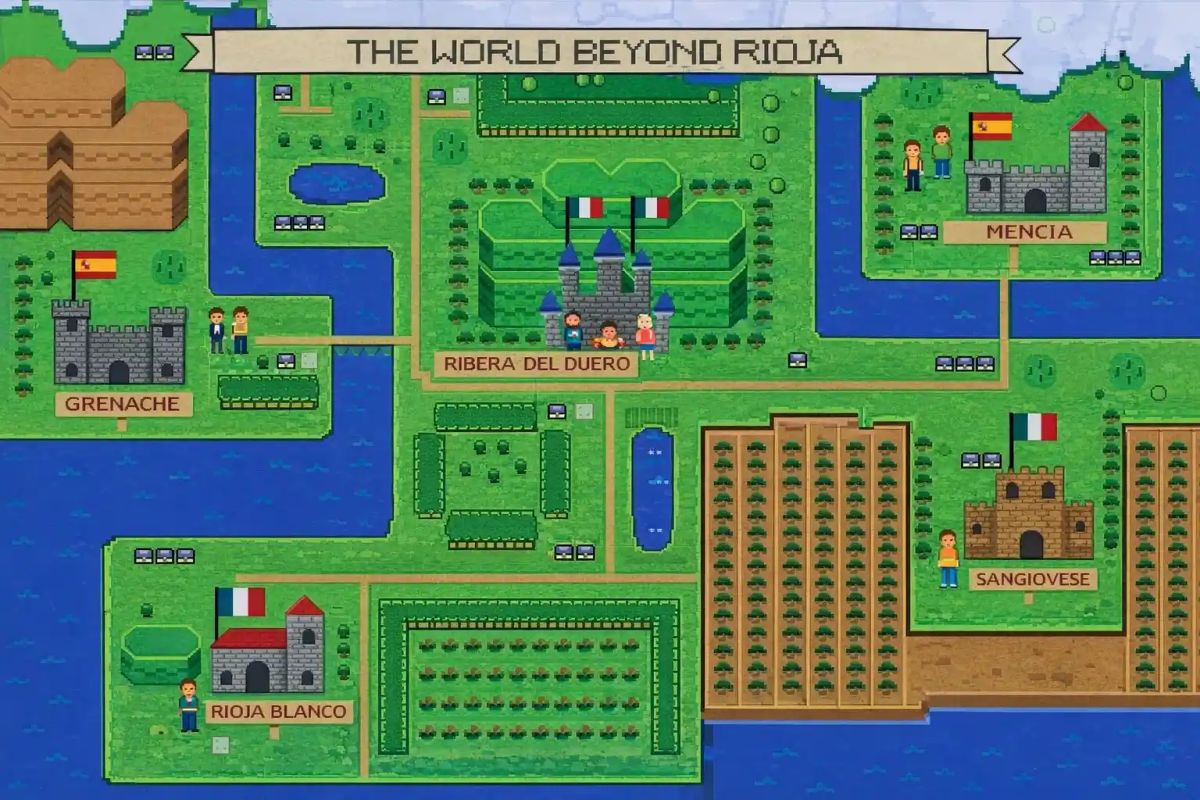
If you like Rioja, try these five wines: Ribera del Duero for darker, more structured Tempranillo with less of the vanilla ceremony, Mencía from Bierzo for aromatic, silky elegance that demonstrates how much more Spain knows how to do, Sangiovese from Tuscany for the structural cousin that leans harder into food and acidity, Grenache from the southern Rhône for warm, spiced red fruit that makes you understand why the grape is in Rioja blends to begin with, and Rioja Blanco for the discovery that the region you already trust makes extraordinary white wine that almost nobody in the UK has tried.
What they share is architecture rather than accent: medium body, food-compatible structure, the kind of warmth that makes a dinner table feel like the right place to be.
Five wines to try if you like Rioja:
- Ribera del Duero (Spain): darker, more structured Tempranillo (£10 to £30)
- Mencía (Bierzo, Spain): silky, aromatic, more perfumed than you expect (£9 to £20)
- Sangiovese (Tuscany, Italy): sour cherry, savoury, built for food (£8 to £40)
- Grenache (Southern Rhône, France): warm, spiced, no oak (£9 to £25)
- Rioja Blanco (Spain): white from the same region, largely unknown, worth discovering (£9 to £20)
THE MAP
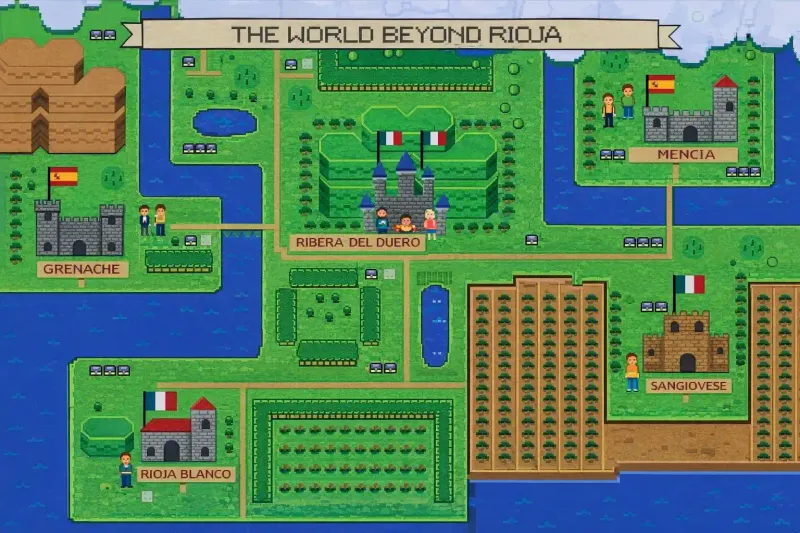
QUICK LEGEND
If you love Rioja's oak and vanilla character: stay in Rioja but move to Reserva or Gran Reserva.
If you want Tempranillo without the oak: go Ribera del Duero.
If you want something more aromatic and lighter: go Mencía.
If you want structure with more food-specific acidity: go Sangiovese.
If you want warmth and red fruit without the oak: go Grenache.
WHAT CONNECTS THESE WINES
Rioja drinkers tend to know exactly what they want, and they want it to be reliably there. That is not laziness. That is what a decade of good experiences looks like.
The loyalty is earned. Warm red fruit, familiar oak, enough structure for food, enough softness to drink without it. These alternatives line up for the same reason, even if they do not taste alike: red-fruit driven, medium-bodied, dry, built for the table. Each one adjusts a single variable. More tannin, less oak, more acidity, more aromatic expression.
They share the warmth, not the vanilla.
Serve at 16 to 17 degrees Celsius.
THE FIVE WINES
1. Ribera del Duero, the Structured One
Also Tempranillo. Also Spain. But further north and considerably higher up, on the Castilian plateau where cold nights and hot days push the grape towards intensity rather than charm.
Where Rioja tends towards red cherry and the warm vanilla note of American oak, Ribera del Duero goes blackberry and graphite. The oak here tends towards French, which means less vanilla, more spice, more integration. The tannins are firmer and the wine requires patience, but the reward is a depth and seriousness that Rioja at the same price rarely achieves.
Joven and Roble expressions deliver the dark fruit character without the price premium of the Reservas. They are the right entry point.
What you will recognise: Tempranillo, dark fruit, oak structure. What changes: darker fruit, less vanilla, firmer tannin, graphite rather than chocolate. Look for: Ribera del Duero DO. Joven or Crianza to start. Budget: £10 to £30.
2. Mencía, the Aromatic One
Where Rioja has warmth and oak, Mencía from Bierzo has perfume and precision. Violets, dark cherry, and a slate mineral quality that Tempranillo simply does not possess. The texture is silky, the body lighter, the finish more expressive.
At a blind tasting, Rioja announces itself with familiar warmth. Mencía surprises. Both are Spanish, both from grapes with centuries of local history, both emphatically food-friendly. The difference is personality: Rioja is confident and comfortable; Mencía is curious.
Old-vine Mencía from steep hillside parcels in Bierzo produces concentration and terroir expression that competes with wines at two or three times the price. It remains one of Spain's most undervalued reds.
What you will recognise: Spanish red fruit, medium body, food-friendliness. What changes: more aromatic, no oak, more floral, more perfumed. Look for: Mencía from Bierzo DO. Budget: £9 to £20.
3. Sangiovese, the Acidic One
Rioja and Sangiovese from Tuscany share a structural logic: medium body, dry finish, acidity and tannin calibrated for food. But Sangiovese leans harder into the acidity, and that difference matters at the table.
Chianti Classico is the benchmark. Sour cherry, dried herbs, leather, and a laser-sharp acidity that cuts through fat and makes a simple plate of pasta genuinely extraordinary. The tannins are grippy rather than plush. The oak, where it appears, sits in older barrels and does not announce itself. This is wine designed to disappear into a meal, which is its highest possible compliment.
Rioja drinkers who love the wine-with-food moment more than the wine itself will understand this immediately.
What you will recognise: dry finish, medium body, food compatibility. What changes: more acidic, sour cherry rather than red, less oak, more savoury and Italian. Look for: Chianti Classico DOCG and Morellino di Scansano for accessible Sangiovese. Budget: £8 to £40.
4. Grenache, the Warm One
Grenache is Rioja's other grape. Garnacha, as it is called in Spain, sits alongside Tempranillo in most Rioja blends. In the southern Rhône, it does the work alone, and that is where you understand what it is capable of.
Côtes du Rhône and Gigondas deliver warm red fruit, dried herbs, a hint of spice, and a roundness that feels like good Rioja but with different geography. Less oak, more sun. Less vanilla, more garrigue: thyme, rosemary, the particular herbal dryness of the southern French hillside in summer.
Works with lamb, works with chicken, works without anything at all on a warm evening.
What you will recognise: red fruit, warmth, medium tannin, food-friendliness. What changes: no American oak, more herbal and aromatic, warmer, spicier, southern French. Look for: Côtes du Rhône for everyday. Gigondas and Vacqueyras for more structure. Budget: £9 to £25.
5. Rioja Blanco, the Discovery
This is not an alternative to Rioja in the usual sense. It is the discovery that the region you already know makes extraordinary white wine that almost nobody in the UK has noticed.
Rioja Blanco is made primarily from Viura. The aged styles, Reserva and Gran Reserva, are unlike almost anything else in white wine: nutty, waxy, and complex, with a deepening colour and a character that sits somewhere between white Burgundy and Fino Sherry. The fresh young styles, Joven or Fermentado en Barrica, are aromatic and precise. Neither has the profile or the price it deserves.
If you already trust the region in red, the white is asking for the same trust. It will not disappoint you.
What you will recognise: familiar Rioja producers, the same winemaking philosophy. What changes: white, a completely different character, and for many people the most interesting discovery in this guide. Look for: Viura-based Rioja Blanco. Gran Reserva for the full experience. Budget: £9 to £20.
THE TASTING GAME
What You Need
Four red bottles and one white. Four to five glasses per person. A pen and the rating table below. One confirmed Rioja loyalist who has never tried Ribera del Duero. This is an efficient use of an evening.
The Rating Table
| Characteristic | What you are looking for |
|---|---|
| Red fruit | Cherry, strawberry, raspberry, cranberry |
| Dark fruit | Blackberry, plum, blackcurrant, damson |
| Oak and vanilla | New wood, vanilla, dill, coconut, toast |
| Tannin and structure | How firmly the wine sits in the mouth |
| Food compatibility | How strongly the wine makes you want to eat something |
Ourglass Benchmarks
| Rioja Crianza | Ribera | Mencía | Sangiovese | Grenache | Rioja Blanco | |
|---|---|---|---|---|---|---|
| Red fruit | 4 | 3 | 4 | 4 | 5 | n/a |
| Dark fruit | 3 | 5 | 3 | 2 | 3 | n/a |
| Oak and vanilla | 4 | 3 | 1 | 2 | 1 | 3 |
| Tannin/structure | 3 | 4 | 3 | 4 | 2 | 1 |
| Food compatibility | 4 | 4 | 3 | 5 | 4 | 4 |
The Five Questions
Between rounds, pour one wine blind and ask:
1. More or less oak than Rioja?
2. Red fruit or dark fruit?
3. Would you drink this without food?
4. Old world or new world?
5. Spain or not Spain?
Question 5 is the interesting one. Ribera del Duero and Mencía are both Spanish and both cause genuine surprise when the answer is revealed. The range of what Spain does with its own grapes is one of the wine world's more persistent secrets.
If you want to keep finding wines like these without doing the research yourself, that is exactly what an Ourglass box does. See how it works.
WHAT YOUR SCORES REVEAL ABOUT YOUR PALATE
High red fruit + high oak? You love Rioja for precisely what it is. Try Gran Reserva rather than branching out. The rabbit hole is deep enough.
High dark fruit + low oak + high structure? Ribera del Duero is where you are heading. Next: Toro from Spain, Priorat, Douro reds from Portugal.
High food compatibility + high acidity? Sangiovese is your grape. Next: Barbera from Piedmont, Nerello Mascalese from Etna, Frappato from Sicily.
High red fruit + low oak + warmth? Grenache is your territory. Next: Châteauneuf-du-Pape, Priorat, Sardinian Cannonau.
YOUR SHOPPING LIST
| Ribera del Duero | Mencía | Sangiovese | Grenache | Rioja Blanco | |
|---|---|---|---|---|---|
| Region | Castile, Spain | Bierzo, Spain | Tuscany, Italy | Southern Rhône | Rioja, Spain |
| Budget | £10–30 | £9–20 | £8–40 | £9–25 | £9–20 |
| Start with | Ribera Crianza | Bierzo DO | Chianti Classico | Côtes du Rhône | Viura Joven or Reserva |
GO DEEPER
What to drink instead of Prosecco. The sparkling version.
What to drink instead of Sauvignon Blanc. The more aromatic crisp white version.
What to drink instead of Chardonnay. The full-bodied white version.
What to drink instead of Pinot Grigio. The non-obvious version.
What to drink instead of Pinot Noir. The lighter red version of this game.
What to drink instead of Shiraz/Syrah. The teeth staining version.
What to drink instead of Malbec. The other half of this conversation.
What to drink instead of Cabernet Sauvignon. The structured red version.
What to drink instead of Rioja. The oak-aged red version.
What to drink instead of Rose. The pink version.
How to develop your wine palate.
Is a wine subscription worth it?
FREQUENTLY ASKED QUESTIONS
If I like Rioja, what else will I like?
Ribera del Duero for darker, more structured Tempranillo. Mencía from Bierzo for lighter, more aromatic Spanish red. Sangiovese from Tuscany for food-specific acidity and structure. Grenache from the southern Rhône for warmth and red fruit without the oak. Rioja Blanco for the unexpected discovery in the same region.
What is the difference between Rioja and Ribera del Duero?
Both are Tempranillo but from different climates with different oak styles. Rioja tends towards red cherry and American oak vanilla. Ribera del Duero tends towards darker fruit, French oak, firmer tannins, and more graphite mineral quality.
Is Grenache similar to Rioja?
In warmth and red fruit, yes. Grenache lacks Rioja's oak character and has softer tannins, but shares the food-friendly warmth that makes Rioja appealing. Côtes du Rhône is the accessible entry point.
What is Rioja Blanco?
White wine from the Rioja region, made primarily from Viura. The aged Reserva and Gran Reserva styles develop nutty, waxy complexity that sits between white Burgundy and Fino Sherry. Almost entirely unknown outside Spain, and worth considerably more attention than it receives.