
WHAT TO DRINK INSTEAD OF ROSÉ
Five wines similar to Rosé, and a tasting game to find your favourite.
THE SHORT ANSWER
If you like Rosé, try these five wines: Cerasuolo d'Abruzzo for a deeper, more structured pink that actually tastes of something, Tavel from the Rhône for the version of rosé that decided it was a red wine and never looked back, skin-contact white for something pale and complex that reframes what "pink" might mean, light red wine served chilled for the discovery that Gamay at 14 degrees Celsius answers the same question with considerably more character, and Txakoli for bone-dry spritzy freshness that does what Provence rosé does for the aperitif hour without any of the sweetness.
Five wines to try if you like Rosé:
- Cerasuolo d'Abruzzo (Italy): deeper pink, structured, sour cherry and genuine character (£9 to £18)
- Tavel (Rhône, France): dry, full-bodied, the most serious pink wine in France (£10 to £20)
- Skin-contact white (various): pale, complex, oxidative texture (£12 to £25)
- Chilled Gamay/Beaujolais: serves the same occasion with more going on (£8 to £18)
- Txakoli (Basque Country, Spain): bone dry, spritz, salt air (£10 to £20)
THE MAP
QUICK LEGEND
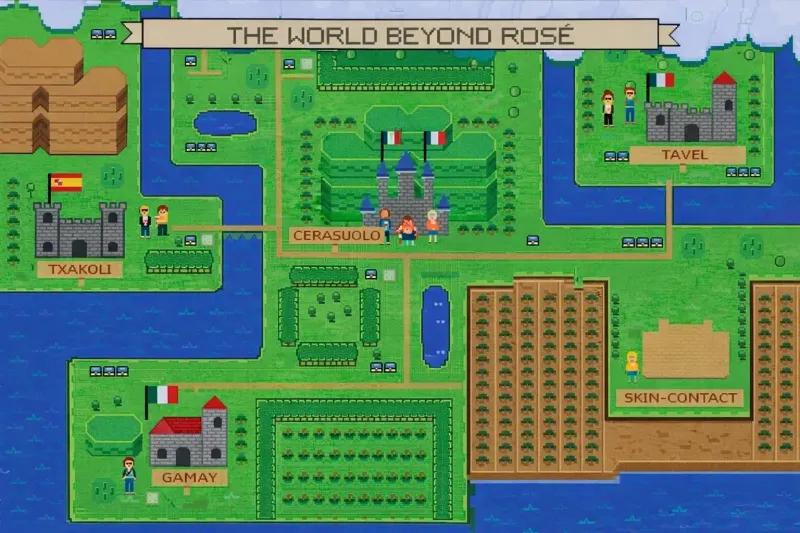
If you like Provence rosé's pale, dry elegance: go skin-contact white or Tavel.
If you want more fruit and character in a pink wine: go Cerasuolo d'Abruzzo.
If you want to drink something pink but more interesting: go Tavel.
If you want the same lightness and freshness without the pink: go chilled Gamay or Txakoli.
WHAT CONNECTS THESE WINES
Rosé is the most occasion-driven category in wine. It is not primarily about flavour. A glass of Provence rosé says the weekend has started. Whatever is in the glass, it signals ease and the suspension of the decision you did not feel like making.
That is not nothing. It is actually quite hard to replicate. These five wines do the same job with more going on in the glass. The signal holds. The interest increases.
Dry, fresh, pale to medium-deep colour. Serve all five well chilled, 7 to 10 degrees Celsius.
THE FIVE WINES
1. Cerasuolo d'Abruzzo, the Serious Pink
From Abruzzo on Italy's Adriatic coast. Cerasuolo means "cherry-coloured," and the wine commits to it: deeper, more vivid, and more evidently pink than anything from Provence, with red fruit intensity to match the colour.
Made from Montepulciano, which is one of Italy's most characterful red grapes when taken seriously. Sour cherry, raspberry, a herbal thread, and enough structure to sit comfortably at a dinner table rather than hovering anxiously above it. Not rosé as aperitif filler. Rosé as an actual food wine.
In a market saturated with pale washed-out pinks that seem designed to avoid committing to anything, Cerasuolo announces itself. That confidence is part of the point.
What you will recognise: freshness, pink colour, dry fruit character. What changes: deeper colour, more red fruit, savoury edge, more useful at the table. Look for: Cerasuolo d'Abruzzo DOC. Budget: £9 to £18.
2. Tavel, the Structured One
From the southern Rhône, Tavel is France's only AOC dedicated entirely to rosé. It produces one of the most serious pink wines in the world, full-bodied, dry, structured, and made for food rather than the hour before it.
Primarily Grenache, with Cinsault and other Rhône varieties. Deeper than Provence in colour, more intense in flavour: watermelon, cherry, dried herbs, and a warm finish with genuine length. The tannins are noticeable. That is unusual for rosé and entirely correct for Tavel.
Tavel is a red wine that happens to be pink. Once you understand that, everything about it makes sense.
What you will recognise: pink wine occasion, dry fruit, food versatility. What changes: fuller body, real structure, warm finish, tannins. Look for: Tavel AOC. Budget: £10 to £20.
3. Skin-Contact White, the Surprising One
White wine made with extended skin contact, the way red wine is made. The result is not quite white, not quite rosé: pale amber or copper in colour, with more texture, more complexity, and a character that sits somewhere between the two in a way that resists easy description.
Stone fruit and dried apricot, tea, walnuts, and something slightly oxidative that is entirely its own thing. The texture is the revelation. Where conventional white wine slides cleanly through, skin-contact wine grips slightly, coats the palate. More demanding than Provence rosé, and considerably more interesting.
This is the wine for rosé drinkers who are ready for the next question. Keep the paleness, keep the food versatility, gain several layers of complexity that will either fascinate you or send you back to Provence to think.
What you will recognise: approachable colour, food versatility, freshness in good examples. What changes: more complex, more textured, slightly oxidative, demands attention. Look for: skin-contact whites from Slovenia, Friuli, Georgia, or Loire producers. Budget: £12 to £25.
4. Chilled Gamay, the Practical One
This is not a different wine style. It is a serving instruction.
Take a bottle of Beaujolais or Beaujolais-Villages. Put it in the fridge for thirty minutes. Drink it at 13 to 14 degrees Celsius. The bright, crunchy, red fruit character of Gamay at a slight chill serves the same occasion as a glass of pink wine with more actual character in the glass.
Fresh cherry, raspberry, a light earthiness, the kind of effortless drinkability that makes a garden feel like a better place to be. The only thing it does not have is the colour. Some people need the pink. If the signal matters as much as the liquid, this does not solve the problem.
For everyone else: a lightly chilled Beaujolais-Villages is more interesting than most rosé at the same price, works better with grilled food, and requires approximately thirty minutes of forward planning.
What you will recognise: the occasion, the freshness, easy drinking. What changes: red, more character, more earthiness, the wine is the thing and not the signal. Look for: Beaujolais-Villages or Cru Beaujolais served chilled. Budget: £8 to £18.
5. Txakoli, the Refreshing One
Already covered in the Prosecco alternatives guide. Worth a second mention here because Txakoli is arguably the best summer aperitif wine that most people have never tried, and rosé drinkers are precisely the audience most likely to enjoy it.
Bone dry, low alcohol, naturally spritzy, lemon and green apple and salt air. Does everything Provence rosé does for the pre-dinner glass without the sweetness. The pale gold colour is not pink, but the function is identical and the freshness is more emphatic.
The wine for people who have always found Provence rosé slightly sweet without quite saying so.
What you will recognise: spritz, freshness, aperitif purpose. What changes: bone dry, white, more acidic, the ocean is present. Look for: Getariako Txakolina DO. Budget: £10 to £20.
THE TASTING GAME
What You Need
Four bottles: Cerasuolo, Tavel, a skin-contact white, and Txakoli. This particular combination is the most instructive spread. Three to four white wine glasses per person. A warm afternoon, ideally.
The Rating Table
| Characteristic | What you are looking for |
|---|---|
| Freshness | How much the wine makes your mouth water |
| Red fruit | Strawberry, cherry, raspberry, watermelon |
| Dryness | 1 = noticeably sweet, 5 = bone dry |
| Food compatibility | How urgently the wine makes you want to eat something |
| Occasion fit | How much it feels like the right drink for right now |
Ourglass Benchmarks
| Provence Rosé | Cerasuolo | Tavel | Skin-Contact | Txakoli | |
|---|---|---|---|---|---|
| Freshness | 4 | 4 | 3 | 3 | 5 |
| Red fruit | 3 | 5 | 4 | 2 | 1 |
| Dryness | 3 | 4 | 5 | 4 | 5 |
| Food compatibility | 3 | 4 | 5 | 4 | 4 |
| Occasion fit | 5 | 4 | 3 | 3 | 4 |
The most revealing column is Occasion fit. Provence rosé scores 5 not because it is the most interesting wine but because it performs its function with exceptional consistency. The exercise is to find which alternative comes closest while giving you more reason to pay attention.
If you want to keep finding wines chosen for the occasion rather than just the grape, that is precisely what Ourglass is for. Start here.
WHAT YOUR SCORES REVEAL ABOUT YOUR PALATE
High occasion fit + some complexity? Cerasuolo d'Abruzzo is your summer wine. Same purpose, more character.
High food compatibility + high dryness? Tavel is what you have been looking for. Next: Bandol Rosé, aged Tavel, serious southern French pink.
High curiosity + willingness to be surprised? Skin-contact white is your next chapter. Next: orange wines from natural producers, aged skin-contact from Georgia or Friuli.
High freshness + low sweetness? Txakoli in summer, Picpoul at dinner. Your palate wants precision over comfort.
YOUR SHOPPING LIST
| Cerasuolo d'Abruzzo | Tavel | Skin-Contact | Gamay | Txakoli | |
|---|---|---|---|---|---|
| Region | Abruzzo, Italy | Southern Rhône | Various | Beaujolais | Basque Country |
| Budget | £9–18 | £10–20 | £12–25 | £8–18 | £10–20 |
| Start with | Cerasuolo d'Abruzzo DOC | Tavel AOC | Slovenia or Friuli | Beaujolais-Villages | Getariako Txakolina |
GO DEEPER
What to drink instead of Prosecco. The sparkling version.
What to drink instead of Sauvignon Blanc. The more aromatic crisp white version.
What to drink instead of Chardonnay. The full-bodied white version.
What to drink instead of Malbec. The other half of this conversation.
What to drink instead of Cabernet Sauvignon. The structured red version.
What to drink instead of Rioja. The oak-aged red version.
What to drink instead of Rose. The pink version.
What to drink instead of Pinot Grigio. The non-obvious version.
How to develop your wine palate.
Is a wine subscription worth it?
FREQUENTLY ASKED QUESTIONS
If I like Rosé, what else will I like?
Cerasuolo d'Abruzzo for more character in a deeper pink. Tavel for structured, food-worthy rosé with real conviction. Skin-contact white for complexity in a similar colour. Chilled Gamay for the same summer purpose in red. Txakoli for maximum freshness without the pink.
What is Tavel rosé?
An AOC in the southern Rhône dedicated entirely to rosé. Full-bodied, dry, and structured, made primarily from Grenache. France's most serious pink wine appellation.
What is skin-contact wine?
White wine made with extended skin contact, like red wine. More colour, more texture, more complexity than conventional white. Sometimes called orange wine. The cloudiness, where present, is not a flaw.
What is Cerasuolo d'Abruzzo?
A deep cherry-pink Italian rosé from Abruzzo, made from Montepulciano. More structured and more flavourful than Provence-style rosé. One of the most undervalued wines in Italy.