
WHAT TO DRINK INSTEAD OF CHARDONNAY
Four wines similar to Chardonnay, and a tasting game to find your favourite.
THE SHORT ANSWER
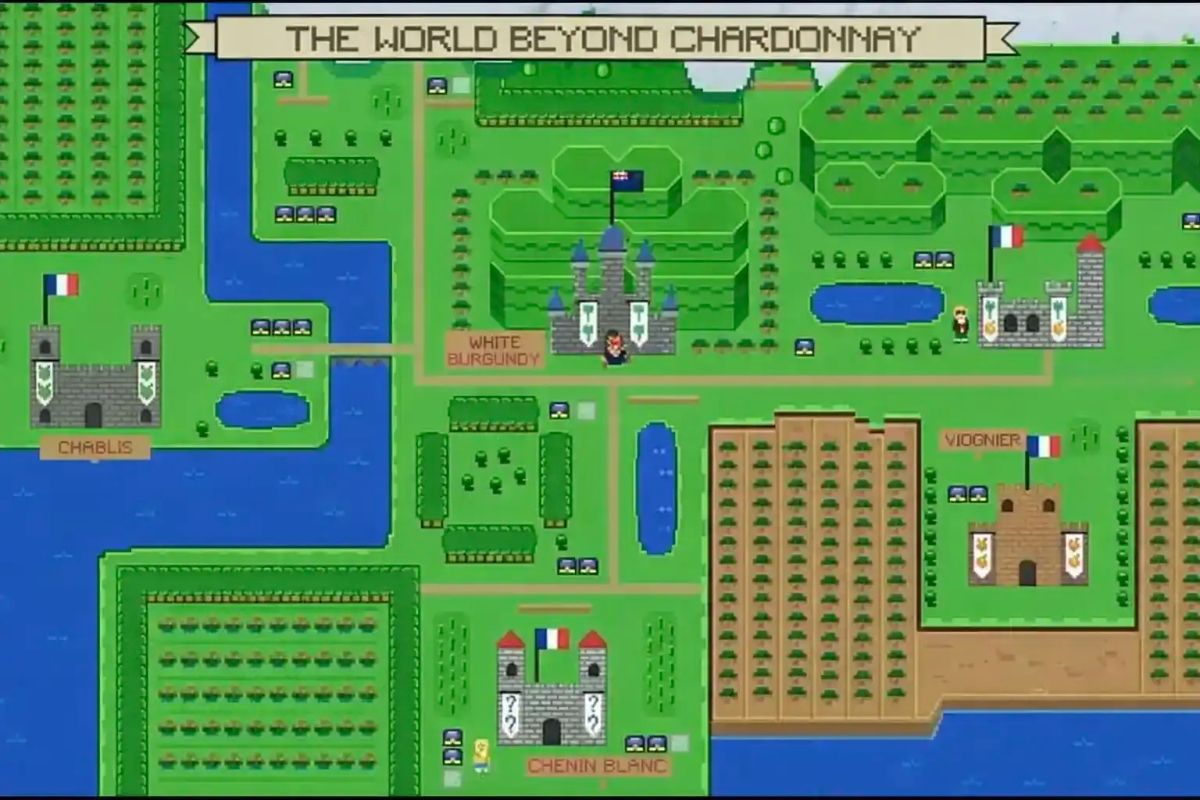
If you like Chardonnay, try these four wines: Chablis for razor-sharp mineral precision, white Burgundy for textured elegance with restrained oak, Chenin Blanc from the Loire for honeyed complexity with a dry spine, and Viognier from the northern Rhône for lush aromatics with structure. They all share the things that make Chardonnay work: body, texture, fruit that leans yellow and stone rather than green, and a versatility with food that most white wines cannot touch.
Four wines to try if you like Chardonnay:
- Chablis (unoaked Chardonnay): crisp, mineral, mouthwatering (£12 to £20)
- White Burgundy (textured Chardonnay): nutty, elegant, quietly complex (£10 to £40)
- Dry Chenin Blanc (Loire Valley): waxy texture, high acidity, serious depth (£10 to £25)
- Viognier (Rhône or Languedoc): aromatic, stone-fruit rich, full-bodied (£8 to £45)
The longer answer involves a map, a blind tasting game, and a scoring system that will teach you more about what you actually want from white wine than a decade of ordering "the Chardonnay" on autopilot.
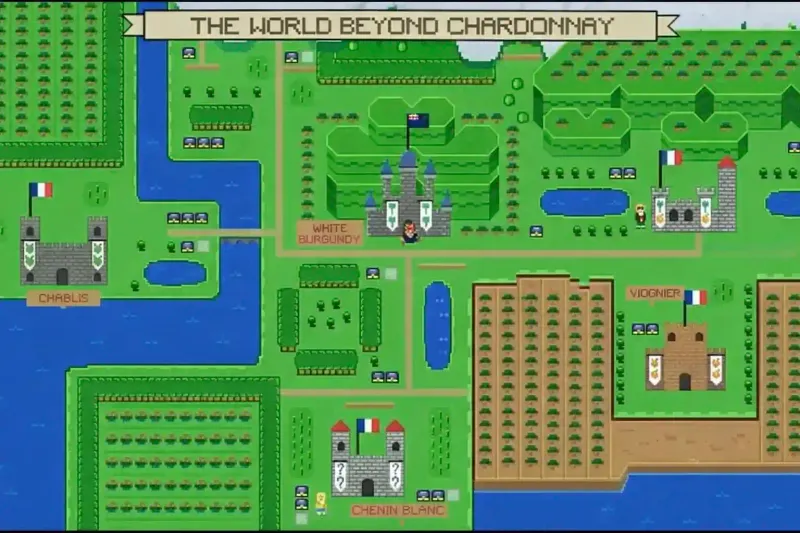
QUICK LEGEND
If you like the crisp, steely, mineral side: go Chablis. If you like the rich, textured, buttery side: go white Burgundy. If you like the honeyed, complex, waxy side: go Chenin Blanc. If you like the aromatic, lush, perfumed side: go Viognier.
WHAT CONNECTS THESE WINES
These four wines don't taste identical to the Chardonnay you know. They share its architecture, not its costume:
Medium to full body. Fruit that sits in the yellow and stone spectrum: peach, pear, apple, apricot. A weight in the mouth that lighter whites like Sauvignon Blanc and Pinot Grigio rarely achieve. The capacity to handle oak gracefully, whether or not any was used. The kind of wine that works equally well with a roast chicken or a Tuesday evening with nothing planned.
Most people who say they don't like Chardonnay don't dislike the grape. They dislike bad oak. Cheap, over-oaked Chardonnay from the 1990s and 2000s traumatised a generation. It tasted like drinking a plank. That wine still exists, but it is not the whole picture. It is not even most of the picture any more.
If Chardonnay is your usual, these four wines are the cleanest detour. They keep the same mouthfeel and change one variable at a time: oak, climate, aroma, structure.
THE FOUR WINES
1. CHABLIS, THE RESET BUTTON
Chablis is Chardonnay. The same grape, grown in the northernmost vineyards of Burgundy where the climate is cool enough to strip away everything except the essentials. No oak, or very little. No butter. No tropical fruit. Just Chardonnay at its most elemental.
The first sip has a chalk-dust dryness that makes you think of cold cellars and clean knives. Green apple, lemon zest, and an acidity that makes your mouth water for oysters whether or not there are any in the room.
If your Chardonnay problem is oak, Chablis is the cure. It proves the grape has nothing to hide behind. The best Chablis, from Premier Cru and Grand Cru vineyards on Kimmeridgian limestone, has a mineral intensity that borders on savoury. It tastes like the ground it grew in.
For more on what makes Chablis different from the rest of Burgundy, our complete guide to French wine regions covers the full map. For Burgundy-specific producers, see our Burgundy producers guide.
What you'll recognise from Chardonnay: the body, the structure, the way it fills the mouth without being heavy. What's different: no oak, no butter, more mineral, sharper acidity. Leaner and more precise. Look for: Chablis (village level for everyday, Premier Cru for a step up). £12-20.
2. WHITE BURGUNDY, THE THING ITSELF
This is Chardonnay's home. The Côte de Beaune in Burgundy produces the most revered white wines on the planet, and they are all Chardonnay. But they taste nothing like the bottle labelled "Chardonnay" on the supermarket shelf.
The oak here is different. Where cheap Chardonnay uses oak like a loudspeaker, Burgundy uses it like a picture frame: present, supportive, not the point. The fruit sits closer to bruised pear than fresh apple, with a toasted-almond finish that lingers like warm bread left on a stone counter. There is a reason people lose their minds over Meursault and Puligny-Montrachet. The reason is that the wines are extraordinary.
The catch is price. Grand Cru white Burgundy costs a fortune. But village-level Burgundy and nearby appellations like Saint-Véran, Mâcon-Villages, and Rully offer the same philosophy at a fraction of the price. For a fuller picture of producers worth knowing, our Burgundy producers guide goes deeper. If you want to understand what drives the price differences, our piece on what makes wine cheap vs expensive breaks it down.
What you'll recognise from Chardonnay: everything. This is Chardonnay. The richness, the texture, the food-friendliness. What's different: more restrained oak, more mineral complexity, more savoury than fruity. Look for: Saint-Véran or Mâcon-Villages (£10-15) as entry points. Rully or Montagny (£14-20) for a step up. Village Meursault or Puligny-Montrachet (£25-40) when you want to understand what the fuss is about.
Image: Vincent Dancer
3. CHENIN BLANC, THE SHAPESHIFTER
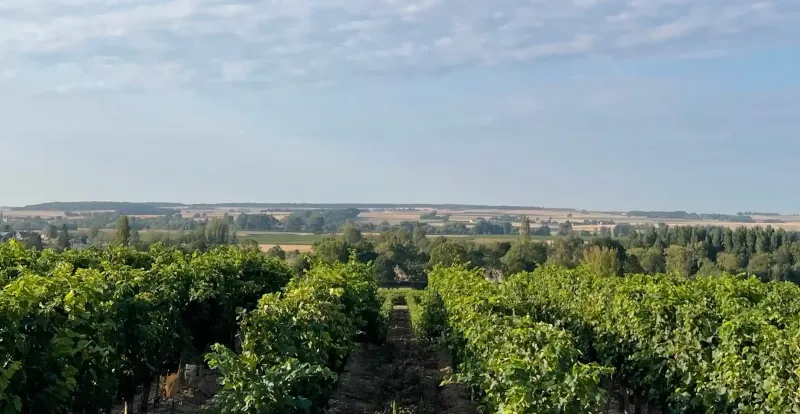
From the Loire Valley in France, where it makes everything from bone-dry still wines to sweet dessert wines to some of the best sparkling wine outside Champagne. The dry versions, from Vouvray Sec and Savennières, are the ones that matter here.
There is a beeswax texture to good dry Chenin, something between lanolin and quince paste, that coats the palate while the acidity cuts clean underneath. It is richer than it looks and more complex than it has any right to be at the price. The best Savennières has an almost savoury, lanolin quality that ages for decades. The best Vouvray Sec balances orchard fruit and mineral tension with a precision that makes you want to stop talking and just drink.
If Chablis is Chardonnay with the oak stripped away, Chenin Blanc is Chardonnay's cousin who went to art school and came back more interesting.
For more on the Loire's extraordinary range, our guide to Loire wine producers covers the key names. For an overview of the region itself, our French wine regions guide puts it in context.
What you'll recognise from Chardonnay: the body, the weight in the mouth, the way it pairs with rich food. What's different: waxier texture, honeyed notes even when bone-dry, higher acidity, more floral. Ages brilliantly. Look for: Vouvray Sec (£10-15) for approachability. Savennières (£15-25) for intensity.
4. VIOGNIER, THE PERFUMED ONE
Originally from the northern Rhône, where it makes Condrieu, one of the most seductive white wines in the world. Viognier is Chardonnay's flamboyant sibling: the same weight and body but with an aromatic intensity that Chardonnay never quite reaches. It smells like someone arranged flowers in a stone fruit bowl. Peach, apricot, honeysuckle, white blossom, all carried on a wine with real grip underneath.
Good Viognier balances that lushness with enough acidity to avoid becoming cloying. Bad Viognier, and there is plenty of it, is heavy, oily, and tastes like perfume you did not ask to wear. The difference between the two is almost always about where it was grown and who made it.
Condrieu is the benchmark but costs accordingly. For everyday Viognier, the Languedoc and the Pays d'Oc in southern France produce excellent versions at a third of the price. Our Rhône producers guide covers the northern Rhône benchmarks.
What you'll recognise from Chardonnay: the body, the richness, the weight. Food-friendly in the same way. What's different: much more aromatic, more floral, peach and apricot instead of apple and citrus. Less oak influence, more natural perfume. Look for: Languedoc or Pays d'Oc Viognier (£8-13) for everyday drinking. Condrieu (£25-45) for the full experience.
THE TASTING GAME
WHAT YOU NEED
Four bottles (one of each wine above). Four glasses per person. A pen and the rating table below. Friends who have opinions about butter.
If you want to sharpen your technique before game night, Michael Sager's guide on how to taste wine is worth ten minutes of your time.
THE RATING TABLE
Rate each wine 1-5:
| Characteristic | What you're looking for |
|---|---|
| Citrus and green fruit | Lemon, grapefruit, green apple, lime zest |
| Stone and orchard fruit | Peach, pear, apricot, yellow apple, nectarine |
| Oak and butter influence | Vanilla, toast, butterscotch, cream, coconut |
| Perceived acidity | How sharp or mouthwatering the wine feels |
| Texture and weight | How full or rich the wine feels in the mouth |
This is a training wheel, not a laboratory result. Our wine flavour tasting chart is a useful reference if you want more specific language for what you're tasting.
HOW TO PLAY
Step 1: Pour blind. Label the wines A, B, C, D. Don't reveal which is which.
Step 2: Taste and score. Each person rates every wine 1-5 across the five characteristics above. 1 is low, 5 is high.
Step 3: Compare scores. See where you agree and where you don't. The disagreements are the interesting part.
Step 4: Reveal the wines. Then compare your scores with the Ourglass benchmarks below.
Step 5: Retaste in a different order. Re-score. Notice how your perceptions shift once you know what you're drinking. This is where the real learning happens: your palate is not fixed. It changes with context, expectation, and experience.
OURGLASS BENCHMARKS
These scores are relative to each other, not absolute. If your table argues with ours, trust your table.
| Characteristic | Citrus and green fruit | Stone and orchard fruit | Oak and butter influence | Perceived acidity | Texture and weight |
|---|---|---|---|---|---|
| Oaked Chardonnay | 2 | 4 | 5 | 2 | 4 |
| Chablis | 5 | 2 | 1 | 5 | 2 |
| White Burgundy | 3 | 3 | 3 | 3 | 4 |
| Chenin Blanc | 3 | 4 | 1 | 4 | 3 |
| Viognier | 1 | 5 | 1 | 2 | 5 |
THE FIVE QUESTIONS
Between rounds, pick a contestant. Pour them one wine. Ask:
- Oaked or unoaked?
- French or not French?
- More or less than 13% alcohol?
- Would you order this with fish or with chicken?
- Is this [Wine A] or [Wine B]?
Make that last question as easy or cruel as you like. Question 4 is the sneaky one. Chablis and Chenin Blanc are fish wines. White Burgundy and Viognier are chicken wines. Knowing which side of that divide you instinctively lean towards tells you something real about your palate.
WHAT YOUR SCORES REVEAL ABOUT YOUR PALATE
Look at where you scored highest across all four wines. That's your palate talking.
High citrus and green fruit + high acidity? You like wines with tension and precision. Chablis is your home. Next: Albariño from Galicia, dry Riesling from Alsace, Assyrtiko from Santorini. Your palate wants sharpness and mineral drive.
High stone fruit + high texture? You like wines that are generous and layered. Viognier and white Burgundy are your territory. Next: Marsanne-Roussanne blends from the northern Rhône, Fiano from southern Italy, aged Semillon from the Hunter Valley. Your palate wants richness with complexity.
High oak and butter influence + high texture? You actually do like oaked Chardonnay, and there is nothing wrong with that. Lean into it. Next: oaked white Rioja from producers like López de Heredia, barrel-fermented Godello from Valdeorras, or Fumé Blanc from California. Your palate wants warmth and generosity.
High acidity + low oak? You like your whites clean and unadorned. Chablis and dry Chenin are your starting points. Next: Muscadet Sur Lie, Grüner Veltliner from the Wachau, unoaked Chardonnay from the Mâconnais. Your palate wants purity.
Everything scored around 3? You're either impressively balanced or you need another glass. Either way, that's what round two is for.
For more on how your palate develops over time, our guide on how to develop your wine palate covers the principles behind everything in this game. If you want to go further, our five expert methods for discovering your palate takes a different angle.
YOUR SHOPPING LIST
| Wine | Chablis | White Burgundy | Chenin Blanc (dry) | Viognier |
|---|---|---|---|---|
| Region | Burgundy, France | Côte de Beaune / Mâconnais, France | Loire Valley, France | Rhône / Languedoc, France |
| Budget | £12-20 | £10-20 | £10-25 | £8-13 |
| Start with | Village Chablis, then Premier Cru | Saint-Véran or Mâcon-Villages | Vouvray Sec or Savennières | Languedoc or Pays d'Oc IGP |
Total for the game: roughly £40-65 for four bottles. Split between four people, that's less than a round at the pub for an evening that will teach you more about white wine in one evening than months of guessing.
Ask any decent restaurant for a Chablis, a Mâcon-Villages, a Vouvray, or a Viognier by the glass. Most will have at least one. Order all four and play the rating game over dinner. If choosing from a wine list feels daunting, our guide on how to choose wine from a restaurant wine list takes the stress out of it.
GO DEEPER
What to drink instead of Prosecco. The sparkling version.
What to drink instead of Sauvignon Blanc. The more aromatic crisp white version.
What to drink instead of Chardonnay. The full-bodied white version.
What to drink instead of Pinot Grigio. The non-obvious version.
What to drink instead of Pinot Noir. The lighter red version of this game.
What to drink instead of Shiraz/Syrah. The teeth staining version.
What to drink instead of Malbec. The other half of this conversation.
What to drink instead of Cabernet Sauvignon. The structured red version.
What to drink instead of Rioja. The oak-aged red version.
What to drink instead of Rose. The pink version.
If you like that wine, try this: 14 alternative styles - the broader alternatives map
How to develop your wine palate. Learn what you love and why.
Is a wine subscription worth it?. Honest take from biased obsessives.
A beginner's guide to wine. if you're just getting started
Or skip the shopping and let us do the work. Every Ourglass box is built around this principle: wines picked to stretch your palate, with tasting notes, pairing suggestions, and short videos that help you understand what you're tasting and why you like it. No algorithms. No guesswork. Just great wine, understood.
FREQUENTLY ASKED QUESTIONS
If I like Chardonnay, what else will I like?
Wines with similar characteristics include Chablis (unoaked Chardonnay from Burgundy's coolest vineyards), white Burgundy from the Mâconnais or Côte de Beaune (the grape's spiritual home), dry Chenin Blanc from Vouvray or Savennières (honeyed texture with high acidity), and Viognier from the Rhône or Languedoc (lush stone fruit and floral aromatics). All share body, texture, and versatility with food. For something in between, try a barrel-fermented Godello from Valdeorras or a white Côtes du Rhône.
What wine tastes most like Chardonnay?
White Burgundy is Chardonnay. It is literally the same grape, grown where the variety originated. For the closest match to an oaked New World style, look for village-level Meursault or Saint-Aubin. For a non-Chardonnay alternative with similar weight and texture, Viognier is the easiest crossover.
Why do people say they don't like Chardonnay?
Almost always because of oak. Mass-produced Chardonnay in the 1990s and 2000s was heavily oaked, giving it a buttery, vanilla-heavy character many drinkers found cloying. That style still exists but represents a fraction of what Chardonnay can be. Try a Chablis.
Is Chablis the same as Chardonnay?
Yes. Chablis is 100% Chardonnay grown in northern Burgundy. The cool climate and Kimmeridgian limestone soil produce a lean, mineral, unoaked style that tastes nothing like warm-climate oaked Chardonnay.
What is the difference between Chablis and white Burgundy?
Both are Chardonnay from Burgundy, but from different parts. Chablis comes from the north, where the climate is cooler, and is typically unoaked with sharp acidity and mineral character. White Burgundy from the Côte de Beaune (Meursault, Puligny-Montrachet, Chassagne-Montrachet) is further south, often sees some oak, and tends to be richer and nuttier. Mâconnais whites (Saint-Véran, Pouilly-Fuissé) sit in between and offer strong value. Our complete guide to French wine regions covers all three areas.
Is Chenin Blanc similar to Chardonnay?
Dry Chenin Blanc shares Chardonnay's body and food-friendliness but has a distinctive waxy, honeyed character with higher acidity. Vouvray Sec from the Loire Valley is the best starting point for Chardonnay drinkers curious about Chenin.
Is Viognier like Chardonnay?
Similar in body and richness, but far more aromatic. Peach, apricot, and honeysuckle rather than apple and citrus. It appeals to Chardonnay drinkers who want perfume instead of oak. Good Viognier from the Languedoc (£8-13) is one of the best value full-bodied whites available.
What is a good unoaked Chardonnay?
Chablis is the benchmark. Mâcon-Villages and Saint-Véran from the Mâconnais offer unoaked or lightly oaked styles at friendlier prices (£10-15). Outside France, look for "unoaked" or "unwooded" on labels from the Adelaide Hills, Casablanca Valley, or Sonoma Coast.
What is a cheaper alternative to white Burgundy?
Mâcon-Villages (£10-13) and Saint-Véran (£12-15) are the classic value plays within Burgundy. Outside Burgundy, dry Chenin from Vouvray (£10-15) offers similar complexity. Languedoc Chardonnay and Limoux (£8-12) provide a southern French take. White Côtes du Rhône blends Marsanne, Roussanne, and Viognier for a rich, textured white at £8-12.