
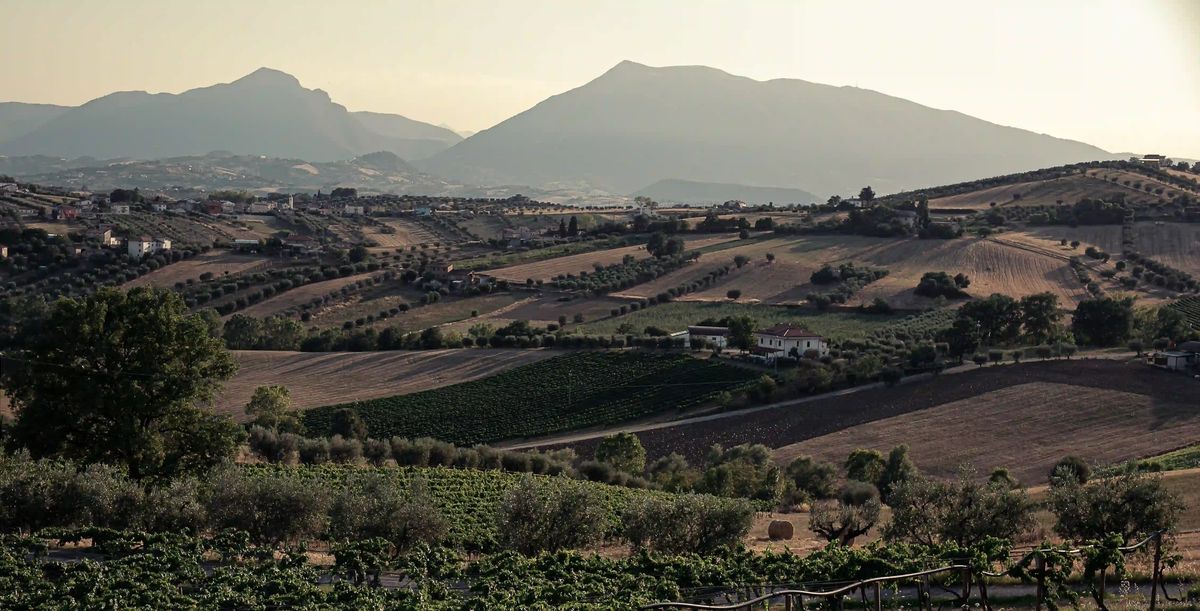
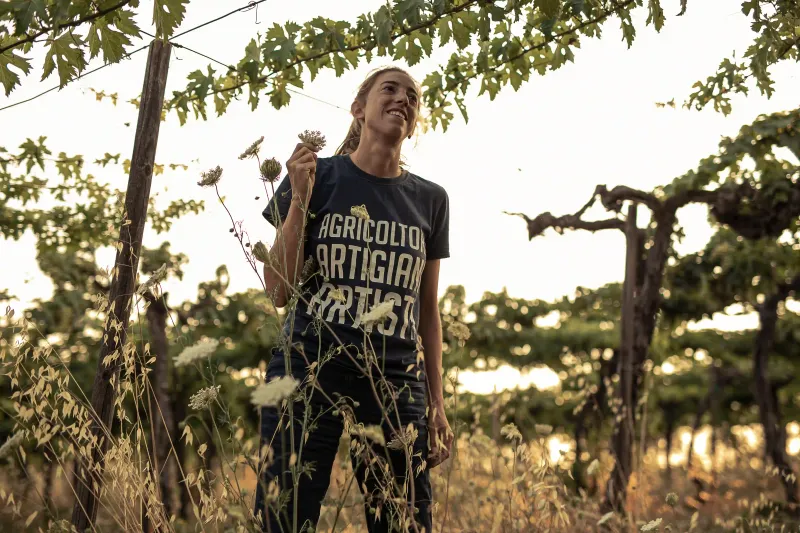
Chiara Pepe is the third-generation winemaker at Emidio Pepe in Abruzzo, stewarding one of Italy's most uncompromising estates. While retaining the estate's five non-negotiable pillars (pergola training, concrete fermentation, spontaneous yeast, no filtration, long ageing), she has adapted viticulture and winemaking to climate change through shade management, delayed phenolic ripening, and precision sulphur use. The result is freshness, longevity, and distinct vineyard expression in a warming climate.
When Emidio Pepe released his first vintage in 1964, few believed Montepulciano d'Abruzzo could produce one of Italy's great red wines. The region's growers sold to cooperatives. The wine was vin de soif at best. One village wag joked that Emidio was building castles in the sky. Sixty years later, the stacked bottles in the Pepe cellar make the reference for him.
Chiara Pepe is seven vintages into her tenure as the third-generation winemaker at one of Italy's most uncompromising estates. Her grandfather Emidio established the vision. Her aunt Sofia shaped it from 1997. Now Chiara stewards a project built for a different climate, in conditions her grandfather never faced.
"I play in the spaces left empty," she says.
THE FIVE PILLARS
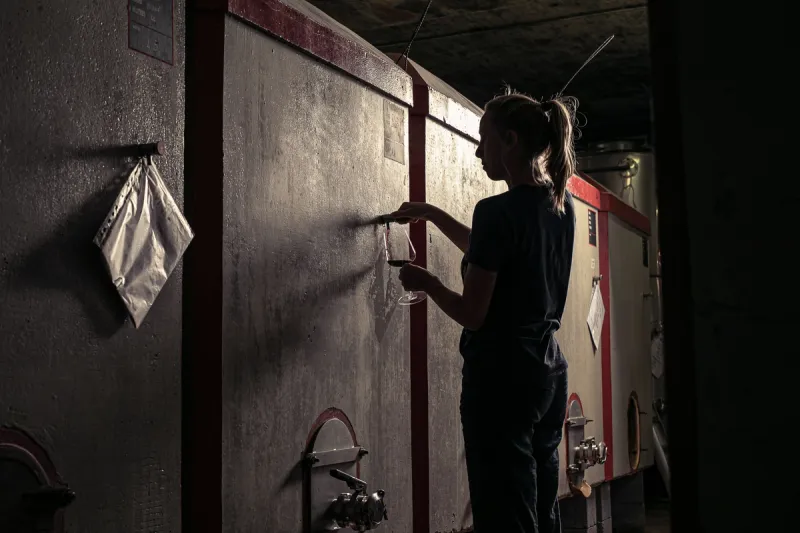
The Pepe philosophy rests on five non-negotiables: pergola training, concrete tanks, spontaneous fermentation, no filtration, long ageing. These are the pillars Emidio established and Chiara will not touch. Critics sometimes mistake these constraints for dogma. They are the opposite: a cleared space within which adaptation becomes possible. Everything else (the timing, the extraction, the sulphur) is where she finds her freedom.
One ritual captures the philosophy better than any other. Because Pepe bottles without filtration, older wines throw sediment. Rather than fine or filter, Rosa (Emidio's wife) hand-decants every bottle of aged Montepulciano before release, one by one, then recorks them. It is absurdly labour-intensive. It is also non-negotiable.
"A tradition that's stuck is fake," Chiara says. "If I kept doing what grandfather did in the 1970s, the wines would be undrinkable. He made wine for his times. I make wine for mine."
This is not rebellion. It speaks of a deep fidelity to the project's purpose, expressed through adaptation rather than repetition.
NATURE HAS MORE ENERGY THAN YOU
Beneath the technique lies a philosophy of surrender.
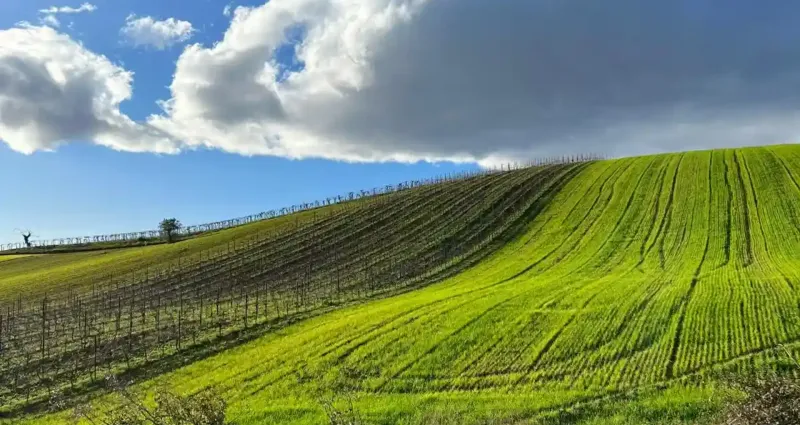
"Winemaking requires very little ego," Chiara says. "Nature leans on you all the time. If you're not in tune with her, she's going to brutally remind you who's in charge. And you can taste it when things go wrong."
She is not being provocative. It's the reality.
The project is bigger than the person. Gianfranco Soldera died and the wines got better. Humans are temporary. The idea stays. The vineyard stays.
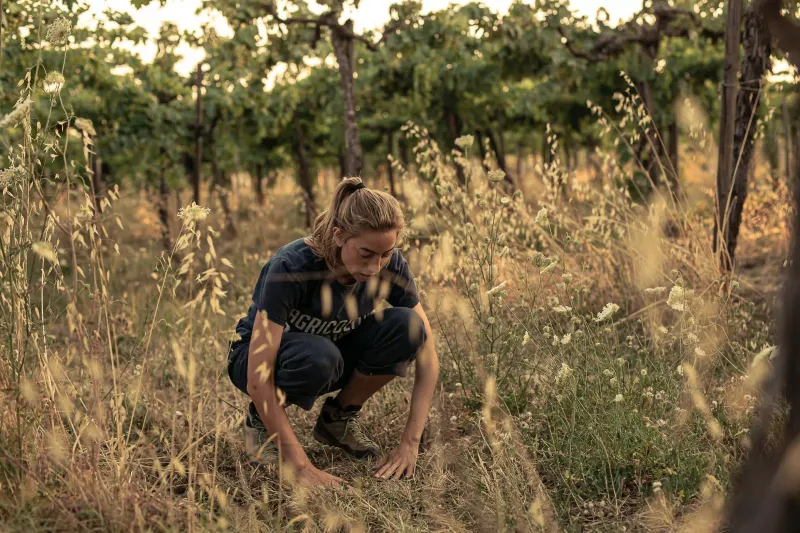
"I'm one generation," Chiara says. "I cover a little temporary volume at this point. The project is bigger than what we do today. There was somebody before me. There will be somebody after."
This is the tension Chiara holds daily: custodian of a vision she did not create, adaptor to conditions her grandfather never faced. The pillars cannot move. Everything else must.
CULTIVATE IN VOLUMES, NOT SURFACES
Most viticulture optimises for surface area: yield per hectare, efficiency per row. Chiara thinks in depth.
"I cultivate in volumes, not surfaces," she explains. "By growing what is visible in different levels, I'm also growing deeper into what we cannot see."
The pergola system (two metres high, vines trained outward in four directions) is central to this philosophy. It is labour-intensive and unfashionable. It is also, Chiara argues, the future.
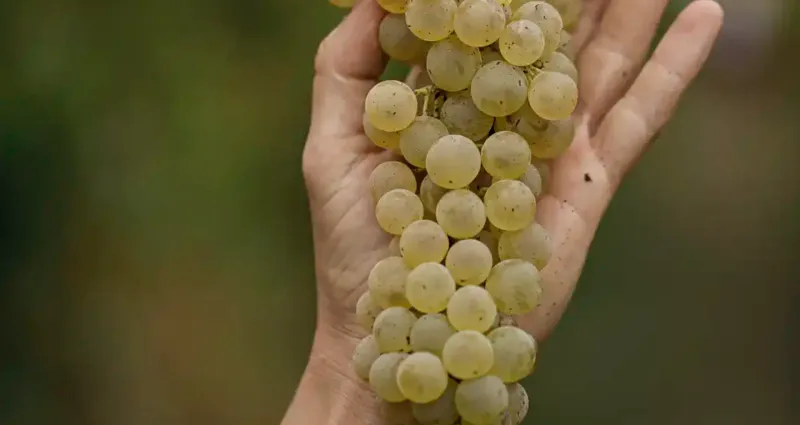
Grapes on the pergola ripen in shade. Skins stay thin. Acidity holds. In an era of 15% alcohols and baked fruit, the Pepe wines routinely land at 13 to 14% with freshness intact. The pergola is not nostalgia. It is climate adaptation hiding in plain sight.
Now Chiara is adding a third layer: trees planted above the vines. Dense canopy on the sunset side to block the brutal afternoon heat. Open canopy on the sunrise side to let quality morning light through.
"Shade is the best tool I have for the future," she says. "It protects the grapes. It protects the soil. Soil oxidises just like wine. If you leave it exposed, you lose the organic matter. Shade protects everything."
THE 501 SOLUTION
Climate change has decoupled two ripeness cycles that once arrived together. In the 1970s, you picked when sugar, acidity, and phenolic maturity aligned: one perfect day when everything was ready. Now technological ripeness (sugar) arrives ten days before the grape is aromatically complete.
Chiara's solution is biodynamic preparation 501: ground silica, sprayed in a fine mist at dawn before harvest. It accelerates phenolic maturation without affecting sugar accumulation, closing the gap between technological and aromatic ripeness.
"I need grapes at 13%, maximum 14%," she says. "That small window is where balance lives. Too early and you get sharp, thin wine that could be from anywhere. Too late and you lose the acidity that lets these wines age for decades."
Late pruning extends the cycle further. In 2022, bud break came on April 13th, eight days later than the ten-year average. That week bought her everything.
The question of what makes extraordinary wine often comes down to these precise interventions at the margin.
BRANELLA AND CASA PEPE: THE SOIL SPEAKS
Two vineyards. Same winemaking. Radically different wines.
Branella, planted in 1966, sits on sand and active limestone. The wine is electric, vertical, almost nervous: high-toned tension with thinner skins and piercing acidity. If you know Burgundy, think Vosne-Romanee. Elegance over power. Lift over weight.
Casa Pepe, grafted between 1972 and 1974, grows on deep silt rich in iron. The wine is an amphitheatre in the mouth: enveloping, warm, welcoming. This is Gevrey-Chambertin. Structure, grip, generosity. The comparison is not imitation. It is convergence: different soils, same logic.
The genetic complexity in Casa Pepe runs deeper still. When Emidio overgrafted those vines, he took cuttings from multiple old parcels across the region, embedding generations of epigenetic diversity into a single vineyard. Chiara sent samples for DNA analysis. The variation was confirmed. What she tasted was real.
"Once you're under the canopy, you see it," she says. "The leaves are different. The berries are different. The skins are different."
Since 2020, she has vinified them separately. The differences demanded it.
THE WINES IN THE GLASS
We tasted four wines from the 2022 vintage.
Emidio Pepe Trebbiano d'Abruzzo 2022 opens with lanolin and white peach, then shifts to something more mineral, almost saline. There is length here, and energy, but also a quietness. It does not shout. Austere when young, Chiara says, but give it five years and it will unfold.
Emidio Pepe Pecorino 2022 is different in texture: creamier, oilier, more immediate. Small berries and thick skins give it grip. The malic acid has converted to lactic, lending a softness underneath the acidity. Picked first (August 24th), it has the flesh and generosity of a grape that knows its moment.
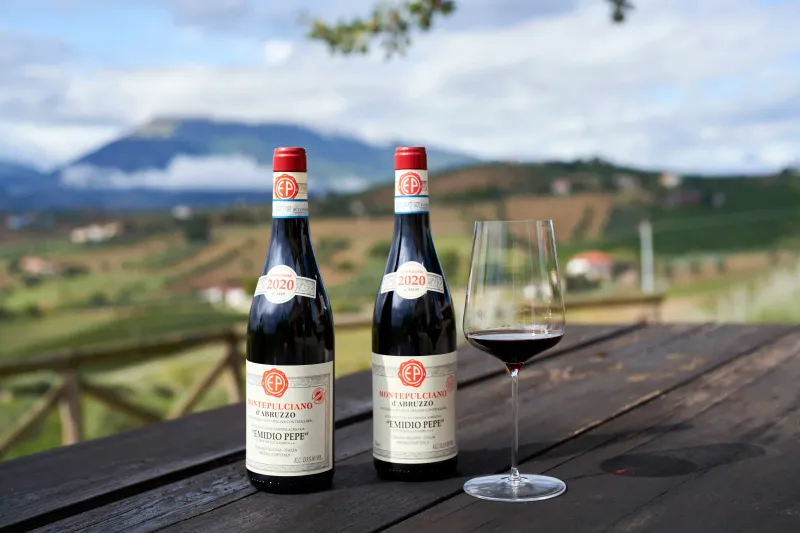
Emidio Pepe Montepulciano d'Abruzzo 2022, Branella is taut, almost nervous: wild berries, sage, a violet lift. The tannins are fine but insistent. It finishes long and slightly austere, asking for time.
Emidio Pepe Montepulciano d'Abruzzo 2022, Casa Pepe is broader, warmer, more welcoming from the first sip. Dark fruit, iron, a sense of enveloping structure rather than linear tension. If Branella is a question, Casa Pepe is an answer.
Both are young. Both are unmistakably Pepe: no oak, no fining, no filtration, fermented with native yeast in concrete. The vintage shows its hand (a cooler year, late rain, slow ripening) but underneath runs something older. Sixty years of the same decisions, made slightly differently each time.
Tasting Branella and Casa Pepe side by side is the kind of education no textbook provides. It is exactly the approach Ourglass takes: wines chosen to reveal how place, grape, and craft interact, so your palate learns by comparison rather than by rote.
SULPHUR, RISK, AND RESPONSIBILITY
Emidio Pepe famously bottled without sulphur. Chiara does not.
"I add sulphur at reception and after malolactic," she says. "2022 is probably 35ppm total."
This is not compromise. It is the sharpest expression of the tension she navigates: freedom to adapt within the spaces left empty, responsibility to a project that must outlast her.
"Sulphur only helps you through the first six months after bottling, the moment of oxygen combination. After that, it plays no role in ageing. But if you don't protect that moment, the wine never gets the chance to age at all."
Her grandfather could take more risks. The climate was more forgiving. The wines were structured differently. Chiara operates in a narrower window, and she knows it.
"How much risk you take depends on the vintage, the pH, how long you want the wine to live, your responsibility to changing generations. Every generation at Pepe has had different risk-taking. Maybe even within our own lives, it changes."
Understanding how price, value, and quality intersect helps explain why producers like Pepe can justify the patience their approach demands.
THE TEMPORARY VOLUME
Chiara is building for a future she will not see. Within ten years, she aims to hold 60% of production for extended ageing, up from 40% today. The new cellar is not for increased production. It is for patience.
The 2022 vintage is the first she considers fully her own: new destemming method, gravity loading, whole berries intact at the bottom of the tank for the first time. Less extraction. More trust.
"Montepulciano has so much power that I don't need to force it," she says. "By not forcing, I'm only enhancing the elegance."
The pillars remain. The spaces have been filled. But she would never claim them as hers alone.
"The wine lives on," she says. "Bigger than one person. Bigger than one generation."
In Torano Nuovo, castles in the sky turned out to be real.
This is what taste confidence looks like in practice: not performing knowledge, but trusting the accumulated evidence of your own attention.
FREQUENTLY ASKED QUESTIONS
Who is Chiara Pepe?
Chiara Pepe is the third-generation winemaker at Emidio Pepe in Torano Nuovo, Abruzzo. She took over winemaking responsibilities from her aunt Sofia and has been the estate's lead winemaker for seven vintages. She studied oenology and has adapted the estate's traditional methods to address climate change while preserving its five founding principles.
What makes Emidio Pepe wines different?
Emidio Pepe follows five non-negotiable principles established by founder Emidio Pepe in 1964: pergola-trained vines, concrete tank fermentation, spontaneous (native) yeast, no filtration, and extended ageing. Older vintages are hand-decanted and recorked before release. The estate uses no oak at any stage of winemaking.
What is pergola viticulture?
Pergola (or tendone) is a vine training system where vines are trained two metres high and outward in four directions, creating a canopy that shades the grapes below. It is labour-intensive and largely abandoned in modern viticulture, but Chiara Pepe argues it is the most effective climate adaptation tool available: grapes ripen in shade, skins stay thin, acidity holds, and alcohol levels stay moderate at 13 to 14%.
What is biodynamic preparation 501?
Preparation 501 is ground silica (quartz) sprayed as a fine mist at dawn. In Chiara Pepe's practice, it accelerates phenolic maturation without affecting sugar accumulation, helping close the gap between technological ripeness and aromatic ripeness that climate change has widened. It allows her to harvest grapes that are aromatically complete at moderate sugar levels.
What is the difference between Branella and Casa Pepe vineyards?
Branella, planted in 1966, sits on sand and active limestone and produces electric, high-toned Montepulciano with piercing acidity and fine tannins. Casa Pepe, grafted between 1972 and 1974, grows on deep iron-rich silt and produces broader, warmer, structurally generous wine. Since 2020, Chiara has vinified them separately. DNA analysis confirmed the genetic diversity within Casa Pepe from Emidio's original overgrafting of cuttings from multiple old parcels.
Does Emidio Pepe use sulphur?
Chiara Pepe adds sulphur at two points: at reception and after malolactic fermentation. The 2022 vintage has approximately 35ppm total sulphur. Her grandfather famously bottled without sulphur, but Chiara considers judicious use essential to protect wines through the critical first six months after bottling, giving them the stability to age for decades.
How long can Emidio Pepe wines age?
The estate regularly releases wines with 20 to 30 years of bottle age. Rosa Pepe hand-decants and recorks older bottles before release. The combination of pergola-preserved acidity, concrete fermentation, and no oak means the wines have the structure and freshness to evolve over very long periods. Chiara aims to hold 60% of production for extended ageing within the next decade.
What grape varieties does Emidio Pepe grow?
The estate produces wines from three grape varieties: Montepulciano d'Abruzzo (red), Trebbiano d'Abruzzo (white), and Pecorino (white). All are indigenous to Abruzzo and central Italy. For a broader look at Italian wine regions and their grape varieties, read our guide to the wine regions of Italy.
MORE FROM TASTE DECODED
How Taste Works: The Science of Flavour and Memory
The Wine Sweet Spot with Rory Sutherland
(Un)learn Taste with Gang of Four's Jon King
Context Effect: How Setting Shapes What You Taste How to Taste Wine with Michael Sager
ABOUT THE AUTHOR
Benedict Johnson is the founder of Ourglass, a London-based taste platform dedicated to helping people become confident wine lovers. He writes on everything to do with wine, and curates the Taste Decoded series, which brings together sommeliers, communicators, academics and creatives to decode what great actually tastes like.