
RANKIN ON TASTE: WHY INSTINCT BEATS INTELLECT
Filmed at Planque, Haggerston, East London
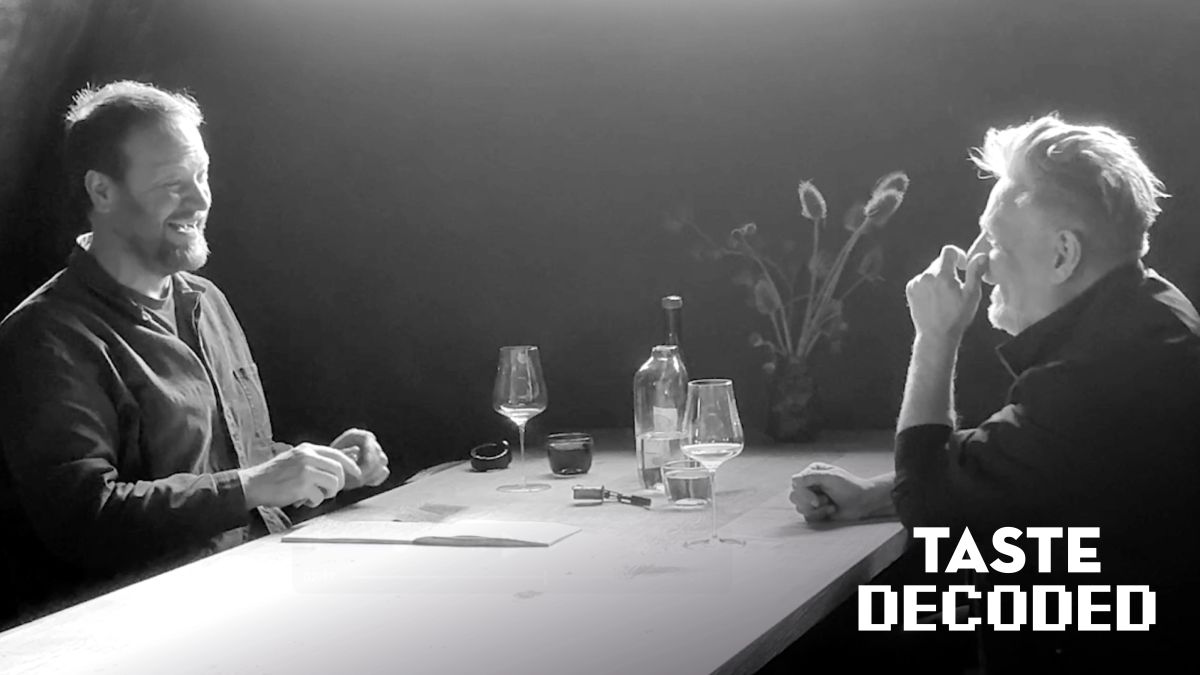
This latest instalment of our Taste Decoded series features legendary photographer Rankin in conversation over a glass of Muscadet from Loire producer Jérôme Bretaudeau. The theme: how instinct outperforms overthinking in both creativity and taste.
“I go with my heart first, then my brain,” Rankin says. “If something makes me feel something, I’ll intellectualise it afterwards. That’s where the best creativity comes from – that balance between intuition and intellect.”
Filmed by Anton Rodriguez, this is the first in a series exploring what taste really means – not just in wine, but in culture, creativity and daily life.
What Is Taste?
“Taste for me is simple when it’s about me – it’s what I like, and it’s instinctive,” says Rankin. “I’m very much about how I feel emotionally, and then I intellectualise it.”
Taste in others? More complicated.
“It can irritate me or excite me,” he admits. “Especially when someone is over-intellectualising or performing for an audience. I’m very much: this is my stuff. If you like it, great. If you don’t, also fine.”
This no-performance philosophy echoes Michael Sager’s approach to wine without dogma, which values honest enjoyment over expertise theatre.
Trusting Your Taste
Does Rankin trust his taste more now than he did in his twenties?
“Yes,” he says. “I trust it more because I can now process it intellectually and understand why I like something. Back then, I made uninformed decisions. Letting go of that changed everything for me as a creative.”
The shift came when he stopped overthinking. “If something makes me feel something, I’ll unpack it from there. That’s where the best wine, the best photography, the best everything comes from.”
It’s the same principle in developing your wine palate: start with what you enjoy, then build knowledge from there. Our guide to discovering your palate offers tools to begin that process.
Emotion Before Intellect
“I go with my heart first and then my brain,” Rankin continues. “A lot of people do it the other way around.”
That order matters. Leading with analysis often results in choosing what you think you should like. Instinct first leads to clearer preferences and more personal enjoyment.
This mirrors Tim Hayward’s reflections on the new language of taste, where younger drinkers are reshaping wine by prioritising curiosity over status.
It also applies to ordering from a wine list or selecting a bottle on the fly. Knowing what you like simplifies every choice.
The Muscadet Moment
Over the glass of Bretaudeau’s Muscadet, Rankin pauses. “I would never normally drink a Muscadet, but that smells incredible.”
It’s a moment of unguarded discovery. Muscadet has long suffered from being dismissed as cheap or basic. But in the hands of producers like Bretaudeau, it shows texture, salinity and depth.
“If you’re drinking around France in funky bars, this is up there with the hardest to get,” says Benedict Johnson. “Bretaudeau is a genius. This bottle has age, and we source it ourselves.”
Our guide to affordable quality wines explores how great bottles are often hidden in plain sight behind outdated reputations.
Taste as Liberation
“I think about this a lot,” Rankin says. “I would never say I’m right and someone else is wrong about taste. That doesn’t mean I like what they like – but I respect it.”
There is power in that separation. Confidence in your own preferences removes the need to convert or impress others.
This connects to how we define good wine and what makes a wine extraordinary. There is no single definition – only individual judgement.
Amelia Singer explores this in her series, showing how personal intuition enhances food and wine pairing. Max Halley makes a similar case, valuing play over rigid pairing rules.
Thirsty for More?
This is the first in a series with Rankin for Taste Decoded. Next up: visual taste, context and the unseen influence of setting.
Or continue exploring:
- Michael Sager on how to taste properly
- Tim Hayward on the changing language of taste
- Our complete wine confidence guide, from grape varieties to reading labels
TL;DR
Rankin on why instinct beats intellect – and how trusting your gut leads to better photos, better bottles and better taste.
About the Contributors
Rankin is one of the world’s most influential portrait photographers, known for founding Dazed & Confused and for photographing everyone from the Queen to David Bowie. In this series, he explores how intuition over analysis leads to better decisions – whether in photography or wine.
Benedict Johnson is the founder of Ourglass, a London-based wine platform. He writes on the psychology of taste and curates Taste Decoded, a series designed to help people become more confident wine lovers.
Art Direction by David Tokley
Filming by Anton Rodriguez
Location: Planque, Haggerston, London