
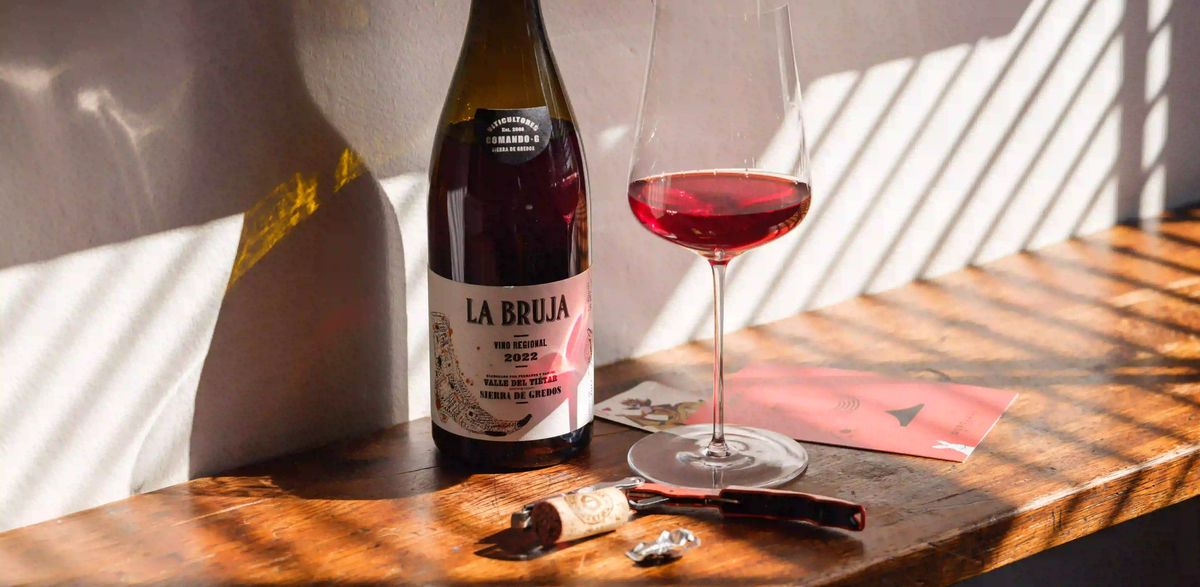
HOW TO LEARN ABOUT WINE TASTING
Wine knowledge feels like something other people have. The people who swirl their glass with confidence, who ask the right question when the sommelier arrives, who seem to know instinctively whether to decant or not. The reality is that none of them were born with it. They learned it, mostly by paying attention to what was in their glass rather than reading about it first.
Learning to taste wine is simpler than the wine world wants you to believe. It does not require courses, certificates, or the right vocabulary before you start. It requires curiosity, a method, and a willingness to notice things you might previously have swallowed without thinking about. Most people realise this about three or four bottles in, usually by accident.
This is where to start.
THE SHORT VERSION
To learn about wine tasting, build three habits: compare wines side by side rather than drinking them one at a time, use the same simple tasting method every time you open a bottle, and write three short notes afterwards. Most beginners notice real improvement within three to six months. You do not need to know regions, vintages, or grape genetics before you can notice acidity, texture, fruit, and finish. The tasting comes first. The knowledge follows. It feels backwards. It is not.
WINE KNOWLEDGE AND WINE TASTING ARE NOT THE SAME THING
This distinction matters and the wine world rarely makes it.
Learning about wine means studying regions, grape varieties, producers, and vintages. That knowledge is useful and interesting, but it is not a prerequisite for tasting. You can name every appellation in Burgundy and still fail to notice whether a wine is grippy or smooth, closed or open, young or evolved.
Learning to taste wine means training your attention on what is actually in the glass. That is a sensory skill, not an academic one, and it develops through practice rather than study. The two reinforce each other eventually. But the tasting comes first.
WHY WINE FEELS HARDER THAN IT IS
The wine industry has a vested interest in complexity. Classification systems, French terminology, vintage charts, and the mystique of the expert palate all serve to make wine feel like a subject that requires initiation before participation. That framing is wrong.
Your palate already functions. You already have preferences, sensory memories, and the ability to distinguish between things you enjoy and things you do not. What you may lack is vocabulary for what you are noticing, and a framework for paying attention more systematically. Both are acquirable within months.
The single most common reason people feel stuck with wine is that they are waiting to feel confident before they start paying attention. It works the other way around. Confidence is the result of attention, not the prerequisite for it.
WHAT YOU NEED TO START
Two different wines. Two glasses. Something white to look against. Ten quiet minutes. A note on your phone.
That is it. No course required. No special equipment. No occasion.
A SIMPLE TASTING METHOD
A tasting method is a set of questions you ask yourself about a wine, in a consistent order, so that nothing important gets missed. Applied every time you open a bottle, it builds the sensory library that makes wine progressively more legible.
Look at the wine. Hold your glass against something white and observe the colour. Depth and shade tell you something about the grape and the age before you taste anything. A pale, translucent red points toward Pinot Noir or Gamay. A deep purple suggests Syrah or Malbec. A white wine that has shifted from pale straw toward gold has probably spent time in oak or has some age behind it.
Smell before you taste. Swirl the glass, then nose it properly. Your nose has around 400 distinct smell receptors. Your tongue has five: sweet, sour, salty, bitter, and umami. Almost everything interesting about a wine arrives through the nose. What is the first thing you notice? Fruit, earth, something floral, something toasty? Then look for what sits underneath.
Taste with attention. Take a proper sip and let it sit before swallowing. Notice texture first: light or full, soft or grippy, smooth or sharp. Then flavours. Most people only start noticing tannin once someone points it out. After that, you cannot not notice it. Notice the finish too: does it linger or disappear quickly? A wine with a long finish generally has more in it.
Assess honestly. Did you enjoy it? What would you change? What would you eat with it?
Our complete guide to the tasting method covers each step in more detail if you want to go deeper.
YOUR FIRST FOUR WEEKS
A simple plan that builds real reference points without overwhelming you.
Week one: open one white and one red on the same evening. Apply the method to each. Write three words about each. Notice the differences in colour, texture, and weight.
Week two: compare two whites from different grapes or regions. A Sauvignon Blanc and a Chardonnay show you the range from sharp and citrus-forward to fuller and rounder. Notice which you prefer and why.
Week three: compare two reds of different body. A lighter Pinot Noir alongside a fuller Malbec or Syrah shows you what tannin and body actually mean in the glass, which no description can fully convey.
Week four: revisit one wine you enjoyed in the first three weeks. Taste it again and write three sentences. Notice how much more you can articulate now.
By the end of that month you have eight reference points and the beginnings of a personal vocabulary. That is enough to make every subsequent bottle more interesting.
WHAT TO TASTE AS YOU DEVELOP
Variety teaches faster than repetition. Work through different styles rather than drinking the same one repeatedly. Useful styles to cover in your first six months:
Whites: one crisp aromatic white (Sauvignon Blanc, Pinot Grigio), one mineral white (Chablis, Muscadet), one oaked white (white Rioja, oaked Chardonnay), one off-dry or aromatic white (Riesling, Gewurztraminer).
Reds: one light red (Beaujolais, Pinot Noir), one medium-bodied red (Rioja, Merlot), one fuller red (Syrah, Malbec, Cabernet Sauvignon).
Subtle wines are overrated when you are starting out. You learn faster from wines that shout. A Marlborough Sauvignon Blanc or a ripe Malbec will teach you more in one glass than a delicate Chablis teaches in three, at least at the beginning.
Seven styles across six months, combined with the comparison habit, builds the map of the territory. Everything else is filling in the detail.
HOW TO REMEMBER WHAT YOU TASTE
Three sentences after each wine is sufficient: what you smelled, what you tasted, whether you enjoyed it and why. The act of writing fixes the sensory experience in a way that passive drinking does not.
After six months of notes, patterns emerge. You consistently return to wines with higher acidity. You find heavily oaked whites register as flat rather than complex. You are drawn to earthy rather than fruit-forward reds. These patterns are your palate. They are more useful than any critic's score.
The wine flavour wheel helps when an experience is clear but the vocabulary is not. It maps aromas into three families: primary (from the grape), secondary (from fermentation), and tertiary (from ageing). When you smell something familiar but cannot name it, the wheel gives you a structure to search within.
HOW LONG IT TAKES
Three months is enough for most people to notice something shifting. Not mastery. Just the beginning of fluency, which is all you need to keep going. Six months of steady attention is usually enough to articulate why you like what you like, not just whether you do. Within a year, basic vocabulary often feels much easier and what develops from there is depth and range rather than foundational fluency.
The common mistake is passive consumption rather than active attention. You can drink wine for decades without improving if you never stop to notice what you are actually tasting. Fifteen minutes of focused attention once a week produces faster development than years of casual drinking.
A NOTE ON FAULTS
Recognising when something has gone wrong with a wine teaches you what right looks like. A corked wine, which smells of damp cardboard due to a compound called TCA, shows you what clean fruit smells like by contrast. An oxidised wine that has turned sharp and vinegary teaches you what balance means. Faults are not rare. Most people encounter them without realising it. Knowing what you are meeting means you can return a bottle with confidence.
Our guide to common wine faults covers the six most common ones.
THE QUESTION RARELY ASKED
Most people who feel like they know nothing about wine know considerably more than they think. What they are missing is not palate but confidence in their own perception. The confidence comes from vocabulary, and the vocabulary comes from paying attention.
Once you have words for what you are noticing, wine stops feeling like a test and starts feeling like a conversation. The sommelier, the wine list, the shop shelf: none of it is intimidating once you trust that your own answers are worth having.
Not to impress anyone. To genuinely know your own mind.
If you want to develop your palate on wines chosen to teach you something, our subscriptions include tasting notes with every delivery, written to explain rather than to impress.
FREQUENTLY ASKED QUESTIONS
Can I learn wine tasting on my own? Yes. Most palate development happens through practice rather than instruction. A simple tasting method applied consistently, and notes written afterwards, will usually develop your abilities faster than a course that does not involve regular tasting.
How long does it take to learn wine tasting? For most beginners, three to six months of regular attentive tasting produces real, noticeable change. A year of consistent practice usually produces enough vocabulary and confidence to navigate any wine list without anxiety.
Do I need to take a course? No. Courses can be useful, particularly for vocabulary and structure. But most people improve faster by opening bottles and paying attention than by sitting in a classroom. The doing comes first.
What is the best wine for beginners to taste? Wines with clear, pronounced characteristics teach fastest. Subtle wines are overrated when you are starting. A Marlborough Sauvignon Blanc has unmistakable citrus and green herb character. A Beaujolais or lighter Pinot Noir shows you what a light red feels like. An oaked Chardonnay teaches you what oak actually does to a wine. Start with contrast rather than subtlety.
Should I spit wine when tasting? Only if you are tasting several wines and need to stay sharp. For at-home learning, swallowing is fine and lets you assess the finish properly.
How many wines should I compare at once? Two is the most useful number for learning. Three is fine. More than four at a sitting produces palate fatigue and makes the distinctions harder to remember.
Is wine tasting the same as wine knowledge? No. Wine tasting is a sensory skill developed through practice. Wine knowledge covers regions, grape varieties, producers, and vintages. The two reinforce each other, but you can develop a capable tasting palate without deep academic knowledge. The tasting comes first.
Written by MJ Hecox, Community Lead at Ourglass.
EXPLORE THE PALATE SERIES
GO DEEPER
- What's in an Ourglass Box
- How Ourglass Works
- How to Talk About Wine Without Sounding Like a Twat
- Is a Wine Subscription Worth It?
- Wine Grape Varieties: The Definitive Guide